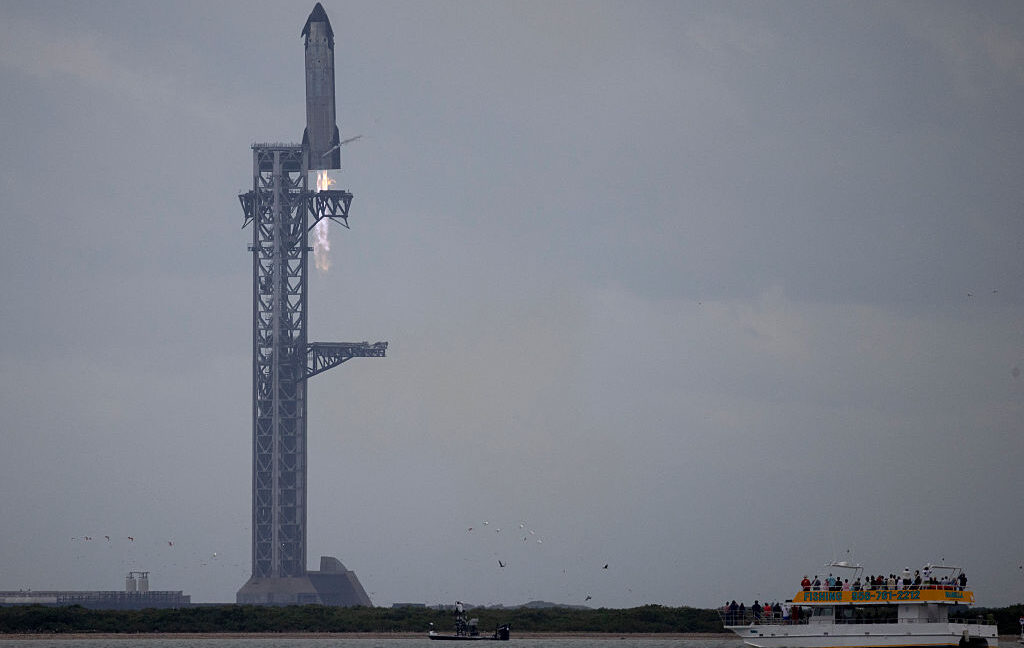
In a landmark demonstration of aerospace engineering, SpaceX completed a test flight of its Starship vehicle that concluded with the unprecedented capture of the Super Heavy first stage. The maneuver, executed at the Starbase facility in Texas, involved the booster ascending to space and returning to Earth, where it was snatched in mid-air by the robotic arms of the launch tower. This event represents the culmination of years of iterative testing, where previous flights had focused on achieving orbit and controlled splashdowns, but rarely on the precise, high-risk mechanics of a hard capture.
The operational context of the flight was critical, as the booster had to align its grid fins and thrusters with extreme precision to intercept the tower's arms at a specific altitude and velocity. The location, Starbase in Boca Chica, Texas, served as the proving ground for this technology, which is distinct from the traditional pad landings seen with Falcon 9 rockets. The success of this specific maneuver validates the core premise of SpaceX's Starship program: that the most expensive part of a rocket can be recovered and reused without the need for a separate landing pad or ocean platform.
Company leadership has framed this achievement as a step toward making space travel routine and affordable. While no specific financial figures were released immediately following the flight, industry observers note that the successful catch removes a major technical barrier to achieving the high cadence of launches necessary for both commercial and government missions. The event has been widely covered by media outlets, highlighting the visual spectacle of the catch as a symbol of the new era of space exploration.
In-Depth Analysis & Key Details
Historically, the aerospace industry has treated rocket boosters as expendable hardware, a model that persisted from the Space Shuttle era through the early days of commercial spaceflight. The structural forces driving the shift toward reusability are economic; the cost of manufacturing a new Super Heavy booster is substantial, and reusing it for multiple flights drastically reduces the marginal cost of each launch. This approach challenges the traditional procurement models of government agencies, which have long favored buying new hardware for each mission rather than investing in the maintenance and refurbishment of existing vehicles.
Competing perspectives on this development highlight the tension between technological ambition and regulatory safety. While SpaceX advocates for rapid iteration and testing, regulatory bodies like the FAA must ensure that these high-risk maneuvers do not pose unacceptable risks to public safety or the environment. The economic consequences of successful reusability could disrupt the global launch market, potentially forcing competitors like Blue Origin and ULA to accelerate their own reusable rocket programs or pivot to different market segments. Industry analysts observe that the barrier to entry for launching large payloads to orbit is now lower than ever, which could democratize access to space for scientific and commercial entities.
Expert domain context suggests that the technical intricacies of the catch involve complex control algorithms that must account for wind shear, fuel slosh, and structural flexing at high speeds. The ability to execute this maneuver reliably is a testament to the maturity of Starship's flight software and hardware. Furthermore, the success of this test provides a clear roadmap for future upgrades, including the potential for in-flight refueling and deeper space missions. The integration of these technologies positions Starship as not just a launch vehicle, but a platform for sustained operations in cislunar space.
"The successful catch of the Super Heavy booster is not merely a technical feat; it is a fundamental restructuring of the economics of space access, proving that the future of heavy-lift launch is defined by reuse, not disposal."
Why This Matters & What Lies Ahead
For everyday readers and global supply chains, the implications of this development extend beyond the immediate spectacle. Reduced launch costs could accelerate the deployment of satellite constellations for global internet coverage, potentially bridging the digital divide in remote areas. Furthermore, the ability to launch larger payloads more frequently could support the growth of space-based industries, including manufacturing and energy production, which may eventually offer new economic opportunities and resources. Public policy implications are also significant, as governments may need to update their space traffic management and liability frameworks to accommodate the increased frequency and complexity of launch operations.
Upcoming milestones to watch include the next scheduled Starship test flight, which will likely focus on demonstrating the booster's ability to refuel in space or perform a more complex orbital maneuver. Regulatory votes and hearings regarding the expansion of launch operations at Starbase and other sites will also be critical, as they determine the pace at which this technology can be scaled. Investors and industry stakeholders should monitor the financial reports of SpaceX's competitors and the budget allocations of NASA, as the success of Starship directly influences the strategic direction of both the private and public sectors in space.
Source: Reported by Ars Technica · Analyzed & Synthesized by DNB Newsroom