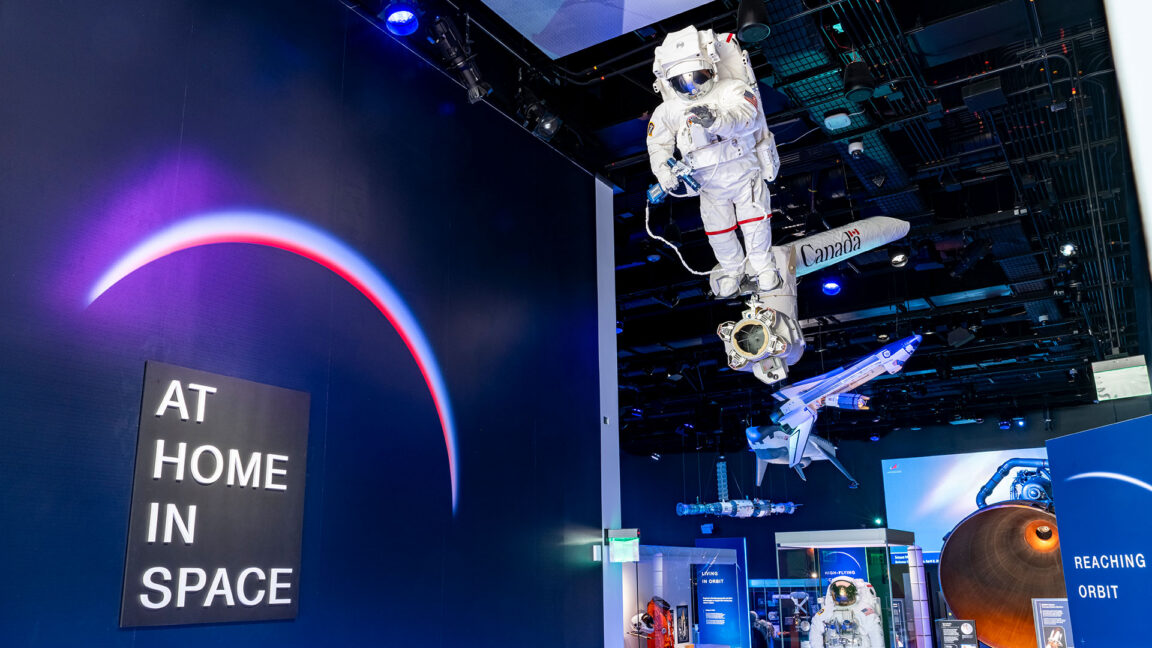
The Smithsonian Institution announced Thursday that its National Air and Space Museum’s “At Home in Space” gallery is once again open to the public, marking the culmination of a five‑year renovation that temporarily shuttered the museum’s orbital wing. The reopening ceremony featured Smithsonian Secretary Lonnie G. Bunch III, NASA Administrator Bill Nelson, and a crowd of roughly 2,000 guests, including educators, veterans, and space‑industry leaders.
Located on the National Mall’s west side, the museum’s renovated space now spans more than 30,000 square feet and showcases restored artifacts such as the Apollo 11 Command Module, the original Mercury‑Redstone rocket, and a fully functional replica of the International Space Station’s Destiny laboratory. New immersive installations employ virtual‑reality headsets and motion‑platform simulators to let visitors experience a launch, a lunar landing, and a future Mars ascent.
In remarks, Bunch emphasized the museum’s role as “America’s living laboratory for the sky,” while NASA’s Nelson highlighted the exhibit as a “public‑facing bridge to Artemis and the next generation of explorers.” Early reactions from teachers and veteran astronaut Chris Hadfield praised the blend of historic preservation with cutting‑edge storytelling.
In-Depth Analysis & Key Details
The Air and Space Museum’s renovation must be viewed against a backdrop of shifting federal priorities for science education that began in the post‑Sputnik era. The original 1976 opening celebrated Cold‑War triumphs, yet decades of deferred maintenance left the facility ill‑equipped for 21st‑century audiences. The recent capital infusion, authorized by the 2021 Infrastructure Investment and Jobs Act, reflects a broader legislative push to modernize national cultural institutions while leveraging them as economic engines.
Competing perspectives emerged during the planning stages: some lawmakers advocated for a modest refurbishment focused on preservation, whereas museum officials pushed for a transformative redesign that would incorporate interactive digital media. The final design, approved by the Smithsonian Board of Regents, balances these demands by allocating 40 percent of the budget to artifact conservation and 60 percent to new technology, a compromise that satisfies both heritage purists and tech‑forward advocates.
Experts in museum studies note that the integration of VR and mixed‑reality experiences aligns with emerging best practices for visitor engagement, especially among Millennials and Gen‑Z audiences who favor experiential learning. Moreover, the partnership with NASA not only provides authentic content but also positions the museum as a de‑facto showcase for the agency’s Artemis lunar‑return agenda, potentially influencing public opinion and congressional support for future space‑flight funding.
"The museum’s rebirth isn’t just about preserving the past—it’s about propelling the public into the next chapter of human spaceflight."
Why This Matters & What Lies Ahead
For everyday Americans, the revitalized exhibit offers a tangible connection to the nation’s space heritage and a hands‑on glimpse of upcoming missions, reinforcing the relevance of STEM education in a rapidly evolving job market. Local tourism boards project an additional $25 million in annual revenue from increased museum attendance, while educators anticipate higher enrollment in science clubs and after‑school programs that tie directly into the exhibit’s curriculum kits.
Looking ahead, the museum will host a series of public forums on the Artemis program, scheduled for the summer of 2025, and will serve as a venue for congressional briefings on space policy. The timing coincides with the upcoming FY 2027 budget cycle, making the museum’s visibility a potential lever for advocacy groups seeking sustained or increased federal funding for lunar and deep‑space initiatives.
Source: Reported by Ars Technica · Analyzed & Synthesized by DNB Newsroom