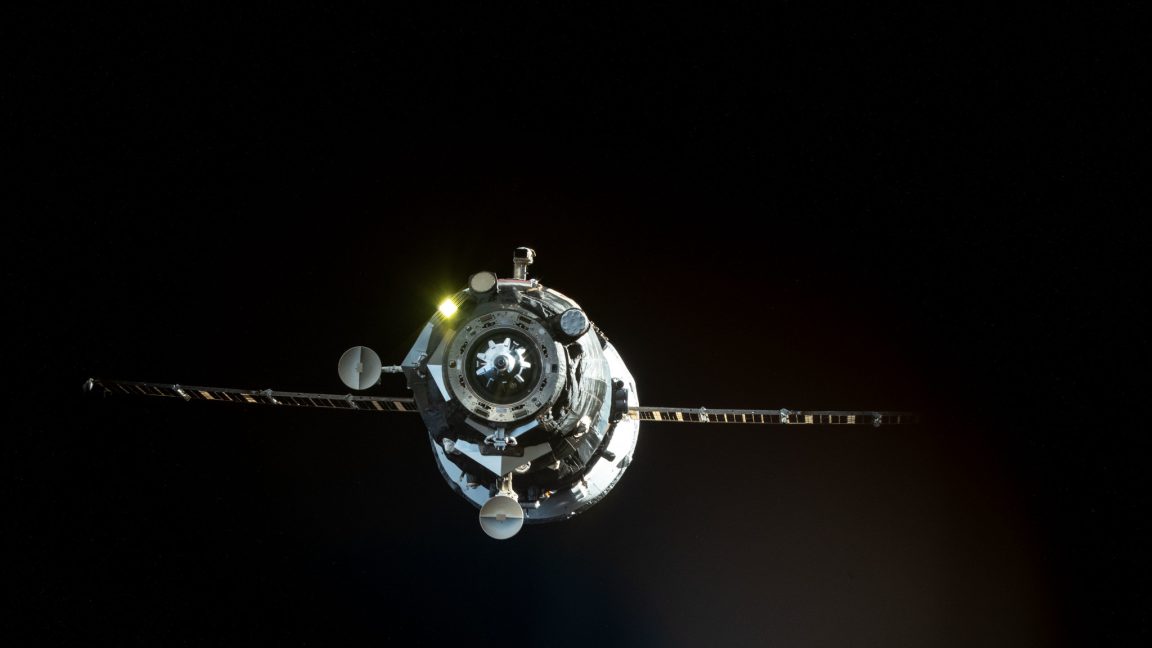
The International Space Station is set to receive a critical cargo delivery from Earth as Russia prepares to launch a Progress spacecraft tomorrow. This mission, while operationally routine in terms of its objective to replenish supplies and scientific equipment on the orbiting laboratory, has been characterized by an atypical level of secrecy. Roscosmos, the Russian state space corporation, has not released the standard pre-launch data packages or public statements that usually accompany such significant orbital events, creating a vacuum of information that has drawn attention from aerospace analysts and international partners.
The launch is scheduled to take place from the Baikonur Cosmodrome in Kazakhstan, the primary launch site for Russian crewed and uncrewed missions to the ISS. The Progress vehicle is designed to dock with the Pirs or Poisk docking ports, transferring essential resources including water, food, fuel, and experimental hardware. The geographical and logistical complexity of the mission remains unchanged, but the communicative environment surrounding it has shifted dramatically, isolating the event from the usual global media scrutiny that typically accompanies major spaceflight activities.
When pressed for details regarding the mission's specific parameters, Roscosmos officials offered minimal response. A representative stated, "I would ask you to please reach out to Roscosmos directly," a phrase that effectively serves as a procedural wall rather than an invitation for dialogue. This deflection marks a departure from the collaborative transparency that has defined the U.S.-Russia space partnership since the station's inception, suggesting that the diplomatic friction on the ground is beginning to influence operational norms in orbit.
In-Depth Analysis & Key Details
The International Space Station has always operated under a framework of international cooperation, where the United States and Russia, despite terrestrial political disputes, maintained a functional and transparent partnership in low Earth orbit. Historically, launch schedules, payload manifests, and docking procedures were shared openly to facilitate global scientific collaboration and ensure the safety of the crew. The current climate, however, is marked by heightened geopolitical tensions that have spilled over into the realm of space operations. The decision to withhold public information about this routine resupply mission suggests that the operational relationship is becoming more insular, potentially prioritizing national security or diplomatic leverage over the traditional ethos of open scientific exchange.
Industry analysts observe that this shift in communication protocols could have broader implications for the future of the ISS. As the station approaches the end of its operational life, the United States and its commercial partners are accelerating efforts to develop successor platforms. The opacity surrounding Russian missions may reflect a strategic calculation to limit the visibility of their space activities during a period of intense global conflict. Furthermore, the lack of shared data complicates the work of independent tracking organizations and safety advocates who rely on public information to monitor the health and trajectory of objects in orbit, potentially introducing new layers of risk into an already complex operational environment.
Technical intricacies of the mission remain largely unchanged, as the Progress spacecraft continues to serve as the backbone of Russian logistics to the station. However, the procedural changes indicate a deeper structural tension. Regulatory filings and internal communications within the space community suggest that the era of seamless, transparent joint operations may be giving way to a more cautious, compartmentalized approach. This evolution is not merely a matter of protocol but a reflection of the broader geopolitical realignment that is reshaping international institutions and cooperative frameworks across multiple domains.
"The silence surrounding this launch is not just a media strategy; it is a signal that the cooperative architecture of the International Space Station is undergoing a quiet but significant restructuring."
Why This Matters & What Lies Ahead
For consumers and the global scientific community, the opacity surrounding ISS missions represents a loss of public trust and transparency in one of humanity's most significant cooperative achievements. The station serves as a platform for research that benefits medicine, climate science, and materials engineering; any disruption to the flow of information or collaboration could hinder the pace of scientific discovery. Furthermore, the financial markets and insurance sectors that underpin the space industry rely on predictable and transparent operations to assess risk; increased uncertainty may lead to higher costs for commercial partners and investors in the broader space economy.
In the coming months, stakeholders should monitor the official statements from NASA and the European Space Agency regarding their continued participation in ISS operations. Upcoming diplomatic summits may address the status of space cooperation, potentially leading to new agreements or, conversely, a formal decoupling of operations. Additionally, the launch of commercial crew and cargo vehicles by U.S. companies will be closely watched as indicators of whether the station can sustain its operations without full reliance on Russian logistical support, a transition that is becoming increasingly urgent as political relations continue to deteriorate.
Source: Reported by Ars Technica · Analyzed & Synthesized by DNB Newsroom