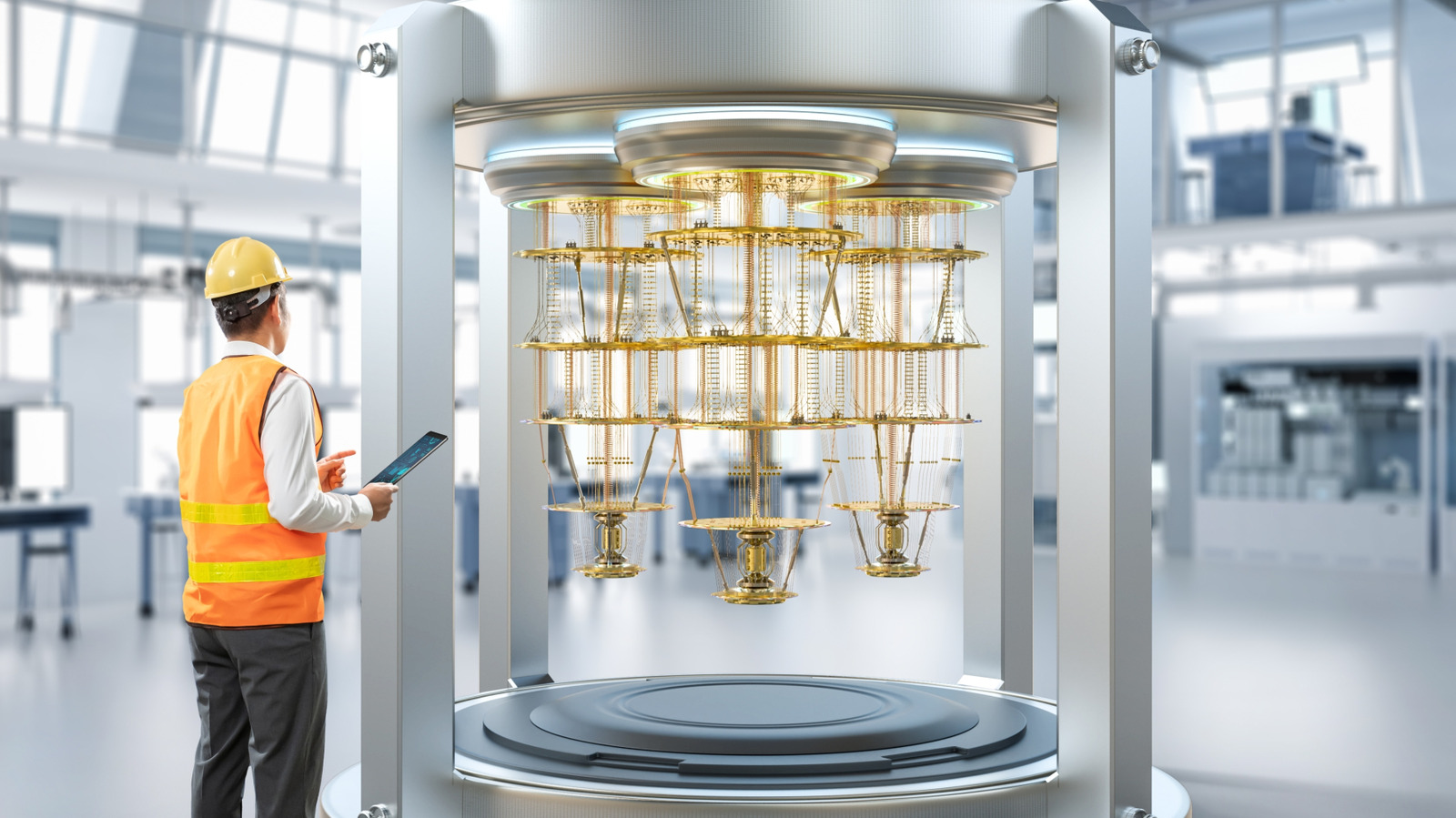
A multinational team of physicists and engineers announced this week that their prototype quantum processor sustained stable operation at roughly ten millikelvin, a temperature colder than the background radiation of deep space. The experiment, conducted in a custom‑built dilution refrigerator at the University of Chicago’s Quantum Information Center, demonstrated error rates dropping by more than 30 % compared with previous benchmarks, drawing immediate interest from industry giants racing to build practical quantum computers.
The ultra‑cold environment was achieved by combining a traditional helium‑3/helium‑4 dilution system with a newly designed superconducting heat shield that siphons residual thermal energy into a superfluid helium bath. This hybrid approach not only pushes the temperature envelope lower but also extends the runtime of qubits, allowing them to remain coherent for longer periods—an essential factor for executing complex algorithms.
In-Depth Analysis & Key Details
Heat is the nemesis of quantum bits because even minuscule thermal vibrations cause decoherence, erasing the fragile superposition states that give quantum computers their power. Historically, quantum labs have struggled to keep processors below 20 millikelvin, a limit imposed by the cooling power of conventional dilution refrigerators and the thermal load of control wiring. By re‑engineering the thermal path and integrating superconducting materials that reflect infrared photons, the researchers have effectively insulated the qubits from external heat sources, achieving a temperature regime previously thought impractical for sustained operation.
This breakthrough arrives amid an intensifying arms race among tech conglomerates and national labs to claim quantum supremacy. While companies like IBM and Google have demonstrated quantum advantage on specific tasks, the reliability of those demonstrations has been hampered by error rates tied to temperature fluctuations. The new cooling methodology could serve as a universal upgrade for existing quantum platforms, potentially shortening the timeline for fault‑tolerant machines and prompting a wave of investment in cryogenic infrastructure across the sector.
Why This Matters & What Lies Ahead
If quantum processors can routinely operate at temperatures colder than the vacuum of space, the path to error‑corrected, large‑scale machines becomes markedly shorter. Cloud‑based quantum services are likely to expand their qubit counts and offer more complex workloads, while industries dependent on secure encryption may need to accelerate the transition to post‑quantum cryptography.
Consumers and enterprises should anticipate a surge in quantum‑ready hardware offerings and a corresponding rise in demand for specialized cooling solutions, creating new market niches for cryogenic engineering firms and reshaping supply chains tied to rare‑earth gases and superconducting materials.