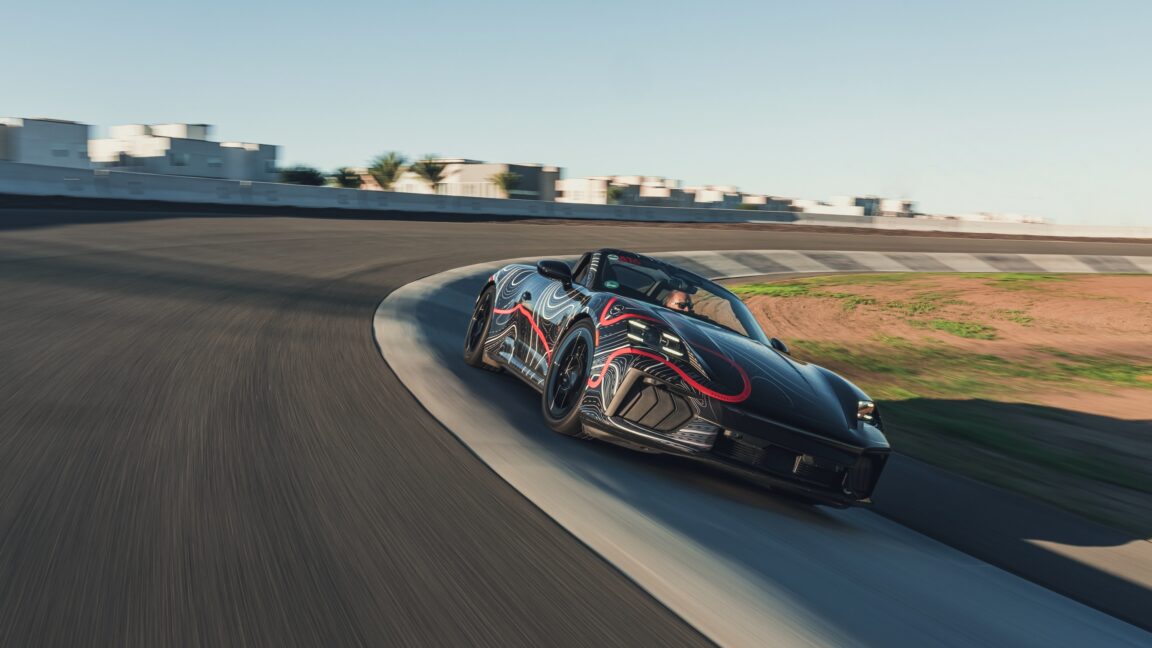
Porsche has moved forward with the public unveiling of its electric 718 Boxster, a significant milestone in the manufacturer’s broader electrification roadmap. The vehicle, which retains the recognizable exterior design cues of its internal combustion engine counterpart, represents a strategic pivot for the Stuttgart-based automaker. By keeping the iconic shape intact, Porsche aims to ease the transition for loyal customers who are accustomed to the brand’s traditional sports car aesthetics while embracing the new electric powertrain technology.
The immediate context of this reveal is characterized by a deliberate scarcity of detailed technical data. While the physical form of the car is established, specific metrics regarding battery capacity, range, and output power remain largely undisclosed in the initial public communications. This approach allows the manufacturer to focus on the experiential aspects of the vehicle, such as handling and driver engagement, before releasing the granular engineering figures that will define its market positioning against competitors.
Official statements from Porsche emphasize that the primary goal is to maintain the high-performance standards associated with the 718 nameplate. The brand has indicated that the electric variant is designed to be a direct successor in terms of driving pleasure, ensuring that the shift to zero-emission mobility does not result in a dilution of the sporty character that has defined the model for decades. Stakeholders in the automotive industry are watching closely to see how Porsche balances these heritage elements with the technological demands of modern electric vehicles.
In-Depth Analysis & Key Details
The introduction of the electric 718 Boxster is part of a larger structural shift in the global automotive industry, where legacy manufacturers are redefining their core competencies in response to tightening emissions regulations and changing consumer preferences. Porsche’s decision to electrify its entry-level sports car line is particularly notable because it challenges the notion that high-performance driving is exclusively tied to internal combustion engines. Historically, the 718 series has been a gateway for many into the Porsche ownership experience, and electrifying this segment requires careful calibration to ensure that the brand’s premium positioning is not undermined by cost or performance trade-offs.
From a regulatory and economic perspective, the electric 718 Boxster must navigate a complex landscape of global emissions standards and supply chain constraints. The availability of critical minerals for battery production and the cost of electric drivetrain components will play a significant role in determining the vehicle’s final price point and accessibility. Industry analysts observe that Porsche’s approach to this model reflects a broader trend among luxury automakers to prioritize software-defined vehicles and advanced driver assistance systems, which are essential for justifying the premium pricing associated with electric models.
Technical intricacies of the electric powertrain are expected to focus on weight distribution and thermal management, key factors that influence handling and performance. The shift from a mid-engine layout with a combustion engine to an electric configuration requires rethinking the vehicle’s architecture to maintain the balanced weight distribution that is central to the 718’s driving dynamics. This engineering challenge is being addressed through the integration of advanced battery placement and chassis tuning, ensuring that the electric version delivers a responsive and engaging driving experience comparable to its predecessor.
"The electric 718 Boxster represents a critical test of whether heritage and innovation can coexist in the high-performance segment, proving that the soul of a sports car can survive the transition to electric mobility."
Why This Matters & What Lies Ahead
For consumers, the electric 718 Boxster offers a compelling option for those seeking a high-performance sports car with zero tailpipe emissions. The vehicle’s retention of the classic design language lowers the psychological barrier for traditionalists, while the electric powertrain provides instant torque and a quieter driving experience. This model also serves as a benchmark for other manufacturers looking to electrify their performance lines, potentially accelerating the adoption of electric vehicles in the sports car segment. Financially, the success of this model will have implications for Porsche’s long-term profitability and its ability to meet corporate sustainability targets.
Upcoming milestones to monitor include the release of detailed technical specifications, such as range and charging times, which will be crucial for potential buyers. Regulatory approvals in key markets like the European Union and the United States will also be critical, as these regions have strict emissions standards that favor electric vehicles. Additionally, the launch of the electric 718 Boxster will likely prompt responses from competitors, such as Tesla and Ferrari, who are also developing electric sports cars, leading to increased competition and innovation in the segment. Investors and industry observers will be watching closely for how Porsche manages supply chain risks and production ramp-up in the coming months.
Source: Reported by Ars Technica · Analyzed & Synthesized by DNB Newsroom