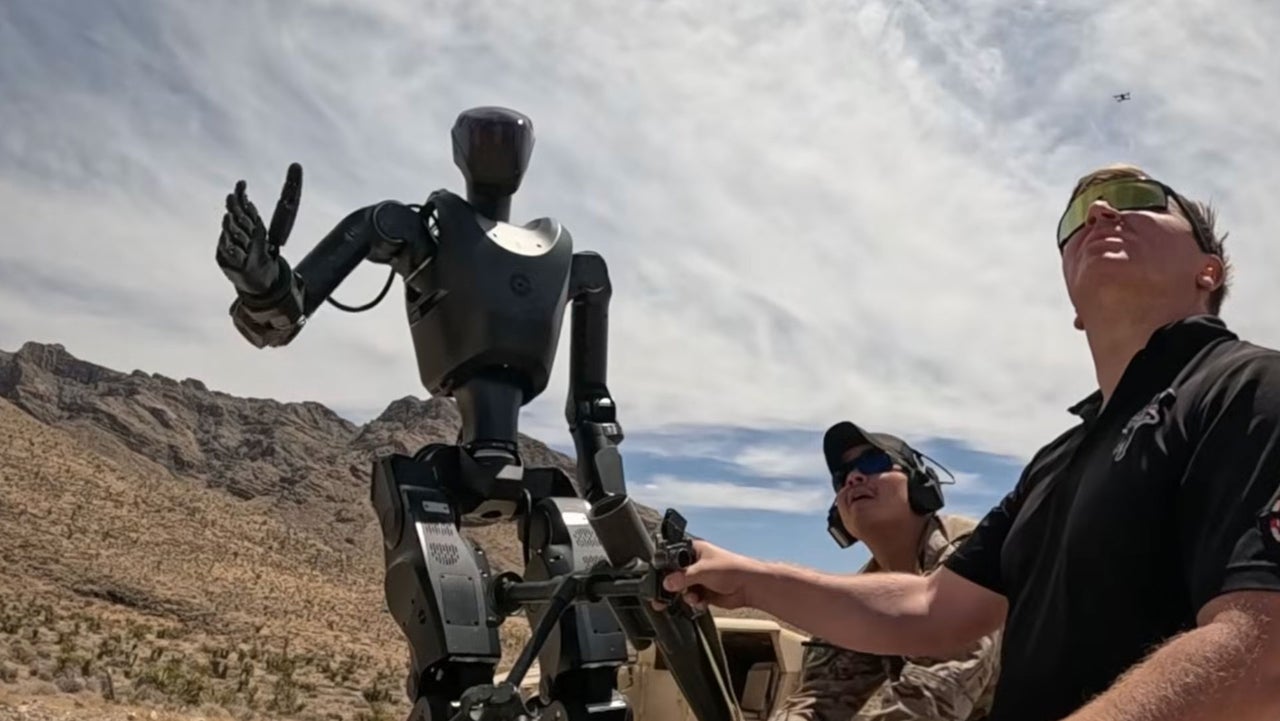
Foundation Future Industries, a venture financed in part by Eric Trump, unveiled its latest humanoid platform, the Phantom MKII, during a live demo in Detroit on Tuesday. The event, attended by investors and industry media, marked the company's first public showcase since securing a $45 million Series B round. The robot’s sleek, aluminum‑clad frame drew immediate attention from construction firms seeking automation.
The MKII can lift up to 200 pounds and maintain balance while traversing rain, snow, or dusty environments, thanks to a proprietary actuator system and sealed joint housings. Its onboard AI interprets 3D sensor data to navigate cluttered job sites, allowing it to transport materials, install components, or perform routine inspections without human intervention.
CEO Alex Rivera—who declined to provide a full name—stated the platform is designed for civilian infrastructure projects but did not dismiss the possibility of future weaponization, noting that the chassis can accommodate a range of payloads, including defensive systems. Labor unions voiced concerns about job displacement, while defense analysts warned that commercial availability could accelerate autonomous weapons development.
In-Depth Analysis & Key Details
Humanoid robotics has oscillated between laboratory prototypes and limited industrial use for decades, with early models such as Honda’s ASIMO demonstrating gait control but lacking practical payload capacity. The Phantom MKII builds on a decade of incremental advances in actuator density, battery energy density, and sensor fusion, pushing the technology into a weight class previously reserved for fixed‑base automation.
The United States Department of Defense has issued guidance encouraging dual‑use technologies that can be repurposed for battlefield logistics, while export‑control regimes like the International Traffic in Arms Regulations (ITAR) scrutinize systems capable of carrying weapons. As a privately funded venture, Foundation Future Industries must navigate both civilian safety standards and potential classification as a “military‑grade” robot, a tension reflected in recent congressional hearings on autonomous weaponry.
Industry analysts observe that the cost per unit—estimated at $120,000 for a fully equipped MKII—remains a barrier for small contractors but could become viable as economies of scale emerge. Robotics scholars note that integrating AI‑driven perception with heavy‑lift mechanics raises reliability challenges, especially in harsh outdoor conditions, and that warranty and liability frameworks are still nascent.
"When a machine that can hoist steel beams can also be fitted with a gun, the line between tool and weapon becomes dangerously thin."
Why This Matters & What Lies Ahead
For construction crews, a robot that can shoulder heavy loads in inclement weather promises reduced injury rates and steadier project timelines, potentially lowering overall building costs. However, the prospect of arming such platforms raises ethical questions about workplace safety and the diffusion of lethal autonomous capabilities into civilian supply chains.
Regulatory filings indicate the company will seek certification from the Occupational Safety and Health Administration by early 2027, while a pending request for a Department of Commerce export license will determine whether the MKII can be sold abroad. Lawmakers have scheduled a hearing on autonomous systems for the next congressional session, where Foundation Future Industries is expected to testify on its safety protocols.
Source: Reported by Fast Company · Analyzed & Synthesized by DNB Newsroom