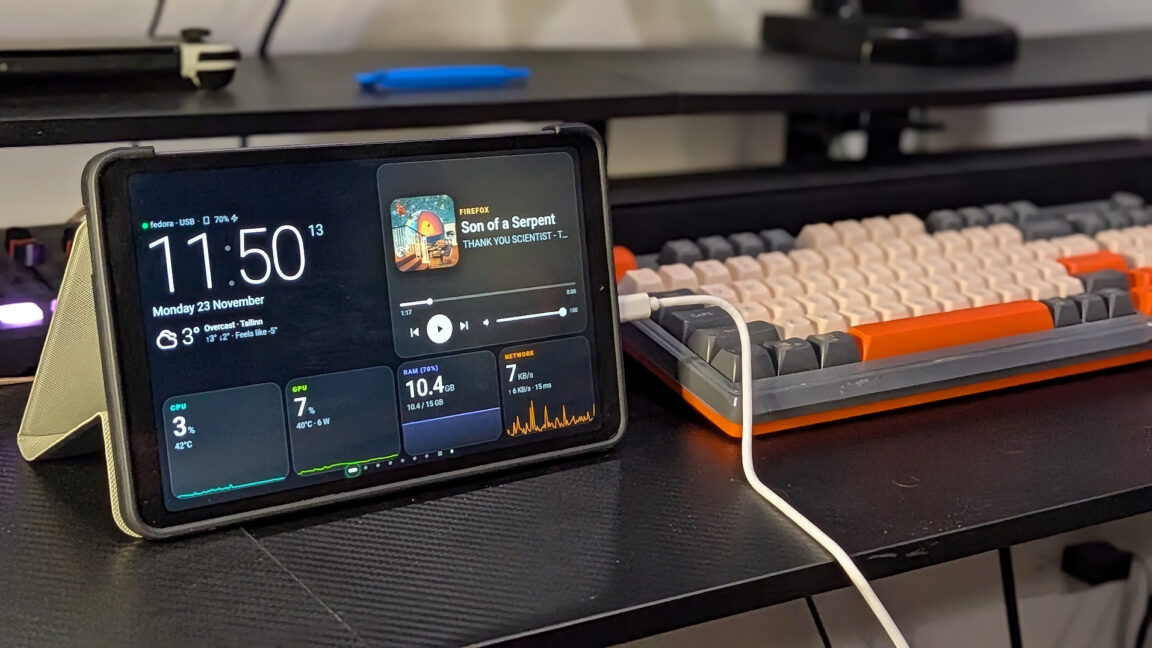
The PhoneBox initiative, released under an MIT license, enables users to convert idle Android tablets and smartphones into dedicated network‑monitoring consoles with a single terminal command. The project’s creator posted the instructions on a popular tech forum, demonstrating how a forgotten device can be revived as a wall‑mounted dashboard that displays system health, traffic statistics, and alert notifications.
Installation requires connecting the device to a computer, enabling developer mode, and executing an ADB script that pushes the lightweight web server and UI assets onto the handset. Once configured, the device boots directly into the PhoneBox interface, eliminating the need for a traditional operating system UI. Early adopters, ranging from home hobbyists to small‑office IT managers, report that the solution runs smoothly on devices as old as 2012, provided they meet the minimum Android version.
The project's maintainers have issued a brief statement emphasizing security and privacy: the dashboard runs locally, does not transmit data to external clouds, and can be locked behind a password. Open‑source advocates praise the approach for its transparency, while industry analysts note that the model could pressure larger vendors to offer more sustainable end‑of‑life options for consumer electronics.
In-Depth Analysis & Key Details
PhoneBox builds on a decade‑long tradition of repurposing legacy hardware, a practice that gained traction when the Android Open Source Project made system images freely modifiable. By leveraging the Android Debug Bridge, the tool sidesteps the need for custom ROMs, a barrier that previously limited large‑scale redeployment of old devices. Historically, enterprises have relied on proprietary thin‑client solutions that often require costly licensing; PhoneBox’s free, community‑maintained codebase challenges that paradigm.
Regulatory bodies in the European Union have recently highlighted the environmental cost of electronic waste, encouraging manufacturers to design for longer lifecycles. PhoneBox aligns with these policy directions by extending usable life spans without compromising security. Economically, the dashboard offers a low‑cost alternative to $200‑$500 commercial appliances, potentially reshaping procurement decisions for small businesses that operate on tight budgets. Technical observers point out that the solution’s reliance on local networking reduces latency and eliminates dependence on third‑party cloud services, a notable advantage for privacy‑sensitive environments.
Domain experts observe that the project's success hinges on continued community contributions to keep pace with evolving Android security patches. While the current version supports devices up to Android 12, future Android releases may introduce stricter permissions that could necessitate code updates. The open‑source model, however, ensures that any required adaptations can be rapidly implemented by volunteers worldwide.
""Turning a forgotten tablet into a real‑time operations board demonstrates how open‑source ingenuity can turn waste into value," the PhoneBox maintainers wrote in their project README."
Why This Matters & What Lies Ahead
For everyday users, the ability to breathe new purpose into an unused device translates into tangible savings and a reduction in landfill contributions. Home offices can monitor network bandwidth, smart‑home sensor status, or even display family calendars without purchasing dedicated hardware. In the broader market, the approach challenges manufacturers to consider modular, upgradable designs that support secondary uses, potentially reshaping product roadmaps.
Legislators and standards bodies will be watching as adoption grows. Upcoming hearings on e‑waste reduction in the U.S. Senate and the EU’s Circular Economy Action Plan include discussions on software‑enabled device longevity. PhoneBox’s open‑source licensing model could serve as a case study for policy frameworks that incentivize developers to create similar repurposing tools. Stakeholders should monitor the project's release schedule and community activity, as well as any emerging partnerships with hardware vendors that could accelerate mainstream acceptance.
Source: Reported by Ars Technica · Analyzed & Synthesized by DNB Newsroom