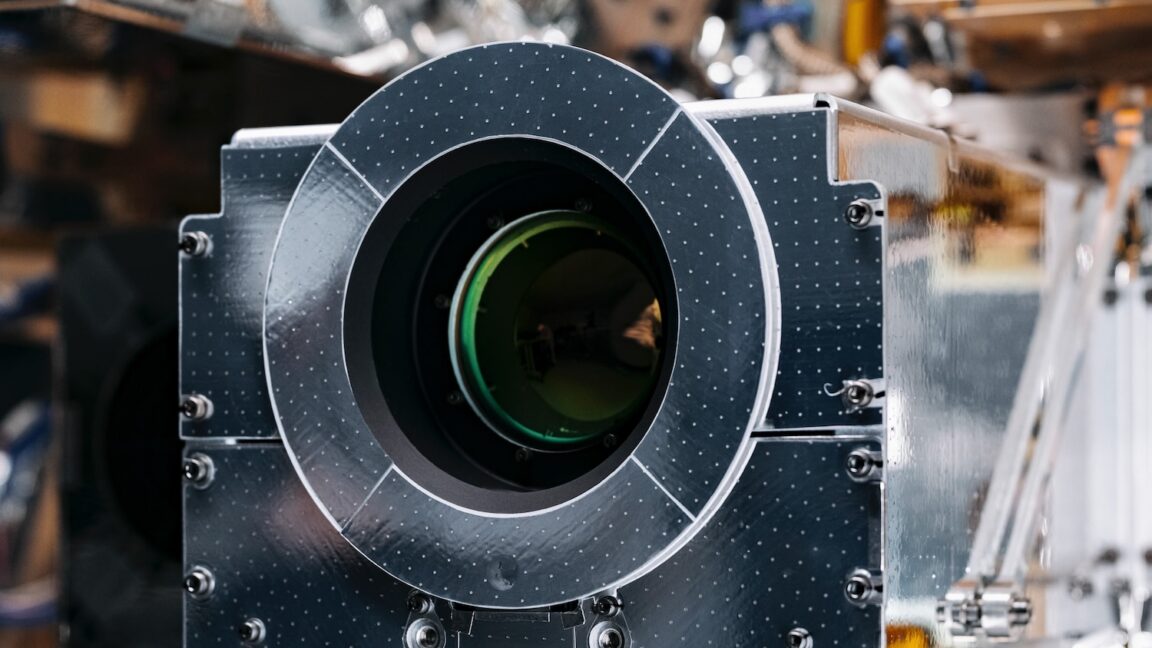
At a press event in San Francisco on Friday, Anduril Industries demonstrated its new night‑vision sensor, highlighting its ability to track satellites even when the sky is pitch black. The device, built on a proprietary optical array, was showcased against a backdrop of simulated orbital debris, illustrating its high‑resolution imaging in low‑light conditions.
The demonstration took place at Anduril’s headquarters, where engineers explained that the sensor’s large dynamic range—an attribute rarely seen in space‑tracking equipment—enables it to distinguish faint objects from background noise. The prototype was tested against a set of known satellite orbits, confirming its precision and reliability.
Anduril’s spokesperson emphasized that the technology could enhance real‑time monitoring of space assets, noting that the company is already in talks with defense agencies about potential deployment in next‑generation space‑based surveillance platforms.
In-Depth Analysis & Key Details
Historically, satellite tracking has relied on optical telescopes and radar systems that struggle in low‑light or weather‑affected conditions. Anduril’s approach leverages a high‑dynamic‑range sensor that adapts to varying illumination, a concept borrowed from advanced night‑vision devices used in ground‑based defense.
The release arrives amid growing regulatory focus on space traffic management, with the U.S. Federal Aviation Administration and the International Telecommunication Union pushing for more robust monitoring tools. Industry analysts observe that such sensors could reduce collision risk by providing earlier detection of debris and untracked objects.
Technical experts note that the sensor’s architecture incorporates a cooled detector array and adaptive optics, allowing it to maintain signal integrity across a wide spectrum of light levels. This innovation may set a new benchmark for future orbital surveillance systems, prompting competitors to accelerate their own research into high‑dynamic‑range imaging.
"The sensor’s unprecedented dynamic range could redefine orbital surveillance, turning darkness into an ally rather than an obstacle."
Why This Matters & What Lies Ahead
For everyday readers, the ability to monitor satellites more accurately translates into safer space operations, reducing the risk of collisions that could disrupt communications, navigation, and weather forecasting services. On the economic front, improved surveillance could lower insurance premiums for satellite operators and spur investment in space‑based infrastructure.
Key milestones to watch include the U.S. Department of Defense’s upcoming review of autonomous space monitoring proposals slated for early next year, and a scheduled hearing before the House Armed Services Committee on space security policy in March. These events will determine how quickly Anduril’s technology can move from prototype to operational deployment.
Source: Reported by Ars Technica · Analyzed & Synthesized by DNB Newsroom