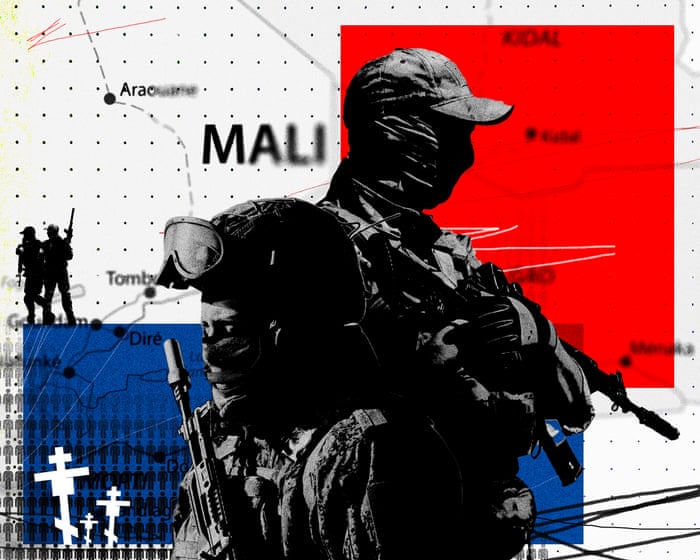
A comprehensive review of leaked internal communications and casualty logs has exposed the true scale of Russian military losses in Mali, with records indicating that 349 personnel were killed in action over a three-year period. This revelation, sourced from detailed operational files, marks a significant departure from the limited transparency previously offered by the Kremlin regarding its involvement in the Sahel region. The data not only quantifies the human cost of Russia’s intervention but also serves as a critical indicator of the intensity of the conflict, suggesting that Moscow has been engaged in far more direct and sustained combat operations than previously understood by Western intelligence agencies or local observers.
The geographical and operational context of these losses is particularly stark in the northern desert region of Kidal. Records detailing the events of April 25 highlight a specific incident where Russian forces were ambushed during a pre-dawn attack. The logs describe how checkpoints situated on the outskirts of the remote desert town were overwhelmed within the first hour, leading to a cascade of casualties that caught the Russian command structure off guard. This specific engagement serves as a microcosm of the broader challenges faced by Russian troops operating in an environment characterized by sparse infrastructure, harsh terrain, and resilient local armed groups who have adapted their tactics to counter foreign intervention.
In response to the emergence of this data, official channels have remained largely silent, adhering to a pattern of non-commentation that is typical for the Russian Ministry of Defense in similar contexts. However, the specificity of the leaked records, which include dates, locations, and casualty counts, lends a degree of authenticity that makes dismissal difficult. Malian junta officials, who have relied heavily on Russian support to consolidate power against separatist and jihadist factions, have not publicly addressed the scale of these losses. Instead, the focus in Bamako remains on the continued presence of Russian military assets and the strategic partnership that underpins the current political order in the country.
In-Depth Analysis & Key Details
The historical trajectory of Russia’s involvement in Mali reveals a strategic shift from diplomatic engagement to direct military intervention, a move accelerated by the withdrawal of French forces and the rise of the military junta in Bamako. Initially, Russia’s presence was framed as a security partnership focused on counter-terrorism, but the leaked data suggests a deeper entanglement in the region’s complex civil conflicts. The high casualty rate indicates that Russian forces are not merely providing advisory support or conducting limited airstrikes, but are actively engaging in ground combat alongside Malian troops. This level of commitment reflects Moscow’s broader geopolitical objective to establish a durable foothold in the Sahel, challenging the influence of Western powers and creating a new axis of security cooperation in Africa.
From a regulatory and geopolitical perspective, these findings complicate the narrative of a 'low-cost' Russian military strategy. The financial and human resources required to sustain such high-intensity operations in a remote and hostile environment are substantial. Industry analysts observe that the reliance on Wagner Group affiliates and other private military contractors, while allowing for plausible deniability, does not insulate the Russian state from the consequences of these engagements. The data also highlights the limitations of Russian military doctrine in asymmetric warfare, where conventional forces often struggle against decentralized, guerrilla-style opponents. This tension between strategic ambition and operational reality is likely to shape future Russian deployments in the region, potentially leading to a more cautious or technologically driven approach.
Expert domain context from security researchers indicates that the leaked records provide a rare window into the internal mechanics of Russian military operations in Africa. The specificity of the data, including the timing of attacks and the location of casualties, allows for a more accurate assessment of the effectiveness of Russian support for the Malian junta. This information is crucial for understanding the dynamics of the conflict and the potential for escalation. Furthermore, the data sheds light on the broader pattern of Russian military activity in other African nations, suggesting a coordinated effort to expand influence across the continent. This trend is likely to draw increased scrutiny from international observers and may prompt new diplomatic initiatives to address the growing Russian presence in the region.
"The leaked casualty figures dismantle the myth of a low-cost Russian intervention, revealing a costly, high-intensity commitment that is reshaping the security landscape of the Sahel."
Why This Matters & What Lies Ahead
For citizens and policymakers, the revelation of 349 Russian deaths in Mali underscores the severe risks associated with the region’s ongoing conflict and the potential for further escalation. The data highlights the human cost of geopolitical maneuvering, where the ambitions of external powers often result in prolonged violence and instability for local populations. For financial markets, the increased visibility of Russian military losses may impact perceptions of Russia’s long-term strategic capabilities and its ability to sustain multiple fronts, including in Ukraine. This could influence investment decisions in defense sectors and energy markets, particularly as Russia seeks to leverage its African partnerships to offset economic pressures from Western sanctions.
Upcoming milestones to watch include potential UN Security Council discussions on the security situation in the Sahel, where the leaked data may be cited as evidence of the need for a more coordinated international response. Additionally, regulatory bodies and human rights organizations are likely to demand greater transparency from both the Russian government and the Malian junta regarding the conduct of hostilities and the protection of civilian populations. The next few months will be critical in determining whether this data leads to a shift in diplomatic strategies or if it is largely ignored in favor of maintaining the status quo. Monitoring the reactions of other African nations to these revelations will also be essential, as it may influence their own decisions regarding security partnerships with Russia or Western powers.
Source: Reported by The Guardian · Analyzed & Synthesized by DNB Newsroom


