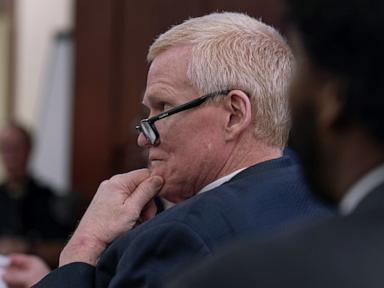
In a significant procedural development, a judge in South Carolina has denied Alex Murdaugh's request to dismiss the murder charges against him. The ruling effectively blocks the defense's final attempt to end the prosecution before it reaches the courtroom again. By rejecting the motion, the court has affirmed that the case will proceed to a retrial, a move that legal observers describe as a critical hurdle cleared by the state's attorneys.
The context for this decision is rooted in the recent actions of the South Carolina Supreme Court, which overturned Murdaugh's 2023 convictions. That higher court decision did not acquit Murdaugh but rather invalidated the previous verdict, necessitating a new trial. The current ruling ensures that the lower court is ready to move forward with that mandate, organizing the logistical and legal framework for the upcoming proceedings.
Official statements from the prosecution emphasize their commitment to seeking justice and upholding the rule of law. The defense, meanwhile, has signaled that they will continue to challenge the evidence and procedural integrity of the case during the retrial. This dynamic sets the stage for a prolonged legal battle that will likely involve extensive pre-trial motions and public scrutiny.
In-Depth Analysis & Key Details
The case of Alex Murdaugh has evolved into a complex test of legal procedure and public perception within the South Carolina judicial system. The initial 2023 convictions were a landmark moment, but the subsequent overturning by the Supreme Court introduced a layer of uncertainty. The current denial of the dismissal motion highlights the tension between the defense's efforts to exploit procedural gaps and the prosecution's drive to present a coherent narrative of guilt. This is not merely a criminal case but a case that has scrutinized the boundaries of legal advocacy and judicial oversight.
From a regulatory and institutional perspective, the retrial places immense pressure on the court to ensure a fair process given the extensive media coverage. The competing perspectives are stark: the prosecution argues that the evidence of murder is substantial and that the previous procedural errors do not negate the core facts. The defense, on the other hand, contends that the state has not provided a fair trial environment. This debate extends to broader questions about how high-profile cases are managed in the modern era of instant public commentary.
Industry analysts in the legal field observe that such cases often serve as de facto policy tests for judicial bodies. The handling of the retrial will likely be examined for its adherence to due process and its ability to withstand appeals. The technical intricacies of evidence presentation and witness testimony will be under a microscope, with both sides aware that any misstep could lead to further appeals or dismissals. This level of scrutiny is rare and demands a high degree of precision from all parties involved.
"The denial of the dismissal motion is not just a procedural step; it is a declaration that the judicial system will not be deterred by complexity or public pressure from seeking a definitive resolution to these serious charges."
Why This Matters & What Lies Ahead
For the public, this development underscores the ongoing nature of a case that has transcended local crime reporting to become a national narrative. The outcome of the retrial will have implications for how similar high-profile cases are handled in the future, potentially influencing legal strategies and public trust in the judiciary. The extended timeline also means that the community and the legal system will remain engaged in this matter for an extended period, with potential impacts on local resources and public discourse.
Upcoming milestones include the scheduling of pre-trial hearings, the selection of a new jury, and the formal presentation of evidence. These steps are critical in determining the trajectory of the case. Legal experts advise that the next few months will be pivotal in shaping the arguments and the public's understanding of the facts. The court's management of these proceedings will be closely watched by both legal professionals and the general public, who have invested significant emotional and intellectual capital in the outcome.
Source: Reported by ABC News · Analyzed & Synthesized by DNB Newsroom