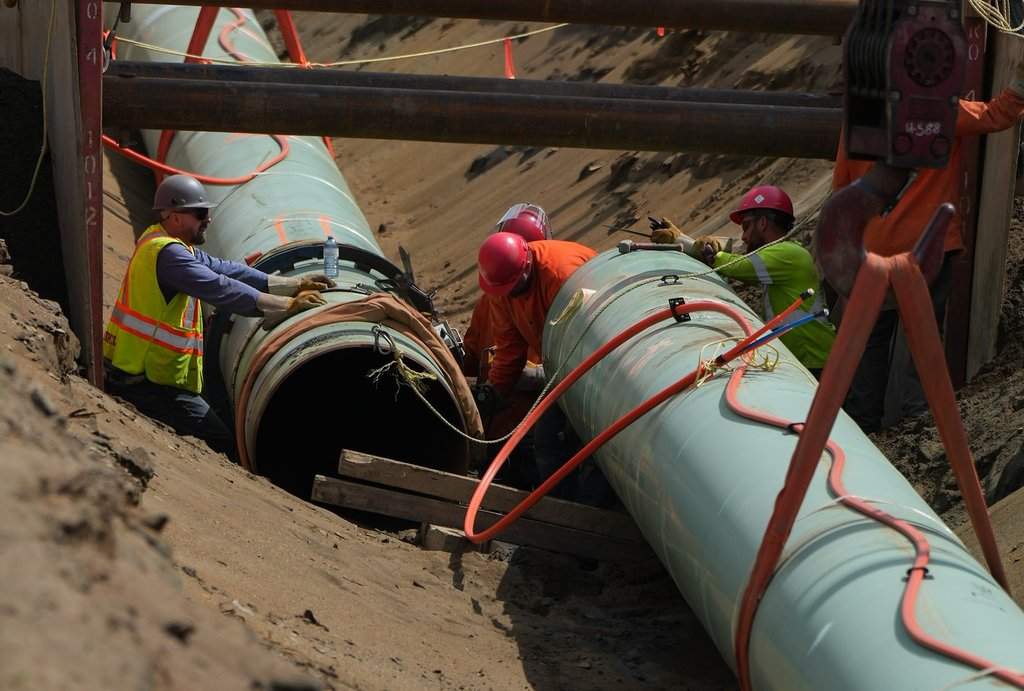
In a decisive legal maneuver, a coalition of First Nations in British Columbia has launched formal court challenges against the federal government’s recent approval of the Pacific Link pipeline. The Indigenous groups argue that the federal cabinet’s decision to designate the project as being in the national interest under the Building Canada Act fails to meet the constitutional duty to consult and accommodate. This legal action represents a direct confrontation with the federal government's attempt to circumvent provincial regulatory frameworks and accelerate the development of heavy crude oil infrastructure in the province.
The dispute centers on a 240-kilometer pipeline extension intended to connect the existing Trans Mountain system to the port of Kitimat in northern B.C. The project was announced with significant fanfare as a cornerstone of Canada’s energy diversification strategy, aiming to provide a dedicated export route for oil sands crude. However, the First Nations involved assert that the environmental impact assessments and consultation processes were insufficient, particularly regarding potential risks to salmon stocks and traditional territories. The geographical scope of the project, traversing sensitive coastal ecosystems, has heightened the stakes for both environmental advocates and Indigenous rights holders.
Federal officials have maintained that the national interest designation was necessary to ensure the project’s viability and to protect Canadian economic interests in a volatile global energy market. They argue that the Building Canada Act provides a clear legal pathway for projects of national significance, shielding them from provincial obstruction. In response, the lead counsel for the First Nations stated that the federal government’s actions constitute a violation of the Crown’s fiduciary duties. They emphasized that the legal process is not an attempt to block energy development, but rather to ensure that the rights of Indigenous peoples are respected and that environmental safeguards are rigorously enforced before construction begins.
In-Depth Analysis & Key Details
The legal battle over the Pacific Link pipeline is rooted in a long-standing tension between federal energy policy and provincial jurisdiction, compounded by the evolving legal landscape regarding Indigenous rights. Historically, the federal government has relied on the Navigable Waters Protection Act and other statutes to manage large-scale infrastructure, but the recent use of the Building Canada Act marks a shift toward more aggressive federal intervention. This legislative tool was designed to expedite critical infrastructure projects, but its application to a controversial oil pipeline has drawn sharp criticism from legal scholars who argue it undermines the principle of cooperative federalism. The historical context includes decades of litigation over the Trans Mountain pipeline, which eventually reached the Supreme Court of Canada, setting precedents that may now be scrutinized in the Pacific Link case.
From a regulatory perspective, the dispute highlights the fragility of the consultation process in Canada. While the federal government claims to have conducted extensive consultations, the First Nations argue that the process was perfunctory and failed to address core concerns about environmental degradation and cultural impacts. The economic implications are significant, as the project is expected to create thousands of jobs and generate substantial tax revenues. However, the legal uncertainty poses a risk to investor confidence, potentially driving up financing costs and deterring private sector participation. The competing perspectives reflect a broader national debate over the trade-offs between economic growth and environmental stewardship, with each side citing different interpretations of the law and different priorities for the country’s future.
Expert analysis suggests that the outcome of these legal challenges will have far-reaching consequences for future infrastructure projects in Canada. If the courts rule in favor of the First Nations, it could set a precedent that requires more rigorous consultation and environmental review for projects designated as being in the national interest. Conversely, a ruling in favor of the federal government would reinforce the power of the central state to override provincial and Indigenous objections in the name of national economic interests. The technical intricacies of the case, including the interpretation of the Building Canada Act and the scope of the duty to consult, will likely be the focus of intense legal scrutiny. The industry is watching closely, as the decision could influence the viability of other proposed pipelines and energy projects across the country.
"The invocation of the national interest designation does not silence the constitutional duty to consult; it merely raises the bar for how that duty is fulfilled, and the courts will now determine if the federal government has met that heightened standard."
Why This Matters & What Lies Ahead
For everyday Canadians and global stakeholders, the outcome of this legal battle will shape the future of Canada’s energy sector and its relationship with Indigenous peoples. A delay or cancellation of the Pacific Link pipeline could reduce Canada’s ability to export oil to Asian markets, potentially affecting global oil prices and supply chain dynamics. Moreover, the case will influence public perception of the federal government’s commitment to environmental protection and Indigenous rights. Consumers may see indirect effects in the form of higher energy costs or changes in the availability of certain fuel types, depending on the project’s progress. The broader implication is a test of Canada’s legal and political institutions’ ability to balance competing interests in a complex and contentious policy area.
Key milestones to watch include the initial court hearings, which are expected to take place in the coming months, and any potential interventions by the provincial government of B.C. or other stakeholders. The Federal Court of Appeal may also be involved if the case is appealed. Regulatory votes and policy reviews related to the Building Canada Act could be triggered by the court’s decision, prompting legislative changes or clarifications. Investors and industry leaders are monitoring these developments closely, as the legal outcome will determine the timeline and feasibility of the project. The coming months will be critical in determining whether the Pacific Link pipeline proceeds as planned or faces significant setbacks that could alter the landscape of Canadian energy infrastructure.
Source: Reported by Global News BC · Analyzed & Synthesized by DNB Newsroom