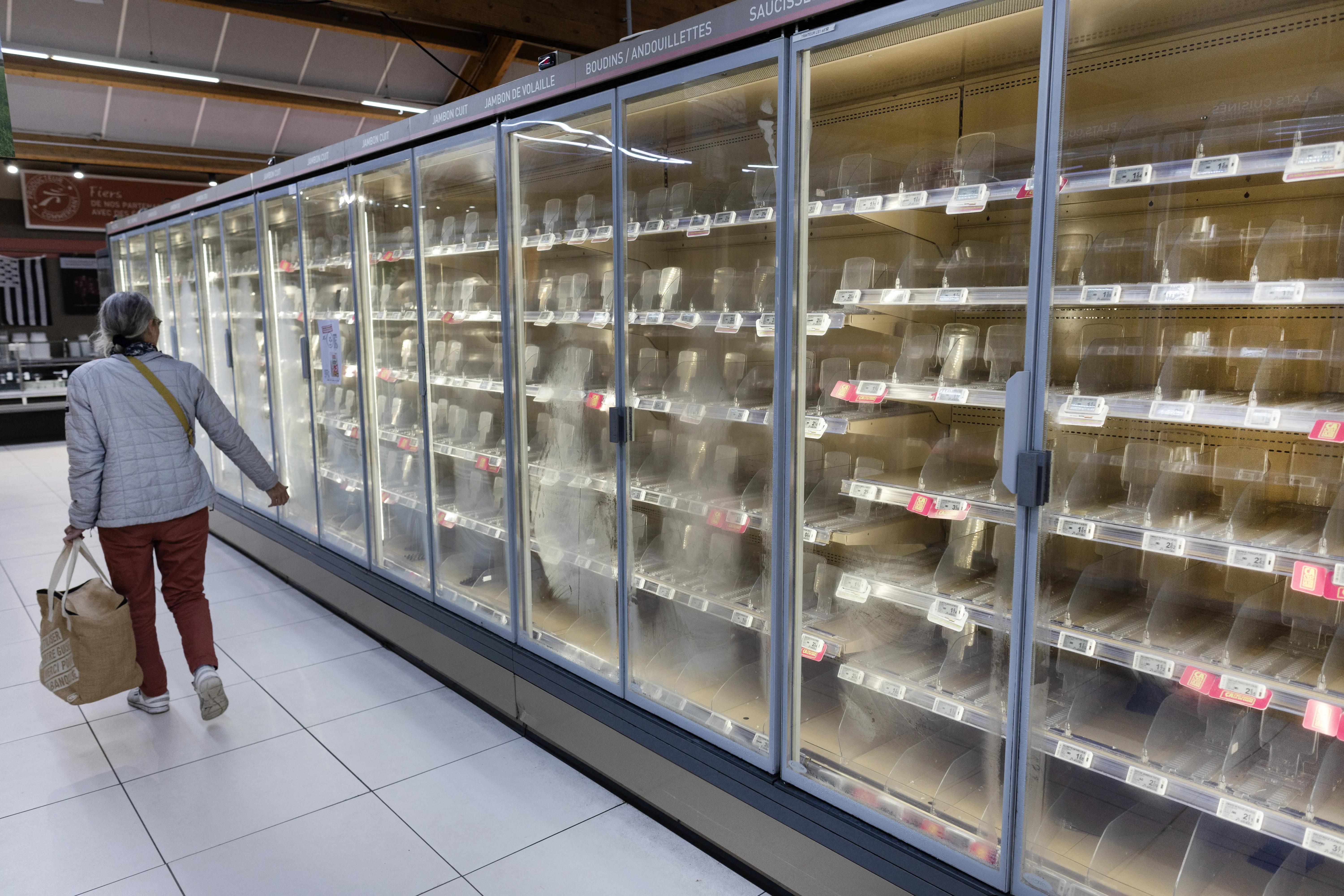
An international wave of cyber intrusions targeting the control systems of industrial refrigerators was detected in early September, affecting food‑processing plants, pharmaceutical storage facilities and large‑scale grocery distributors. The attacks, traced to a loosely affiliated hacker collective known as "Frostbite," leveraged default credentials and outdated firmware to gain remote access, allowing perpetrators to manipulate temperature settings and deploy ransomware that locked operators out of their own equipment.
The compromised devices spanned three continents, with the highest concentration in the United States' Midwest grain‑processing corridor, Germany's cold‑chain logistics hubs, and Japan's seafood export facilities. Preliminary estimates suggest that the disruption led to the loss of roughly 12,000 metric tons of perishable inventory, translating into multimillion‑dollar damages and a temporary spike in retail prices for fresh produce.
CISA Director Jen Easterly warned that the attacks represent “a stark illustration of how operational technology, once isolated, is now a frontline target for hostile actors.” European Commission cybersecurity chief Mauro Martino echoed the sentiment, calling for “urgent harmonisation of security standards across borders.” Industry groups, including the International Association of Refrigerated Warehouses, have pledged accelerated firmware updates and mandatory employee training on credential hygiene.
In-Depth Analysis & Key Details
The vulnerability of industrial refrigeration stems from a legacy of rapid digitisation that outpaced security planning. In the early 2000s, manufacturers began embedding Ethernet modules to enable remote monitoring, but many devices retained factory‑set passwords and lacked the capability for over‑the‑air patches. This technical debt created a fertile ground for attackers, especially as supply‑chain interdependencies grew during the pandemic‑induced surge in e‑commerce food delivery.
Regulators have long debated the scope of oversight for Internet of Things (IoT) devices, but the Frostbite campaign has shifted the conversation from abstract policy to concrete risk. In the United States, the proposed Cyber Physical Systems Act seeks to mandate baseline security controls for critical infrastructure, while the EU's forthcoming NIS2 amendment aims to extend mandatory reporting obligations to all connected appliances handling essential commodities. Critics argue that overly prescriptive rules could stifle innovation, yet proponents contend that the cost of inaction—measured in spoiled goods, lost jobs and eroded consumer trust—far outweighs compliance expenses.
Cybersecurity experts underscore that the attacks exploit not just technical flaws but also human factors. Dr. Lena Ortiz, a professor of industrial control systems at MIT, notes that “the convergence of legacy hardware, insufficient network segmentation, and a lack of cybersecurity culture among operational staff creates a perfect storm.” She advises a layered defence strategy that combines device authentication, network isolation, and continuous monitoring to detect anomalous temperature patterns before they cascade into full‑scale failures.
"The Frostbite assaults have turned a mundane kitchen appliance into a battlefield, proving that even the coldest corners of our supply chain are vulnerable to digital warfare."
Why This Matters & What Lies Ahead
For consumers, the immediate fallout could manifest as higher grocery bills and reduced availability of fresh produce, especially in regions reliant on long‑haul cold logistics. Businesses face not only direct financial loss from spoiled inventory but also reputational damage that can erode brand loyalty and trigger contractual penalties with downstream partners. Moreover, the attacks expose a systemic blind spot in national security strategies that traditionally prioritize power grids and financial systems over food‑safety infrastructure.
Legislators and regulators are now racing to embed robust cybersecurity mandates into existing food‑safety frameworks. Upcoming hearings before the U.S. Senate Commerce Committee and the European Parliament’s Committee on Industry, Research and Energy will scrutinise the efficacy of current standards and explore funding for a unified certification scheme for smart refrigeration. Stakeholders are advised to monitor the rollout of CISA’s emergency directive, the EU’s NIS2 amendment timetable, and any forthcoming bilateral agreements on cyber‑incident information sharing, all of which will shape the resilience of global cold‑chain operations for years to come.
Source: Reported by NPR · Analyzed & Synthesized by DNB Newsroom