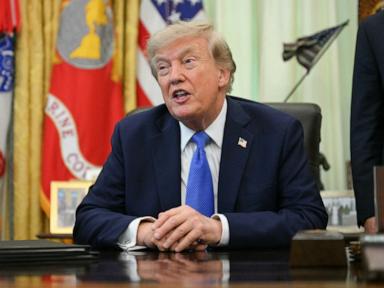
In a decisive legal move, a federal judge has blocked President Donald Trump’s latest executive order aimed at curtailing birthright citizenship. The court granted a request for a preliminary injunction, a temporary legal order that prevents the government from enforcing the policy until the case is fully litigated. This judicial action directly counters the administration's attempt to use executive authority to amend the Fourteenth Amendment’s guarantee that all persons born or naturalized in the United States are citizens of the United States.
The ruling operates within the broader federal judiciary, where courts have increasingly acted as a check on executive actions that many legal scholars argue overstep constitutional boundaries. The injunction means that for the duration of the legal proceedings, the federal government cannot deny citizenship status based on the immigration status of the parents at the time of birth. This maintains the operational status quo for immigration services and civil registration offices across the country.
Legal representatives for the plaintiffs, who likely include affected families and civil rights organizations, expressed relief at the court’s swift action. They argue that the executive order poses an immediate and irreparable harm to the fundamental rights of newborns. Conversely, administration officials have signaled their intent to appeal the decision, framing the order as a necessary measure to enforce immigration laws and deter illegal entry, though they face the hurdle of proving that the executive branch possesses the authority to override explicit constitutional text.
In-Depth Analysis & Key Details
The historical context of this dispute is rooted in the post-Civil War era, when the Fourteenth Amendment was ratified to ensure that former slaves and their descendants were recognized as citizens. The concept of birthright citizenship, or jus soli, has been a cornerstone of American identity for over a century. The current executive action represents a radical departure from this long-standing legal precedent, attempting to introduce a parentage-based restriction that has no basis in the amendment’s text. Legal analysts observe that such a unilateral change would require a constitutional amendment, a process that is deliberately difficult and slow, rather than an executive order.
The debate surrounding this issue highlights a deepening tension between executive power and constitutional limits. Proponents of the executive order argue for a stricter interpretation of immigration laws, suggesting that allowing birthright citizenship to children of undocumented immigrants undermines the rule of law. However, opponents, including constitutional law experts, argue that the amendment’s language is clear and that the executive branch lacks the authority to reinterpret it. The economic implications are also significant, as birthright citizenship affects labor market dynamics, social security contributions, and the long-term demographic profile of the nation.
From a regulatory perspective, the outcome of this case will likely set a precedent for how executive orders can interact with constitutional rights. If the injunction is upheld on appeal, it will reinforce the judiciary’s role in protecting individual rights from executive overreach. If the order is ultimately enforced, it would create a complex legal landscape where citizenship status is contingent on the immigration status of parents, potentially leading to a class of permanent non-citizens born on U.S. soil. Industry and legal observers note that the complexity of this issue makes it a high-stakes test for the separation of powers.
"The judiciary’s intervention serves as a critical bulwark, reminding the executive branch that constitutional rights cannot be dismantled by administrative fiat."
Why This Matters & What Lies Ahead
For everyday citizens, this ruling preserves the certainty of citizenship for millions of families who rely on the automatic grant of citizenship at birth. It prevents the creation of a stateless or non-citizen class among children born in the United States, which would have profound social and legal consequences. For policymakers, the case underscores the limits of executive power and the importance of legislative action for significant changes to citizenship laws. Businesses and social service providers also benefit from the stability provided by the injunction, as they can continue to operate under the existing legal framework without the uncertainty of a sudden policy shift.
In the coming months, the legal battle is expected to intensify, with appeals likely to reach higher courts. Key milestones to watch include the filing of appellate briefs, potential hearings in the circuit court, and any further executive actions that may be taken in response to the injunction. The outcome of this case will have far-reaching implications for immigration policy and the interpretation of the Fourteenth Amendment, making it a critical issue for legal scholars, policymakers, and the American public alike.
Source: Reported by ABC News · Analyzed & Synthesized by DNB Newsroom