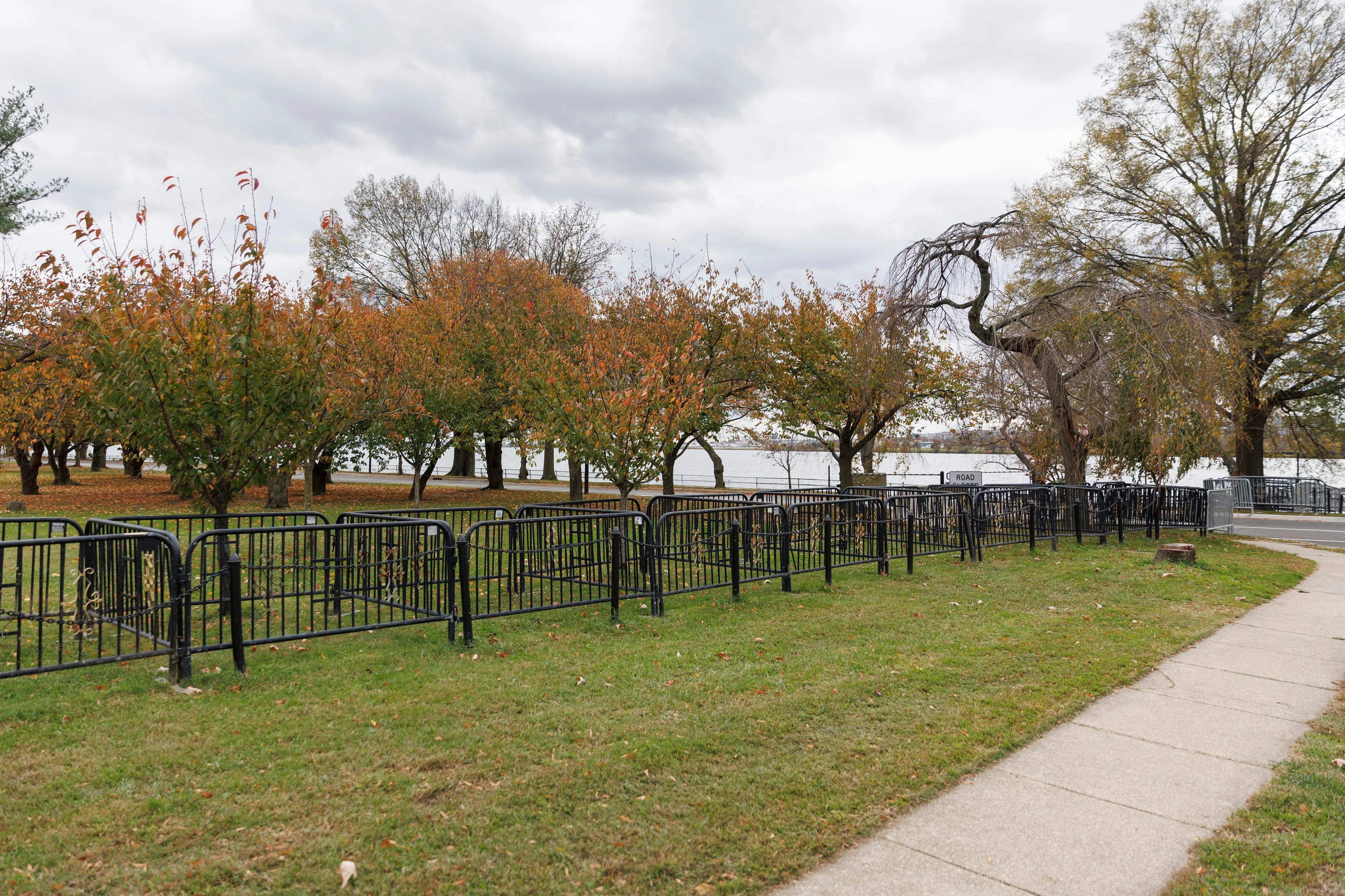
In a decisive move that underscores the ongoing tension between executive ambitions and judicial oversight, a federal judge issued a temporary restraining order on Saturday, halting all redevelopment activities at a prominent public golf course in Washington, D.C. The court mandated a two-week pause on any work related to the project, which the Trump administration had sought to accelerate. This judicial action effectively freezes the site, preventing contractors and government officials from advancing the physical transformation of the grounds, which are situated in a highly visible and politically sensitive location near the White House.
The geographical and operational context of the decision is critical, as the golf course is not merely a recreational space but a historic public asset that has been part of the nation's capital landscape for decades. The proximity to the White House amplifies the symbolic weight of the project, turning every construction decision into a matter of national scrutiny. By ordering the delay, the judge has injected a period of legal certainty into a chaotic process, forcing all parties to pause and address the underlying legal deficiencies that prompted the emergency filing.
While the administration has signaled its intent to modernize and repurpose the space, the judicial intervention has prompted immediate reactions from legal advocates and civic groups who have long monitored the treatment of public lands. The order does not permanently ban the redevelopment but imposes a strict timeline for compliance, requiring the administration to demonstrate adherence to federal regulations before any further steps can be taken. This pause has shifted the narrative from one of rapid execution to one of legal due process, setting the stage for a contested battle over the future of this iconic public space.
In-Depth Analysis & Key Details
The historical background of this dispute reveals a long-standing pattern of conflict between presidential administrations and the judiciary regarding the management of federal properties. Public lands, particularly those with historical significance, are often subject to intense political maneuvering, with each administration seeking to leave its mark on the physical landscape of the capital. The current situation reflects a broader structural force in American governance, where the separation of powers is tested when executive branches attempt to bypass traditional bureaucratic and legal channels to achieve policy goals. The court's decision reinforces the principle that even high-profile projects must navigate the complex web of environmental and historical preservation laws.
Competing perspectives in this debate center on the balance between modernization and preservation. Proponents of the redevelopment argue that the golf course is underutilized and that its transformation could enhance public access and modern amenities, aligning with broader infrastructure goals. Critics, however, contend that the rush to alter the site disregards its historical value and the rights of the public to access these spaces without political interference. The economic consequences of the delay are relatively minor in the grand scheme of national infrastructure but carry significant symbolic weight, as they highlight the costs of legal challenges and the potential for prolonged litigation to slow down government projects.
Expert domain context from legal scholars and public policy analysts indicates that such injunctions are common in cases involving federal land use, where the stakes are high and the legal requirements are stringent. The technical intricacies of the case likely involve detailed reviews of environmental impact assessments and historical preservation statutes, which require thorough documentation and public comment periods. The industry tensions are evident in the relationship between government contractors, who rely on timely project approvals, and legal entities, who must ensure compliance with a vast array of federal regulations. This case serves as a microcosm of the broader challenges facing public administration in a polarized political environment.
"The court's intervention is not merely a procedural delay but a fundamental assertion that executive power does not supersede the rule of law, especially when it comes to the stewardship of public heritage."
Why This Matters & What Lies Ahead
For everyday readers and citizens, this development underscores the importance of legal safeguards in protecting public assets from political expediency. The golf course, as a public space, represents a shared resource that belongs to the American people, and its redevelopment must be conducted in a manner that respects its historical significance and ensures broad public benefit. The financial implications for the administration include potential legal costs and delays that could impact other infrastructure projects, while the broader policy implications suggest a renewed focus on the legal boundaries of executive action. Citizens should be aware that such legal challenges can have long-lasting effects on the availability and character of public spaces, influencing how communities interact with their urban environments.
Upcoming milestones to monitor include the expiration of the two-week injunction, after which the court may issue a more permanent ruling or require further hearings. Stakeholders should watch for any administrative responses, such as appeals or revised project plans that address the legal concerns raised by the judge. Additionally, legislative implications may arise if Congress decides to intervene in the management of federal lands, potentially passing new laws to clarify the powers of the executive branch in such matters. The coming weeks will be critical in determining whether the redevelopment proceeds with full legal compliance or if the project faces further judicial hurdles, setting a precedent for future disputes over public land use.
Source: Reported by NPR Politics · Analyzed & Synthesized by DNB Newsroom