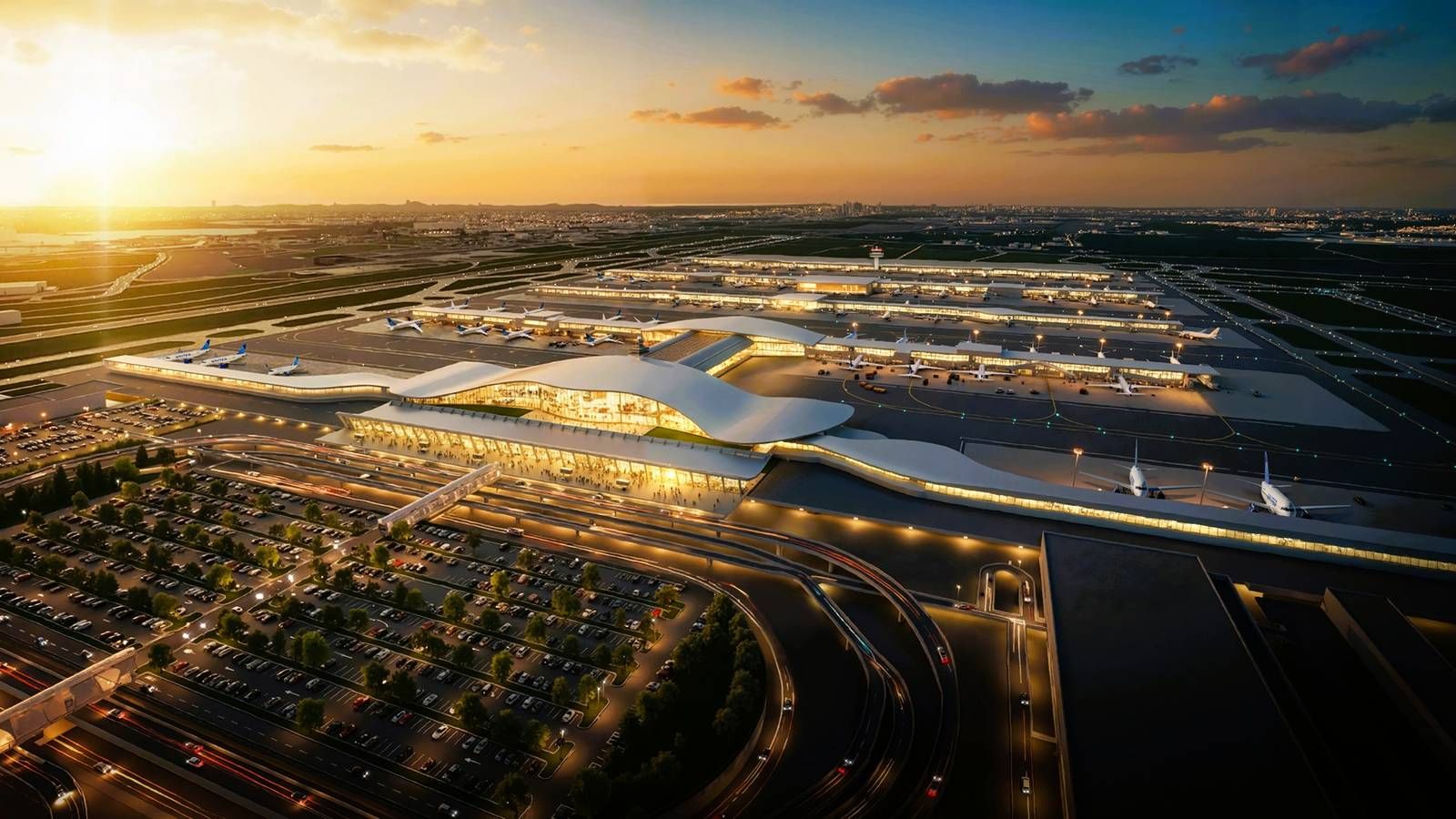
Washington Dulles International Airport has crossed a critical threshold in its long-term development strategy by authorizing a comprehensive modernization package valued at more than $20 billion. This significant escalation in capital expenditure marks a departure from previous, more modest upgrade plans, reflecting an urgent institutional recognition that the airport's existing infrastructure can no longer sustain the volume and complexity of modern aviation operations. The decision places immediate pressure on construction firms, local governments, and airline partners to align with an accelerated timeline for one of the most critical transport hubs in the United States.
The core of this transformation focuses on the complete replacement of Concourses C and D, which serve as the primary operational backbone for United Airlines within the Washington metropolitan area. These concourses handle a disproportionate share of the airport's international and long-haul domestic traffic, making their structural integrity and capacity vital to the national aviation network. By opting for total replacement rather than phased renovation, the airport authority acknowledges that the existing terminal structures have reached the end of their viable service life, necessitating a ground-up rebuild to meet contemporary safety, efficiency, and passenger experience standards.
Official statements from the airport’s leadership emphasize that this investment is not merely cosmetic but a fundamental re-engineering of the travel experience. Stakeholders, including United Airlines, have responded with cautious optimism, noting that while construction will introduce short-term operational disruptions, the long-term gains in throughput and reliability are essential for maintaining the hub's competitive edge against rival airports in the region. The announcement coincides with a broader push to modernize aging American infrastructure, positioning Dulles as a flagship project for federal and state investment in critical public works.
In-Depth Analysis & Key Details
The decision to triple the modernization budget reflects deep-seated structural issues that have plagued Dulles for decades. Historically, the airport has struggled with a layout that prioritizes car-centric access over efficient passenger flow, a design choice from the 1960s that has become increasingly incompatible with modern high-volume air travel. The aging infrastructure, particularly in the concourse sections, has led to persistent maintenance challenges, security bottlenecks, and a reputation for operational inefficiency that has eroded passenger confidence. This upgrade is a direct response to these accumulated technical debts, aiming to replace obsolete systems with state-of-the-art digital and physical infrastructure.
From a regulatory and economic perspective, this project intersects with broader debates over public-private partnerships and the allocation of federal funds for infrastructure. The $20 billion price tag raises questions about funding mechanisms, potential tax implications for local residents, and the environmental impact of such a large-scale construction effort. Competing perspectives highlight the tension between immediate economic disruption caused by construction and the long-term necessity of preventing systemic failure. Industry analysts argue that without such a decisive investment, Dulles risks losing significant market share to competing hubs, which would have cascading effects on regional economic growth and airfare competitiveness.
Expert domain context suggests that the technical intricacies of replacing active concourses without halting operations will be the defining challenge of this project. Engineers and project managers will need to implement innovative phasing strategies to ensure that United Airlines can maintain its flight schedules while major structural components are dismantled and rebuilt. This requires precise coordination between airport security, airline operations, and construction teams, a logistical feat that has rarely been attempted at this scale in the United States. The success of this endeavor will serve as a benchmark for future airport modernization projects across the country.
"This is not a renovation; it is a structural rebirth. We are dismantling the constraints of the past to build the operational resilience required for the next century of air travel."
Why This Matters & What Lies Ahead
For everyday travelers and businesses operating in the Washington D.C. metropolitan area, this transformation carries immediate and profound implications. The short-term reality will involve significant construction noise, altered terminal access, and potential flight delays as the airport navigates the complex logistics of rebuilding active concourses. However, the long-term outcome promises a more efficient, secure, and comfortable travel experience, with reduced congestion and improved connectivity. For the broader economy, a robust and modernized Dulles Airport is essential for maintaining the region's status as a global business and diplomatic center, ensuring that the flow of people and goods remains uninterrupted and competitive.
Upcoming milestones to monitor include the finalization of construction contracts, the commencement of demolition activities for Concourse C, and the first operational phases of the new infrastructure. Regulatory bodies will also be watching closely for compliance with environmental and labor standards, as this project sets a precedent for future public infrastructure investments. Stakeholders should keep an eye on quarterly progress reports from the airport authority and any legislative adjustments required to support the funding and execution of this massive undertaking. The next twelve months will be critical in determining whether this ambitious vision translates into tangible improvements or devolves into a protracted logistical nightmare.
Source: Reported by Simple Flying · Analyzed & Synthesized by DNB Newsroom