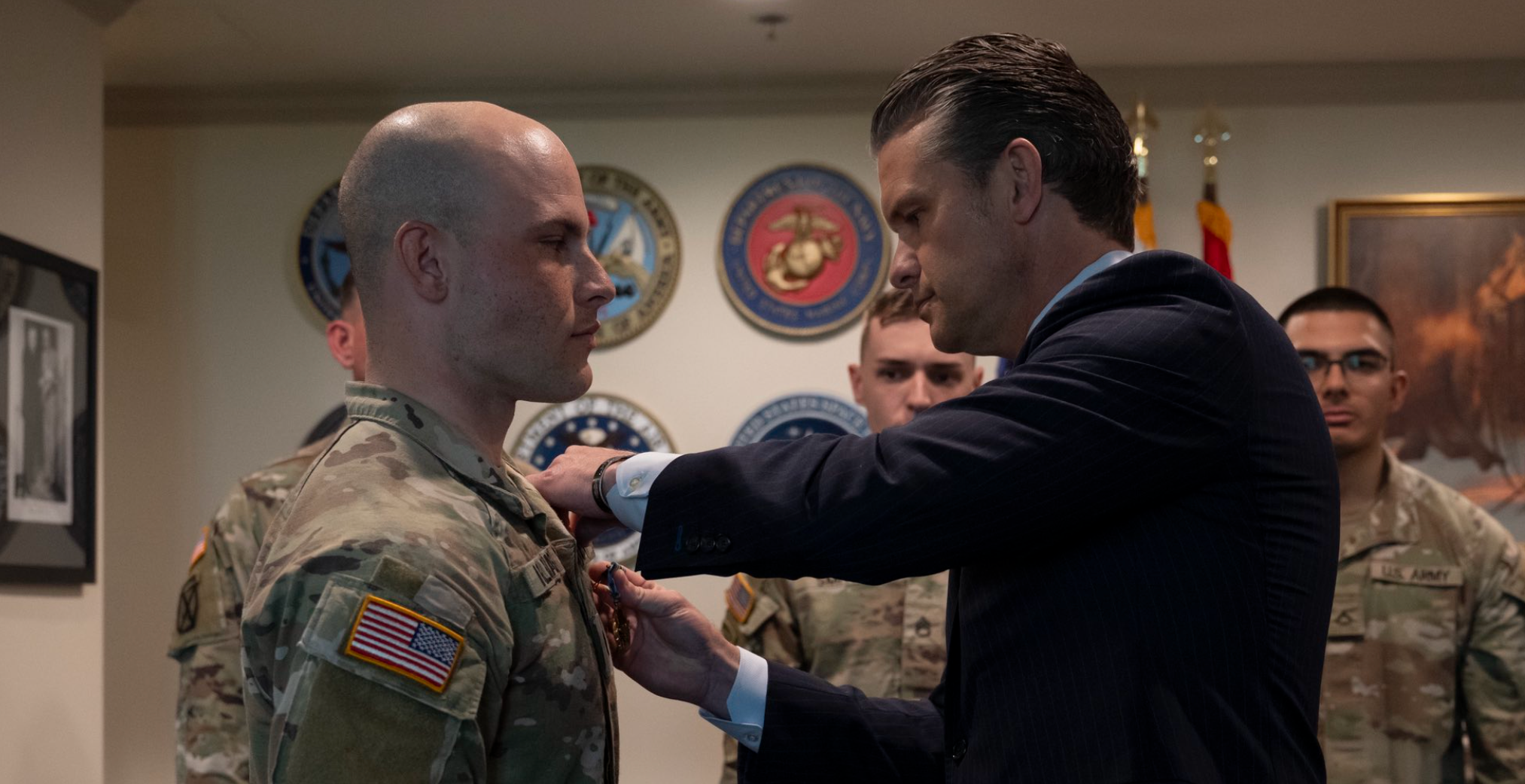
In a move designed to reinforce core military values, Defense Secretary Pete Hegseth presented a medal to the soldier responsible for correcting a breach of protocol at one of the nation’s most sacred sites. The recipient of the honor is the service member who intervened when a group was observed making noise in the immediate vicinity of the Tomb of the Unknown Soldier. By bestowing this specific award, the Secretary of Defense elevated a routine enforcement of silence rules into a nationally recognized act of duty, signaling that the preservation of the tomb’s solemn atmosphere is a priority for the highest levels of the Pentagon.
The incident occurred at the Arlington National Cemetery, where the Tomb of the Unknown Soldier serves as a perpetual symbol of the sacrifices made by American service members. The area surrounding the tomb is governed by strict protocols regarding noise and conduct, ensuring that the site remains a place of reflection rather than casual recreation. The soldier’s decision to reprimand the group, rather than ignoring the infraction or escalating the situation unnecessarily, was deemed by leadership to be the appropriate and necessary response to protect the integrity of the memorial. This specific location, with its 24-hour guard rotation and high public visibility, makes any deviation from silence a significant operational and symbolic failure.
Official communications surrounding the award emphasize the soldier’s quick thinking and commitment to the mission, which extends beyond combat to the ceremonial protection of national heritage. While the specific details of the group’s behavior were not extensively detailed in initial reports, the focus remains squarely on the service member’s action. The Department of Defense framed the medal not merely as a reward for stopping noise, but as a commendation for upholding the dignity of the fallen. This top-down recognition is intended to ripple through the ranks, encouraging all service members to take ownership of the environments they protect, whether on the battlefield or at a memorial site.
In-Depth Analysis & Key Details
The decision to award a medal for this specific action must be viewed within the broader context of the Department of Defense’s ongoing efforts to address internal culture and discipline. Recent years have seen increased scrutiny of military conduct, both in terms of operational performance and public-facing behavior. By highlighting an incident at the Tomb of the Unknown Soldier, the Department is leveraging a universally respected symbol to reinforce the idea that discipline is a continuous, everyday responsibility. This approach contrasts with more traditional commendations that focus on combat heroism, suggesting a shift in how the institution values procedural integrity and respect for national symbols.
From a regulatory and institutional perspective, this action underscores the tension between the military’s role as a public service and its internal hierarchy. The Tomb of the Unknown Soldier is not just a historical site but an active element of military protocol, with guards trained to maintain a specific demeanor and environment. The incident highlights the challenges of managing public interaction with these sensitive sites, where the line between a tourist and a disruptor can be blurred. Industry analysts in military affairs observe that such high-profile awards serve as a form of soft power, shaping the public narrative around the military’s values and leadership. By making this a national news story, the Department aims to preemptively address any criticisms regarding lax discipline or lack of respect for tradition.
Furthermore, the technical intricacies of memorial protection involve a complex interplay of security protocols, public relations, and historical preservation. The guards at the Tomb are trained to be invisible yet omnipresent, maintaining a state of alertness that allows them to detect and respond to any disruption. The soldier’s action required not only an understanding of the rules but also the judgment to apply them in a public setting without causing a scene. This nuanced approach to enforcement is a critical skill in modern military operations, where the distinction between a tactical success and a public relations failure is often thin. The award serves to validate this nuanced judgment, encouraging similar proactive measures in other sensitive contexts.
"The preservation of silence at the Tomb is not merely a rule; it is a moral imperative that defines the character of the institution."
Why This Matters & What Lies Ahead
For the American public, this incident and its subsequent recognition serve as a reminder of the deep respect owed to those who have served and sacrificed. The award reinforces the idea that the military is not just a fighting force but a custodian of national memory and values. For citizens, it provides a tangible example of how individual actions by service members uphold the broader ideals of the nation. In terms of financial and policy implications, while the direct economic impact is minimal, the symbolic value is significant. It may influence public trust in the Department of Defense, potentially affecting support for military funding and recruitment efforts. A strong public image of discipline and respect can be a powerful tool in maintaining societal support for the armed forces.
Looking ahead, stakeholders should monitor how this type of recognition is applied in future incidents. Will the Department of Defense continue to use high-profile awards to signal its priorities, or will this be a one-time gesture? Additionally, the response of the public and media to this award will provide insight into the current climate of opinion regarding military leadership and tradition. Upcoming hearings or reports on military culture and discipline may reference this incident as a case study in effective enforcement and recognition. For policymakers, it serves as a reminder that the management of public-facing military assets requires careful attention to detail and a clear communication strategy to ensure that actions align with the institution’s stated values.
Source: Reported by CBS News · Analyzed & Synthesized by DNB Newsroom