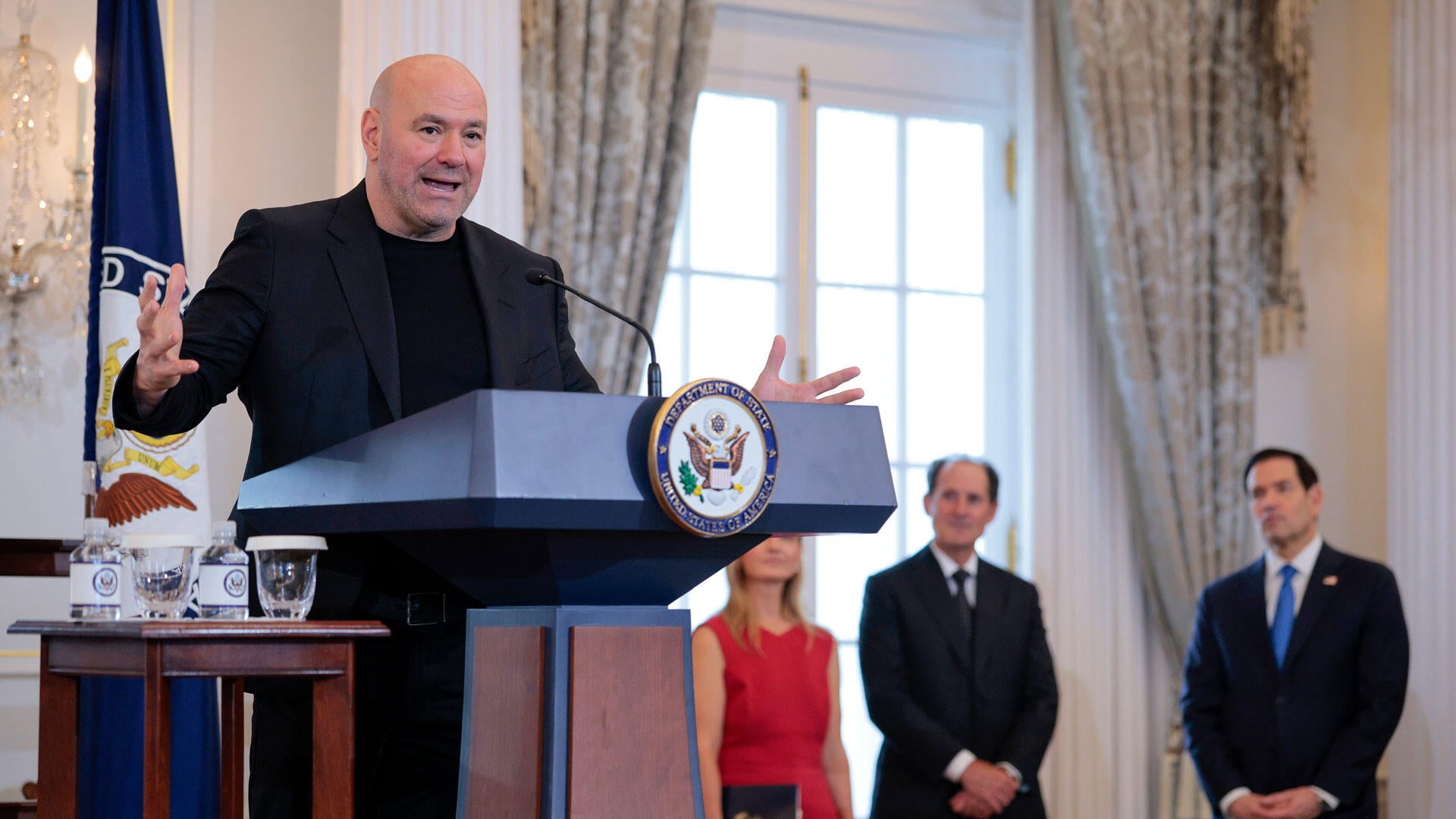
The political and sports worlds are converging in an unusual manner as UFC President Dana White prepares for a scheduled meeting with President Donald Trump at the White House on Monday. The agenda, while not officially detailed in advance, has been dominated by speculation following the President's Saturday social media post, in which he floated the idea of White assuming the role of White House Press Secretary. This suggestion has sent ripples through both the media landscape and the combat sports industry, prompting immediate scrutiny from journalists, political analysts, and fans alike.
The geographical and institutional context of this meeting is significant, as it takes place within the heart of the federal executive branch, a space typically reserved for diplomatic engagements, legislative negotiations, and official state business. The presence of a private sports mogul in such a setting, coupled with the specific mention of a high-profile government job, suggests a level of influence or relationship that exceeds standard business lobbying. White, known for his direct and often controversial public persona, has historically maintained a distinct separation between his corporate empire and political affairs, making this potential pivot a notable departure from his established professional trajectory.
Initial reactions from stakeholders have been mixed, with some viewing the potential appointment as a bold move to modernize government communications, while others raise concerns about the lack of traditional journalistic credentials required for such a role. The White House has not yet issued a formal statement confirming the specific purpose of the meeting, leaving room for interpretation and media speculation. Meanwhile, the UFC has remained quiet, focusing on upcoming events and operational matters, though the attention surrounding its CEO is inevitably impacting the brand's public image and media coverage.
In-Depth Analysis & Key Details
Historically, the White House Press Secretary role has been filled by individuals with extensive experience in journalism, public relations, or political communication, emphasizing the importance of media literacy and institutional knowledge. The suggestion that a sports executive, regardless of his public profile, could fill this position challenges these long-standing norms. This shift reflects a broader trend in contemporary politics where personal brand and social media reach are often prioritized over traditional professional qualifications. The structural forces at play include the increasing influence of digital platforms in shaping public opinion and the administration's apparent strategy of leveraging celebrity figures to command media attention and control the narrative.
From a regulatory and economic perspective, this development highlights the complex relationship between the government and major entertainment corporations. The UFC operates in a highly regulated environment, with oversight from athletic commissions and potential federal implications regarding gambling and broadcasting rights. A close working relationship between the UFC's leadership and the President could have unintended consequences for regulatory independence and the perception of fairness in the industry. Competing perspectives on this issue range from those who see it as a pragmatic approach to engaging with modern media to those who view it as a compromise of institutional integrity and professional standards.
Expert analysis suggests that while the immediate impact may be symbolic, the long-term implications could be significant. If White were to accept such a role, it would set a precedent for the involvement of private sector leaders in government communications, potentially altering the dynamics of press conferences and public information dissemination. Furthermore, it raises questions about conflicts of interest, particularly given the UFC's commercial interests and the potential for government policies to favor or disadvantage the industry. The technical intricacies of managing a global sports organization while serving in a high-stakes political role would also pose significant logistical and ethical challenges.
"The potential appointment of a sports executive as White House Press Secretary marks a pivotal moment where the boundaries of public service and private enterprise are being fundamentally redefined, challenging traditional norms of journalistic integrity and institutional stability."
Why This Matters & What Lies Ahead
For everyday readers and consumers, this development signals a shift in the nature of public information and political communication. The involvement of a high-profile sports figure in government communications could influence public trust in official sources and the perceived credibility of government messaging. Additionally, it may impact the sports industry by creating a perception of political favoritism or influence, which could affect fan engagement, sponsorship deals, and regulatory oversight. The financial markets may also react to the potential changes in the UFC's operational environment and its relationship with the federal government.
Upcoming milestones to monitor include the outcome of the Monday meeting and any subsequent official announcements from the White House or the UFC. Key regulatory votes or hearings related to sports broadcasting, gambling, and entertainment industry standards may also be influenced by this new dynamic. Journalists and analysts should closely track any changes in the White House's communication strategy and the UFC's public statements to gauge the practical implications of this potential appointment. The coming weeks will be critical in determining whether this remains a speculative social media post or evolves into a concrete shift in government personnel and policy.
Source: Reported by CBS Sports · Analyzed & Synthesized by DNB Newsroom