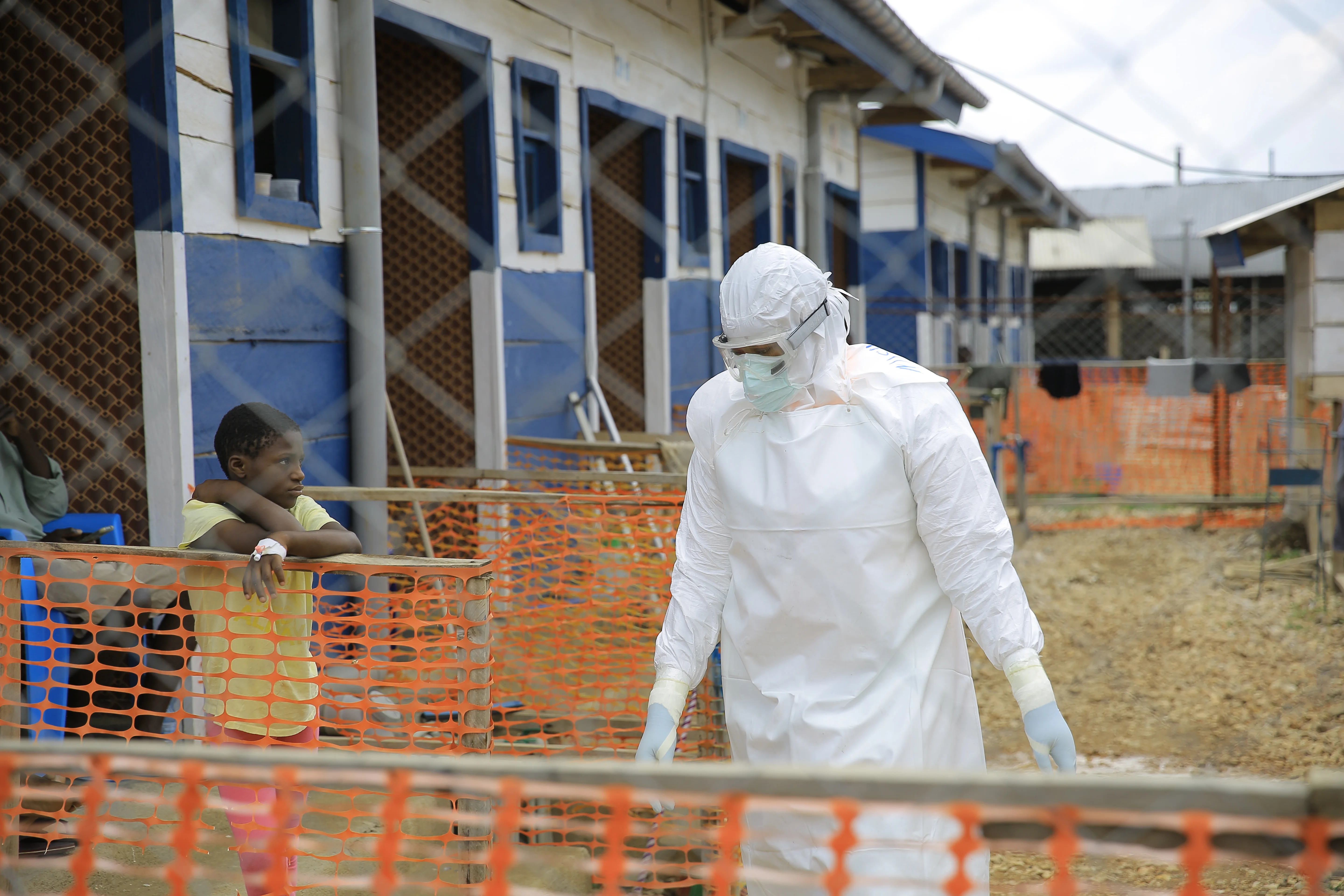
The Democratic Republic of Congo has reached a grim milestone in its fight against the Ebola virus, with government health officials confirming that the total number of confirmed and probable cases has now exceeded 11,000. This announcement, released on Wednesday, serves as a sobering indicator of the epidemic's severity and the persistent challenges faced by local health systems. The figure stands as a testament to the relentless spread of the disease, which has continued to claim lives and disrupt communities across the affected zones despite ongoing intervention efforts.
The geographical scope of the outbreak remains concentrated in areas where healthcare access is historically limited and infrastructure is fragile. As the case count climbs, the operational burden on frontline medical workers intensifies, with many facilities operating at or beyond capacity. The density of cases in specific districts highlights the difficulty of implementing effective isolation and contact tracing protocols in densely populated and remote communities simultaneously.
In response to the escalating numbers, national health authorities have reiterated the urgent need for sustained public health measures, including community engagement and rapid response teams. International health partners have acknowledged the gravity of the situation, emphasizing the necessity for coordinated logistical support to ensure that testing, treatment, and vaccination efforts can scale effectively to match the growing demand for medical services.
In-Depth Analysis & Key Details
This outbreak is part of a broader pattern of Ebola epidemics that have plagued the Democratic Republic of Congo over the past two decades, each revealing structural vulnerabilities in the nation's public health architecture. Historically, these outbreaks have been exacerbated by conflict, displacement, and limited road networks, which hinder the rapid deployment of medical supplies and personnel. The current crisis echoes previous episodes, where the virus exploited gaps in surveillance and community trust, leading to prolonged transmission chains that are difficult to sever.
Regulatory and geopolitical dynamics play a crucial role in the response capacity. The effectiveness of international aid depends on the stability of the affected regions and the ability of local authorities to enforce health directives. Industry analysts observe that the economic cost of such outbreaks is disproportionately high, as they disrupt agricultural production and local trade, further deepening poverty in already vulnerable areas. The tension between rapid response needs and the logistical realities of operating in conflict-adjacent zones remains a central challenge for all stakeholders involved.
From a technical standpoint, the management of an outbreak of this magnitude requires a multi-faceted approach that combines biomedical interventions with social mobilization. Public health experts note that the success of containment efforts hinges on the community's willingness to participate in safe burial practices and isolation measures. The integration of data from local health centers with international monitoring systems is essential for tracking the virus's evolution and adjusting strategies in real-time to prevent further spread.
"The 11,000-case threshold is not merely a statistic; it is a critical warning that the infrastructure of care is being tested to its limits, demanding a unified and resolute response from both local and global actors."
Why This Matters & What Lies Ahead
For everyday citizens in the affected regions, this outbreak represents an immediate threat to life and livelihood, forcing families to navigate a landscape of fear and uncertainty. The disruption to daily life, including the closure of schools and markets, has broader economic repercussions that ripple through local supply chains. On a global scale, the situation underscores the fragility of public health systems in developing nations and the continued risk of emerging infectious diseases that can cross borders with relative ease, necessitating robust international preparedness mechanisms.
In the coming weeks, key milestones will include the assessment of new containment zones and the deployment of additional medical teams. International organizations are expected to convene to review resource allocation and coordinate logistical support. Monitoring the trend in new case reports and the mortality rate will be crucial for determining the effectiveness of current interventions. Stakeholders should closely watch for updates from the Ministry of Health regarding the expansion of vaccination campaigns and the status of laboratory testing capacities across the affected provinces.
Source: Reported by NPR · Analyzed & Synthesized by DNB Newsroom