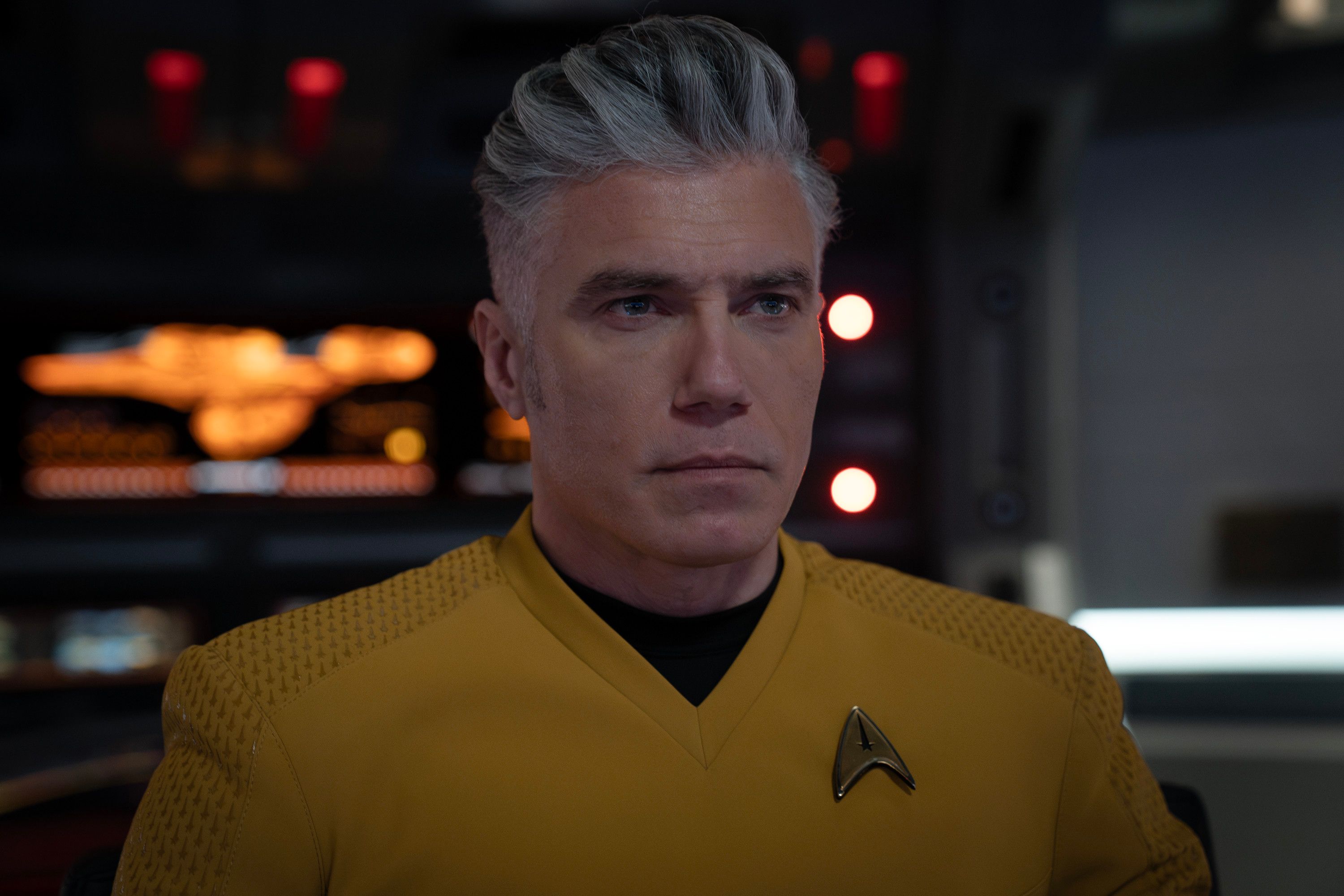
In a rare instance of a single piece of dialogue achieving long-term cultural permanence, the words spoken by Anson Mount as Captain Christopher Pike in the hit series 'Star Trek: Strange New Worlds' have been identified as the defining sci-fi line of the last decade. Four years after the episode aired, the monologue continues to circulate widely, not merely as a clip, but as a philosophical statement on human agency. The line, delivered during a moment of crisis, posits that while the past is fixed, the future remains an open canvas, a concept that has struck a profound chord with viewers navigating their own uncertainties.
The context of the speech is crucial to its impact. Pike, a character defined by the weight of history and the expectation of failure, uses the moment to rally his crew not through fear or duty, but through shared hope. This departure from the traditional, stoic command style of previous Trek captains, such as Picard or Kirk, marks a significant evolution in how leadership is portrayed in the franchise. The speech emphasizes collective responsibility, suggesting that destiny is not something that happens to us, but something we actively construct through our choices.
Since its release, the quote has been adopted by various communities beyond the core fanbase, appearing in motivational contexts, academic discussions on determinism, and even political commentary. Industry analysts note that this longevity is unusual for television dialogue, which typically fades from public consciousness within months. The fact that this specific line has endured suggests it tapped into a pre-existing cultural desire for narratives that affirm human potential and moral agency in the face of overwhelming odds.
In-Depth Analysis & Key Details
The enduring power of Pike's quote can be traced to the broader cultural shift away from nihilistic or dystopian sci-fi tropes that dominated the early 2010s. While shows like 'The Expanse' or 'Battlestar Galactica' explored grim, morally ambiguous futures, 'Strange New Worlds' returned to the optimistic core of the original series. However, it did so with a modern sensibility that acknowledges trauma and doubt. The quote serves as a bridge between the idealism of Golden Age Trek and the psychological realism of contemporary television, offering a hopeful outlook without ignoring the complexity of human nature.
From a production standpoint, this moment highlights the importance of casting and performance in elevating scripted material. Anson Mount's delivery, which balances vulnerability with authority, brings a physical and emotional weight to the words that generic delivery would not have achieved. This underscores a key lesson for the industry: in an era of high-concept storytelling, the human element remains the primary vehicle for audience connection. The quote's success is not just about what is said, but how it is embodied by a character who feels real and flawed.
Furthermore, the quote has sparked debate among purists and modernists within the Star Trek fandom. Some argue that this emphasis on personal destiny deviates from the collective, institutional focus of the original series, while others see it as a necessary evolution for modern audiences who prioritize individual agency. This tension reflects broader societal discussions about the balance between systemic forces and individual choice, making the line a proxy for larger philosophical debates that extend far beyond the realm of science fiction.
Why This Matters & What Lies Ahead
For audiences, the persistence of this quote offers a psychological anchor in an era characterized by rapid technological change and global uncertainty. It reinforces the idea that individuals are not passive recipients of fate but active participants in shaping their future. This narrative has implications for public morale and how society perceives its capacity for progress and adaptation. In a time when many feel powerless against large-scale systemic issues, the message that the future is 'ours to shape' provides a sense of empowerment and hope that resonates on a personal level.
Looking ahead, the industry should monitor how this thematic shift influences future content development. Studios are likely to invest more in character-driven stories that emphasize moral agency and optimistic resolutions, as these elements drive long-term audience loyalty. For creators, this means prioritizing dialogue that offers philosophical depth and emotional resonance over purely plot-driven mechanics. The success of Pike's quote suggests that audiences are hungry for stories that not only entertain but also inspire and challenge them to think about their own role in the world.
Source: Reported by Polygon · Analyzed & Synthesized by DNB Newsroom