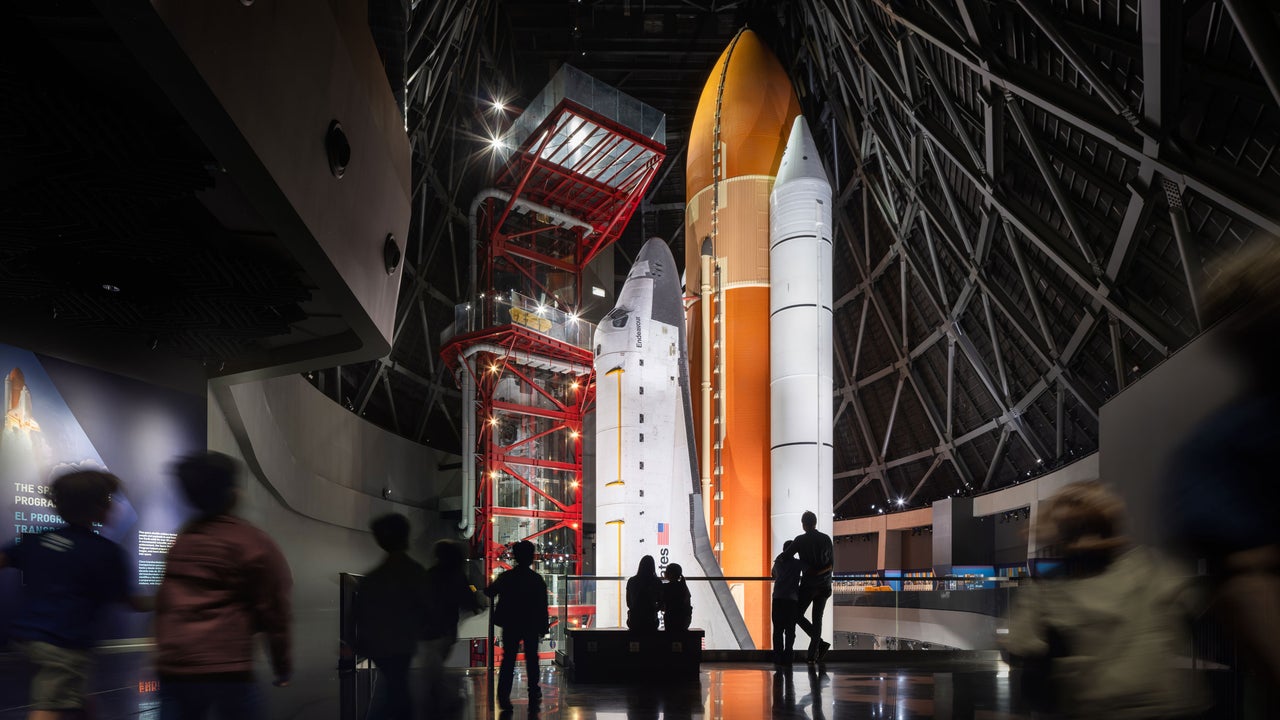
In a move that redefines the role of public museums in workforce development, the California Science Center has officially opened its latest flagship attraction, a comprehensive gateway to science, technology, engineering, and mathematics (STEM) careers. The centerpiece of this launch is a meticulously choreographed sequence that begins with a cinematic depiction of a space shuttle launch, culminating in the dramatic reveal of the actual 200-foot Space Shuttle Endeavour. This artifact, positioned nose-up and facing the sky, serves not merely as a historical relic but as a tangible symbol of American engineering prowess, designed to evoke a sense of awe that traditional exhibits have struggled to maintain in the digital age.
The operational context of this new installation is as significant as its visual impact. Located in the heart of Los Angeles, the exhibit is engineered to disrupt the conventional museum experience by enveloping visitors in a simulated launch environment. Real-life fog rolls across the theater floor while walls physically part to dissipate the haze, creating a seamless transition from screen-based narrative to physical reality. This architectural and technological integration ensures that the shuttle is not viewed from behind glass, but experienced as a monumental presence, altering the psychological distance between the viewer and the artifact.
Officials from the Science Center emphasized that the primary objective is to demystify complex scientific fields for young people. By framing the discovery of STEM careers through the lens of cinematic spectacle, the institution hopes to capture the attention of a generation accustomed to high-production-value media. Stakeholders, including educational partners and corporate sponsors, have responded positively to the initiative, viewing it as a critical intervention in a landscape where interest in technical careers has plateaued among younger cohorts in the United States.
In-Depth Analysis & Key Details
The launch of this exhibit is rooted in a long-standing historical tension within American science education: the disconnect between the romanticized narrative of exploration and the rigorous, often mundane reality of scientific work. Historically, museums have relied on static displays that, while informative, often fail to convey the scale and complexity of modern engineering. The California Science Center’s new approach reflects a structural shift in how institutions engage with public perception, moving away from passive consumption toward active, immersive participation. This mirrors broader trends in the entertainment industry, where interactivity has become a prerequisite for audience retention.
From a regulatory and economic perspective, this initiative highlights the growing importance of public-private partnerships in funding large-scale educational infrastructure. The cost of maintaining and showcasing artifacts of this magnitude is substantial, necessitating revenue streams that go beyond standard ticket sales. By branding the exhibit as a 'gateway to careers,' the Science Center positions itself as a partner in workforce development, appealing to tech and aerospace industries that are increasingly investing in early-stage talent pipelines. This creates a dual-purpose model where cultural enrichment directly supports economic competitiveness, a narrative that resonates strongly with state and federal policymakers focused on innovation hubs.
Experts in educational psychology suggest that the 'wow factor' of the Endeavour reveal is not merely aesthetic but pedagogical. The visceral reaction to seeing a full-scale shuttle in a confined space triggers a cognitive association between scale, effort, and achievement. This emotional resonance is critical for career inspiration, as it provides a tangible anchor for abstract concepts like orbital mechanics and propulsion systems. The technical intricacies of the exhibit, including the precise timing of the fog machines and wall mechanisms, underscore the hidden STEM labor involved in creating the experience itself, offering a meta-lesson in engineering design and project management.
"By transforming a static artifact into a dynamic narrative engine, the California Science Center is not just displaying history; it is actively engineering the next generation of innovators, proving that awe is the most effective catalyst for scientific curiosity."
Why This Matters & What Lies Ahead
For everyday readers and families, this development signifies a shift in how educational experiences are delivered, offering a more engaging alternative to traditional classroom learning. In a national context where the shortage of qualified STEM professionals threatens to bottleneck technological advancement, initiatives like this are crucial for broadening the talent pool. The direct impact is seen in increased visibility of technical careers, potentially influencing career choices among high school students and early career professionals who might otherwise overlook these fields due to a lack of accessible entry points. Furthermore, the success of this model could incentivize other cultural institutions to adopt similar immersive strategies, raising the overall standard of public science education.
Looking ahead, key milestones to monitor include the exhibit’s initial attendance metrics and its impact on local tourism and economic activity in the Los Angeles region. Policymakers and educational boards will be watching for data on whether increased museum attendance correlates with higher enrollment in STEM programs at local universities and technical colleges. Additionally, the long-term sustainability of the exhibit will depend on its ability to secure ongoing corporate sponsorship and grant funding, which will likely be influenced by its measurable success in achieving its stated career-orientation goals. Upcoming reviews by educational consultants and public feedback will be critical in determining if this immersive approach can be scaled or adapted for other scientific disciplines.
Source: Reported by Fast Company · Analyzed & Synthesized by DNB Newsroom