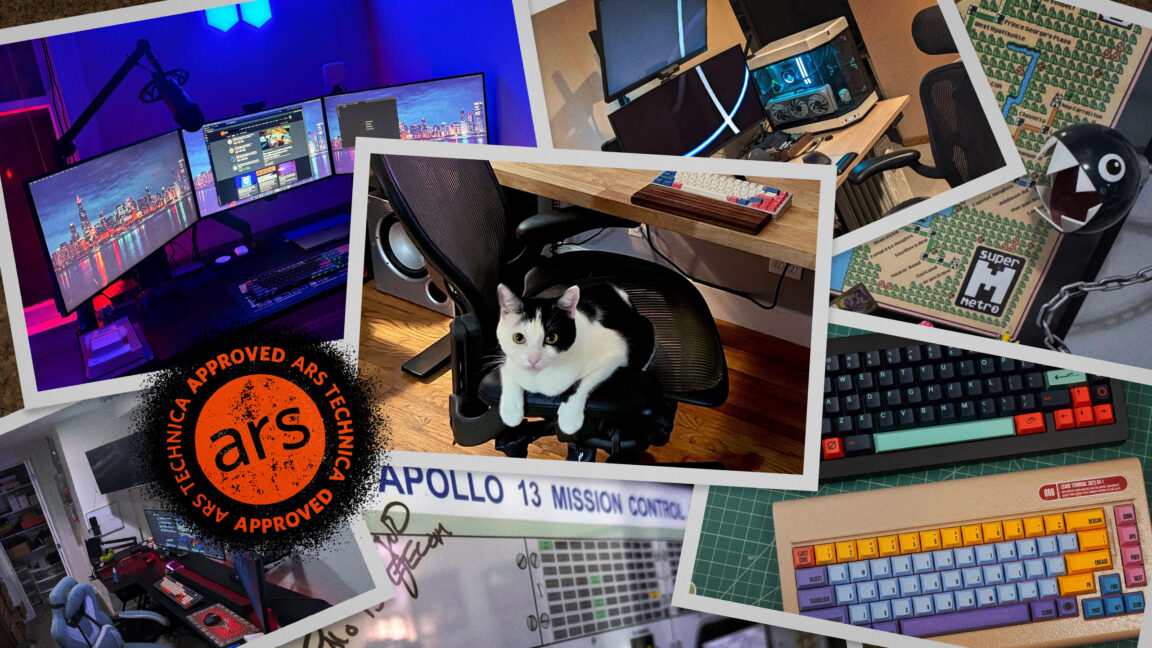
Ars Technica, a prominent technology news outlet, has released an internal feature showcasing the home offices of its diverse staff members. The publication, which covers hardware, software, and digital culture, used this initiative to highlight the varied approaches employees take to creating their remote work environments. The feature, titled 'From minimalist to maximalist,' presents a curated collection of photographs that depict the physical spaces where the company's journalists, engineers, and editors conduct their daily professional duties.
The geographical context of these offices spans various residential settings, from dedicated spare rooms to corners of living spaces, reflecting the decentralized nature of the modern tech workforce. Unlike the uniform cubicles of traditional newsrooms, these spaces are uniquely tailored to individual preferences and workflows. Some setups feature ergonomic chairs, dual-monitor configurations, and acoustic treatment, while others incorporate gaming peripherals, extensive bookshelves, and personal memorabilia, blurring the line between professional and personal life.
In accompanying text, the publication frames this diversity as a reflection of the current state of remote work. The editorial team notes that the range of setups, described as ranging from 'tasteful' to 'please explain yourself,' serves as a candid look at how workers adapt their living spaces to meet professional demands. The feature does not impose a hierarchy of quality on these environments but rather presents them as valid expressions of individual work styles, encouraging readers to reflect on their own remote work setups.
In-Depth Analysis & Key Details
The emergence of such detailed internal showcases marks a significant departure from the early days of the pandemic, when remote work was often viewed with suspicion and associated with a lack of professional discipline. Historically, the office environment was a controlled space where corporate culture was visibly enforced through dress codes and desk organization. The shift to remote work has dismantled this control, leading to a period of experimentation where employees have redefined what a 'professional' space looks like. This visual survey by Ars Technica captures the culmination of this experimentation, showing that productivity is not inherently linked to minimalism or order.
Industry analysts observe that this trend reflects a broader cultural shift in the tech sector, where employee well-being and autonomy are prioritized over rigid adherence to traditional office norms. The maximalist setups, in particular, suggest a rejection of the sterile corporate aesthetic in favor of environments that feel more personal and comfortable. This has implications for how companies design their remote work policies, as they may need to move away from any implicit expectations of a 'clean' background on video calls or a specific type of home office. The debate now centers less on appearance and more on outcomes, with companies focusing on deliverables rather than the visual context in which they are produced.
From a technical perspective, the variety of setups also highlights the diverse hardware and software ecosystems that remote workers navigate. The presence of high-end gaming gear, for example, in professional workspaces indicates the overlap between leisure and work in the digital age. This convergence has led to a more flexible approach to equipment, where the same devices used for work are also used for entertainment and personal projects. This fluidity challenges traditional IT department policies that sought to strictly separate corporate and personal technology, leading to a more integrated and less regulated technological landscape for remote workers.
"The modern home office is no longer a compromise between professional expectations and personal comfort; it is a deliberate, individualized ecosystem that reflects the worker's identity and workflow."
Why This Matters & What Lies Ahead
For everyday readers and employees, this feature serves as a validation of their own remote work experiences, reducing the pressure to conform to an idealized standard of productivity. It encourages a more honest conversation about the challenges and realities of working from home, including the difficulty of separating work life from personal space. For companies, it highlights the importance of flexibility and trust in remote work policies, suggesting that a one-size-fits-all approach to office environments is outdated and potentially counterproductive. The financial implications are minimal, but the cultural impact is significant, as it reinforces the idea that remote work is a permanent and evolving aspect of the modern workforce.
Looking ahead, industry observers will monitor how this trend influences future workplace design and corporate culture. As more companies adopt hybrid or fully remote models, the emphasis on individualized workspaces is likely to grow. Key milestones to watch include the development of new remote work guidelines by major tech firms, which may explicitly address the diversity of home office setups. Additionally, the evolution of video conferencing software to better accommodate varied backgrounds and lighting conditions will be a critical factor in shaping the future of remote professional interactions. This shift paves the way for a more inclusive and flexible work environment, where the focus remains on output rather than appearance.
Source: Reported by Ars Technica · Analyzed & Synthesized by DNB Newsroom