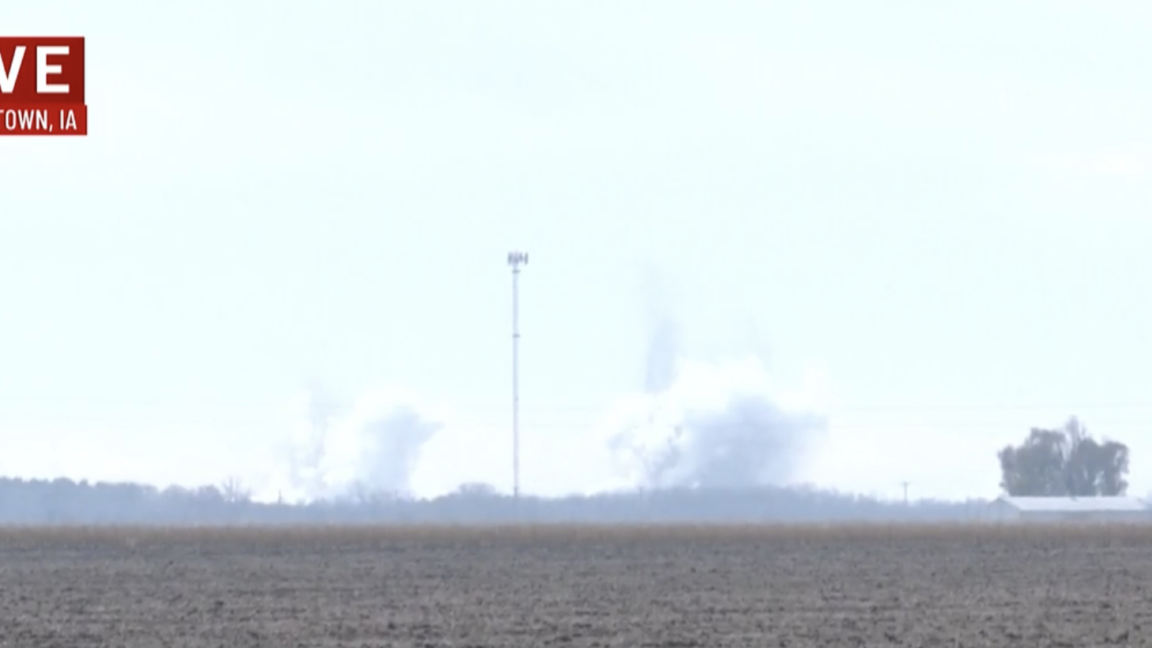
The Department of Defense confirmed that a scheduled detonation of lead azide, a high‑explosive compound, took place early this week at a training range in the western United States. Military engineers reported that the charge weighed several metric tons and was detonated under controlled conditions to assess blast effects for future ordnance development.
Atmospheric dispersion models generated by the Army’s own environmental office indicated that the resulting cloud of lead‑containing particles could travel over a terrain spanning hundreds of square miles, depending on wind patterns and temperature inversions. Residents of nearby towns, some located within a 30‑mile radius, were alerted via emergency broadcast systems and advised to seal homes, limit outdoor activity, and monitor local health advisories.
In a press briefing, the Army’s public affairs officer emphasized that safety protocols were followed and that the test was essential for advancing defensive capabilities. State health officials, however, expressed caution, noting that lead exposure can cause neurological damage, especially in children, and pledged to coordinate with federal agencies to provide real‑time air‑quality data.
In-Depth Analysis & Key Details
Lead azide has long been used in detonators because of its rapid decomposition, but its toxicity has sparked controversy whenever large‑scale tests are contemplated. Historically, the military has conducted similar exercises in isolated deserts, yet population growth has increasingly placed civilian communities within reach of such operations. Regulatory frameworks, such as the Clean Air Act, require comprehensive impact assessments, but exemptions for national security activities can limit public disclosure.
Industry analysts observe that the test reflects a broader push by the Pentagon to modernize legacy munitions while contending with stricter environmental standards. The tension between operational readiness and community health has prompted several states to lobby for tighter oversight, arguing that predictive models often underestimate plume spread under variable meteorological conditions.
Environmental advocacy groups note that lead particles can settle in soil and water, persisting for decades. While the Army cites mitigation measures—including post‑detonation soil remediation plans—the lack of independent third‑party monitoring fuels skepticism, prompting calls for transparent data sharing and independent verification of exposure levels.
"The challenge now is not just detonating a charge, but ensuring the resulting cloud does not become a lingering public‑health crisis."
Why This Matters & What Lies Ahead
For everyday citizens, the immediate concern is inhalation of lead‑laden dust, which can impair cognitive development in children and increase cardiovascular risk in adults. Local economies may also feel pressure as agricultural producers worry about contaminant uptake in crops, potentially triggering market disruptions and insurance claims.
Looking ahead, the Army is slated to submit a detailed environmental impact report to the EPA within the next 30 days, and a congressional subcommittee on defense procurement plans a hearing on the balance between ordnance testing and civilian safety later this year. Stakeholders will be watching for any regulatory adjustments that could reshape how future explosive trials are conducted near populated areas.
Source: Reported by Ars Technica · Analyzed & Synthesized by DNB Newsroom