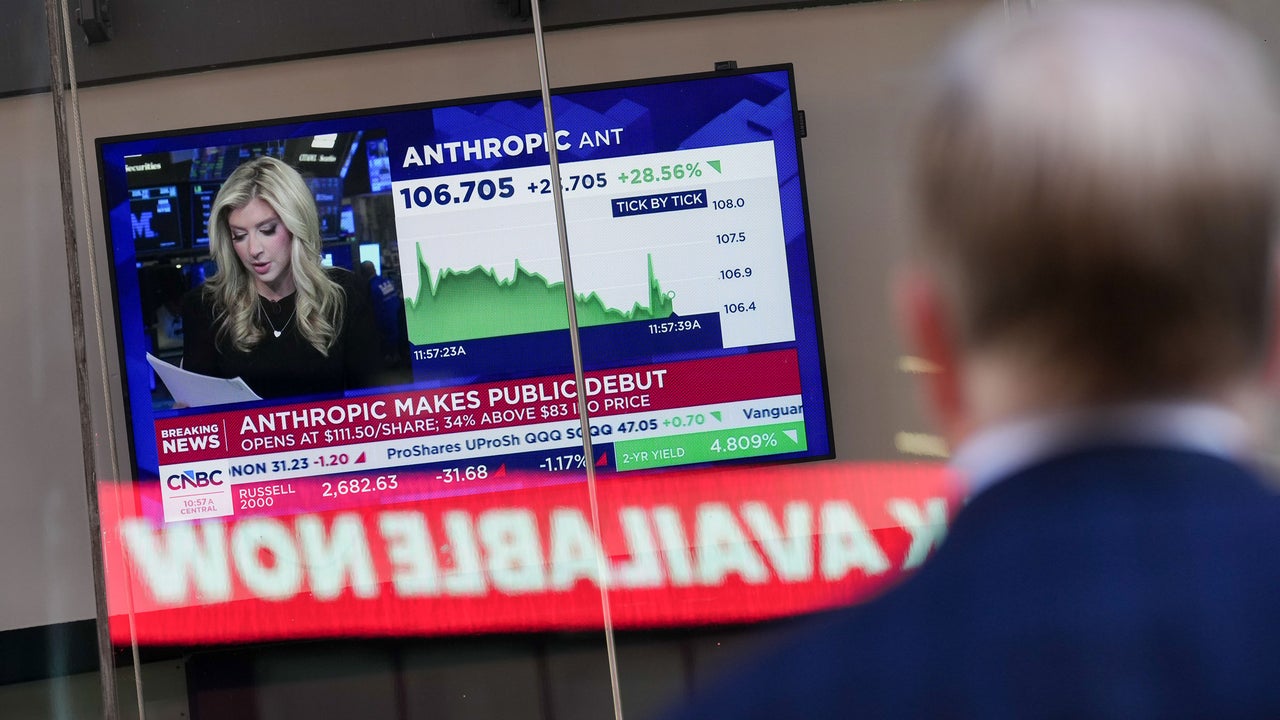
On Thursday, November 19, the artificial intelligence landscape underwent a fundamental structural shift as Anthropic, the creator of the Claude series of large language models, completed its initial public offering. As the first and largest pure-play AI company to list on a major exchange, the firm’s entry into the public domain immediately captured the attention of global financial markets. The stock’s debut was characterized by significant volatility, with shares initially jumping nearly 39% above the IPO price before settling into a more measured close at $97.17, a 17% premium over the opening valuation.
The operational context of this listing is defined by the scale of Anthropic’s infrastructure and its position within the generative AI race. Unlike traditional software firms, Anthropic’s value proposition is deeply tied to the computational power and proprietary data required to train and deploy its models. The geographical and institutional footprint of the company, centered in Silicon Valley, places it at the epicenter of a technological arms race that has drawn intense scrutiny from both regulatory bodies and civil society. The immediate market reaction suggests that investors are prioritizing growth potential over the speculative risks of the technology itself.
Official statements surrounding the IPO highlighted the company’s dual commitment to commercial viability and safety. While the financial metrics demonstrated strong investor confidence, the corporate narrative remained anchored in the company’s long-standing warnings about the catastrophic potential of advanced AI. Stakeholder responses have been varied, with financial analysts focusing on revenue trajectories and hardware partnerships, while safety advocates point to the irony of a firm warning of existential risk seeking public capital to accelerate the very technology that poses the threat.
In-Depth Analysis & Key Details
The historical background of Anthropic’s listing reveals a sector that has moved rapidly from academic research labs to high-stakes commercial entities. For years, AI development was largely funded by venture capital and corporate giants, allowing for a degree of operational opacity. The transition to a public entity subjects the company to rigorous financial reporting, legal liability, and shareholder expectations. This shift marks a maturation of the AI industry, where the focus is no longer solely on technical breakthroughs but on sustainable business models and risk management frameworks that can withstand public scrutiny.
Competing perspectives on this development highlight a deep-seated tension between innovation and caution. Industry analysts observe that the market’s bullish response indicates a willingness to decouple the immediate financial upside from the long-term existential risks. However, regulatory debates are intensifying, with policymakers grappling with how to govern technologies that may outpace traditional legal frameworks. The economic consequences of this listing are profound, as it sets a valuation ceiling for other AI firms and influences where institutional capital flows, potentially accelerating the development of more powerful models while raising questions about accountability.
Expert domain context suggests that the 'price' of Anthropic is not just a financial metric but a signal of societal tolerance for technological risk. The company’s explicit warnings about catastrophe create a unique paradox in public markets, where the product’s potential danger is part of its brand identity. This dynamic forces investors to engage with complex ethical and technical considerations that were previously relegated to academic or policy circles. The technical intricacies of training large language models, combined with the geopolitical implications of AI dominance, make this listing a pivotal moment in the history of technology regulation and corporate responsibility.
"The market has assigned a dollar value to the promise of artificial intelligence, but it remains silent on the cost of the risks that the company itself has warned could be catastrophic."
Why This Matters & What Lies Ahead
For everyday consumers and global supply chains, the public listing of Anthropic signals that the AI revolution is now firmly embedded in the mainstream financial system. This integration means that the stability of the broader stock market may become increasingly linked to the performance and regulatory status of AI firms. For public policy, this event provides a tangible case study for regulators to develop frameworks for AI liability and safety standards. The direct impact includes a potential acceleration of AI tools in consumer and enterprise sectors, driven by the capital influx that public markets provide, while also raising the stakes for data privacy and ethical deployment.
Upcoming milestones to monitor include the first quarterly earnings report, which will reveal the true cost of maintaining the computational infrastructure required for Claude’s operations. Regulatory bodies are expected to intensify their scrutiny of AI companies as they become public entities, potentially leading to new legislation or enforcement actions regarding algorithmic transparency and safety. Investors and policymakers alike will be watching how Anthropic navigates the tension between its safety commitments and the pressure to deliver rapid, profitable growth, a dynamic that will likely shape the regulatory landscape for the entire AI industry in the coming years.
Source: Reported by Fast Company · Analyzed & Synthesized by DNB Newsroom