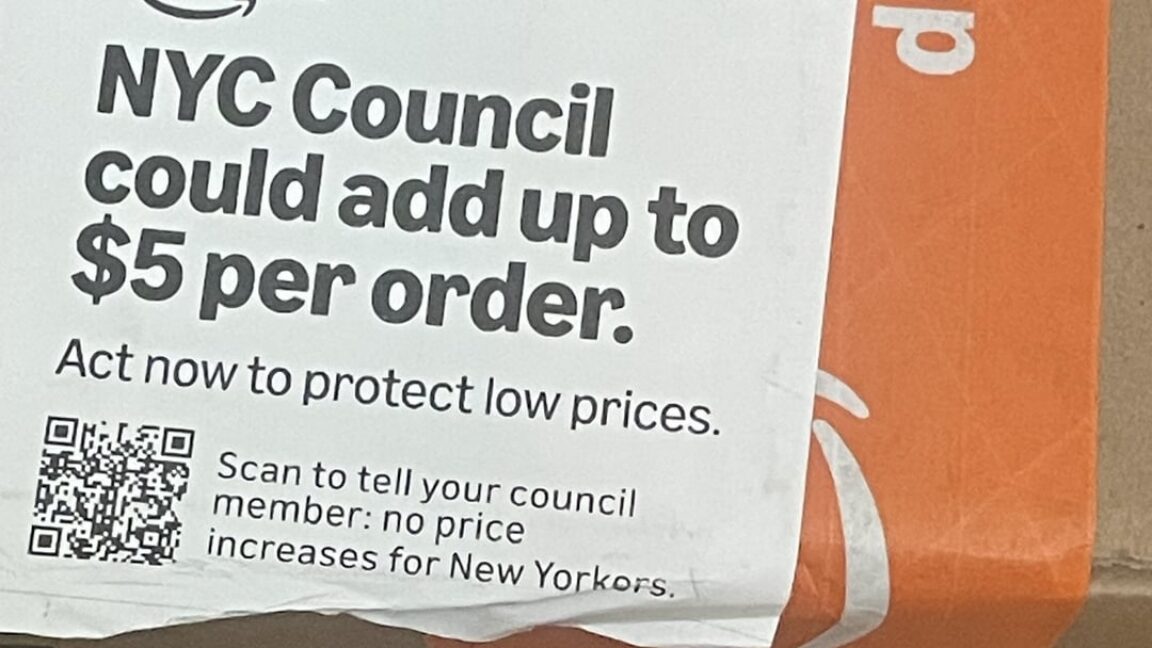
Amazon has announced that it will begin placing stickers on its shipping packages as a direct response to the Delivery Protection Act, a bipartisan bill that would prohibit political parties from using consumer deliveries as a vehicle for campaign messaging. The company’s spokesperson said the stickers are a symbolic gesture to highlight the perceived overreach of the proposed legislation.
The initiative will roll out across Amazon’s primary fulfillment centers in the United States, with packages destined for customers in the United States, Canada, and Mexico. The stickers, printed with a simple message, will appear on the exterior of boxes before they leave the warehouse.
Amazon’s spokesperson emphasized that the company has no intention of distributing political content, but the stickers serve to draw attention to the broader issue of political influence on everyday consumer experiences. Early reactions from political analysts suggest the move could intensify lobbying efforts on both sides of the debate.
In-Depth Analysis & Key Details
The Delivery Protection Act emerges from a long history of attempts to regulate political advertising, echoing earlier efforts such as the Federal Election Campaign Act and the Bipartisan Campaign Reform Act. Amazon’s use of stickers marks a new front in this regulatory struggle, leveraging its logistical dominance to challenge what many see as an infringement on free speech.
Industry analysts observe that the bill could impose significant operational costs on Amazon, requiring changes to packaging, labeling, and compliance protocols. At the same time, political parties may seek alternative delivery methods, potentially increasing reliance on traditional mail or digital channels.
From a technical perspective, the stickers represent a low‑cost, high‑visibility tactic that could be replicated by other logistics providers. The broader industry debate centers on whether e‑commerce platforms should serve as neutral carriers or active participants in the political discourse.
"Amazon’s sticker strategy marks a new front in the battle over package‑based political messaging."
Why This Matters & What Lies Ahead
For everyday consumers, the presence of political stickers on packages could alter the perception of Amazon’s role as a neutral retailer, potentially influencing trust in the brand. On a larger scale, the outcome of the Delivery Protection Act could reshape how political campaigns reach voters, affecting the balance of influence between corporate logistics and grassroots outreach.
Lawmakers are slated to vote on the bill in the coming months, with a key hearing scheduled for early next year. Meanwhile, Amazon’s legal team is preparing for potential litigation, and industry watchdogs will be monitoring the case for precedent‑setting implications.
Source: Reported by Ars Technica · Analyzed & Synthesized by DNB Newsroom


