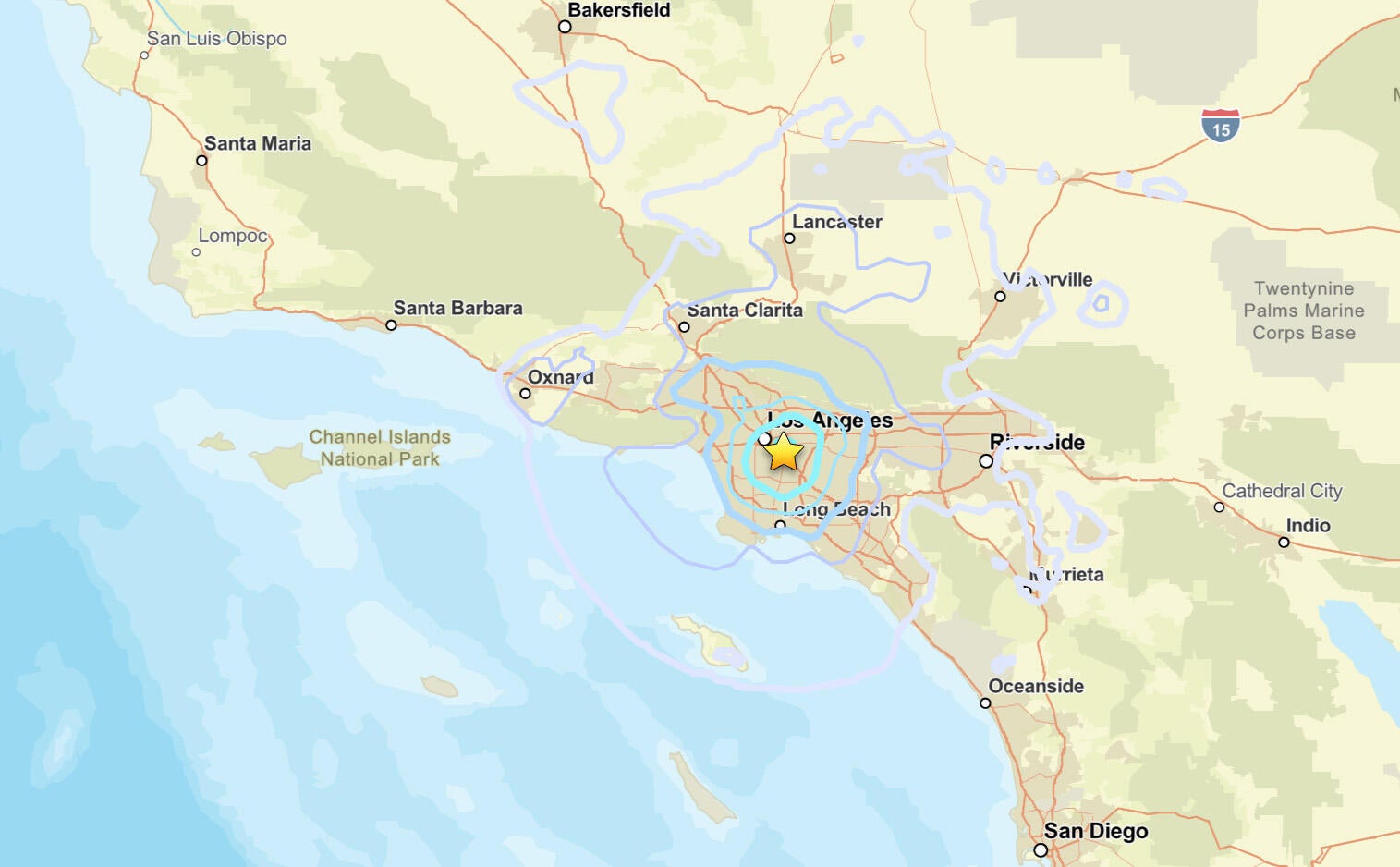
The Los Angeles metropolitan area experienced a significant seismic event when a 4.4-magnitude earthquake struck the region, as confirmed by the U.S. Geological Survey. The tremor was centered approximately half a mile north-northwest of Commerce, a city situated in the San Gabriel Valley, placing the epicenter just seven miles from the heart of downtown Los Angeles. This proximity to one of the nation's most densely populated and economically vital urban centers immediately triggered automated alerts to residents and activated emergency management channels across Los Angeles County.
The geographical positioning of the quake highlights the complex fault systems underlying the Los Angeles Basin. Commerce lies in an area historically monitored for tectonic activity, and the magnitude of this event is sufficient to cause noticeable shaking and potential minor structural damage in older buildings. Local emergency services have been deployed to assess the situation, with primary focus on identifying any trapped individuals, gas leaks, or compromised infrastructure that could pose secondary hazards to the public.
Initial responses from local authorities emphasize a posture of cautious monitoring rather than immediate crisis management. While the magnitude is moderate, the urban density means that even minor structural failures can have amplified consequences. Officials have urged residents to remain vigilant, check for damage to their properties, and stay informed through official channels. The event serves as a stark reminder of the seismic reality facing the West Coast, where moderate earthquakes are a recurring feature of the geological landscape.
In-Depth Analysis & Key Details
The Los Angeles region sits atop a complex network of faults, including the San Andreas, the San Jacinto, and numerous smaller, often unmapped faults. The occurrence of a 4.4-magnitude event near Commerce is consistent with the background seismic noise that characterizes the area. Historically, the region has experienced a range of seismic activities, from minor tremors to major destructive events like the 1994 Northridge earthquake. This recent event, while not catastrophic, fits into a pattern of moderate seismicity that keeps emergency preparedness agencies on high alert and serves as a functional test of the region's resilience infrastructure.
From a regulatory and economic perspective, every seismic event of this magnitude prompts a review of building code compliance and infrastructure maintenance. Industry analysts observe that the construction sector in Los Angeles faces continuous pressure to adhere to stringent seismic retrofitting standards, particularly for pre-1970s structures. The cost of maintaining these standards is a significant factor in real estate valuation and insurance premiums. Furthermore, the event underscores the tension between rapid urban development and the geological realities of the region, where new construction must be engineered to withstand forces that can strike with little warning.
Technical monitoring agencies, including the USGS and local seismological observatories, use such events to refine their models of fault behavior. The precise location and magnitude of the Commerce tremor provide valuable data points for understanding stress accumulation along local fault segments. While a single moderate earthquake does not necessarily predict a larger event, it contributes to the broader dataset used by scientists to assess long-term risk. The integration of real-time data from distributed sensor networks allows for more accurate modeling of how seismic waves propagate through the urban environment, informing future building codes and emergency response strategies.
"In the shadow of the San Andreas, every tremor is a reminder that resilience is not a static state but a continuous process of adaptation and vigilance."
Why This Matters & What Lies Ahead
For the millions of residents and businesses in the Los Angeles area, this earthquake serves as a tangible reminder of the region's seismic vulnerability. The immediate impact includes potential disruptions to daily life, such as power outages, water main breaks, and traffic delays due to road inspections. For the local economy, the event can influence insurance markets, with premiums potentially adjusting based on perceived risk. Moreover, it highlights the importance of community preparedness, encouraging individuals and organizations to review their emergency plans and ensure they have adequate supplies and communication strategies in place.
Looking ahead, this event may prompt legislative and regulatory bodies to review current building codes and emergency response protocols. Upcoming milestones include potential hearings on infrastructure funding for seismic retrofitting and updates to the regional early warning system. Monitoring the response to this event will provide insights into the effectiveness of current preparedness measures and may lead to policy changes aimed at enhancing the region's resilience against future seismic events. Stakeholders, including city planners, engineers, and emergency managers, will closely examine the post-event assessments to identify areas for improvement and ensure that the Los Angeles area remains as safe as possible in the face of ongoing seismic threats.
Source: Reported by CBS News · Analyzed & Synthesized by DNB Newsroom