dailynewsnblog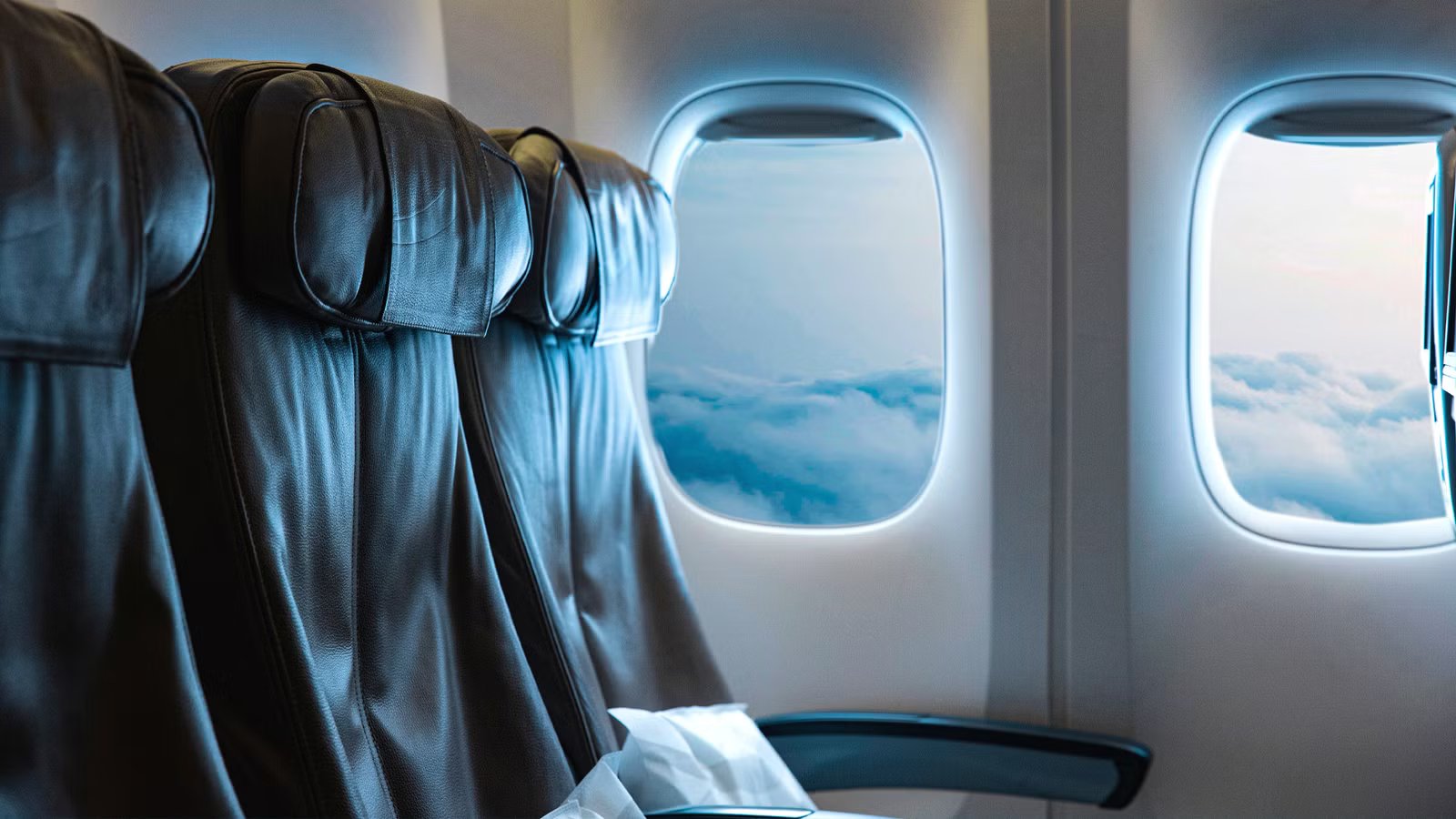
Today, all passenger windows on aircraft are round or a form of rounded rectangle. No windows have sharper edges. It wasn’t always this way with the first jet-powered airliners featuring square windows with sharp edges. Unfortunately, this was an engineering nightmare that should have had already been learned from centuries of shipbuilding. Airplane makers always want to make their aircraft more attractive to passengers, but safe engineering must come first.
While Boeing has been able to design its Boeing 787 and 777X with extra-large windows, this is only possible with advanced materials and engineering to ensure they will not be a weak link in the aircraft’s structural integrity. After three successive catastrophic airline structural failures causing in-flight break-ups that claimed all lives on those flights, the industry vowed never to make square windows again. Here is what to know about why all aircraft are built with rounded windows and why this is mostly followed by spacecraft and ships for similar reasons.
The Three de Havilland Comet 1 In-Flight Breakups

According to the FAA, squarish windows are a contributing factor to early 1950s-era de Havilland Comet 1 aircraft in-flight breakups. Investigations found that fuselage fatigue life for the Comet was much shorter than previous testing had shown. One incident occurred in May 1953 when British Overseas Airways Corporation (BOAC) Flight 783 departed Calcutta in India. After climbing to 7,500 feet, it broke up and crashed, killing everyone on board. Investigation found the aircraft’s structure had failed due to overstress by severe gusts from the storm the aircraft flew through, or over-control of the aircraft by the pilot.
Next, in January 1954, BOAC experienced a sudden in-flight break-up and crashed into the Mediterranean Sea near the Italian island of Elba. The Comet fleet was then grounded, and modifications were made to remedy what had been thought to be the problem with the fleet returning to service in March 1954. Unfortunately, the issue had not been identified, and the fixes were wrong.
Within a couple of weeks of returning to service, South African Airways Flight 201 (contracted through BOAC) also broke up and crashed over the Mediterranean Sea. In each incident, all on board perished. Finally, investigators were able to conclude that these three incidents likely had the same cause: the square windows. The Certificate of Airworthiness was withdrawn for all Combat aircraft, and the fleet was indefinitely grounded.
Making Windows Rounded

Wreckage was retrieved from the Elba crash and studied. Eventually, it was found that the aircraft’s relatively squarish winders were causing much greater stress concentrations than had been previously calculated. The FAA states, “These stress concentrations fatigued the material around the window corners, which would quickly lead to a rupture of the fuselage.”
The subsequent Comet 4 was built with rounded windows, and the entire aviation industry accepted that it was to be rounded windows forever. This was a cruel development for the early Comet that had become the first jet airliner to enter service and was otherwise one of the best aircraft of its time. But as CNN puts it, “the original Comet DH106 enjoyed only a brief reign before a series of catastrophes led its entire fleet to be pulled out of service and then tested to destruction or left to rot.“
|
Comet 1 squarish-window breakups |
Flight 783 |
Flight 783 |
Flight 201 |
|---|---|---|---|
|
Date |
May 1953 |
January 1954 |
April 1954 |
|
Airline |
BOAC |
BOAC |
South African Airways |
|
Fatalities |
43 |
35 |
21 |
|
Location |
Calcutta, India |
Elba, Italy |
Naples, Italy |
In 2019, the BBC reported that the last square-windowed Comet had been moved to a new de Havilland Museum hangar. That aircraft was produced in 1952 and has been at the museum since 1985. This particular airframe had been sent to Farnborough for pressure testing in the wake of the crash trio. While the aircraft didn’t end up being used for testing, it never flew again and remained stored at Farnborough until 1985.

Southwest Airlines’ Former & Unique Seating Arrangement: Experts Say It Was Safer
Would you like to fly facing your fellow passengers?
The Engineering Weakness Of Square Windows

The sharp corners on square windows produce local stresses. By contrast, round or rounded-corner windows have the effect of eliminating stress concentration. They help the fuselage resist cracking under cyclic loads. Since the Comet disasters, all aircraft windows are round (even though designed to appear somewhat rectangular), and are carefully engineered to ensure there are no sharp corners.
Aircraft cabins are pressurized, meaning the fuselage is under strain to expand outward. Every opening in the fuselage, like windows, interrupts the aircraft’s structure, creating stress concentrations. Corners have the effect of behaving like a magnifying glass for stress. Depending on various factors, a square window can be responsible for stress concentrations up to 3x more at the corners compared with a window with a smooth curve.
But there is another solution to the window problem. Just don’t use windows in the first place. While all commercial passenger aircraft include windows for passengers, Spike Aerospace is currently developing the supersonic Spike S-512 Diplomat business jet without them. The company says on its website, “The small cabin windows have been replaced with our revolutionary Multiplex Digital Screens providing full-length, high definition displays for an incredible flying experience.” Removing windows will help the aircraft resist the stresses of supersonic flight.
Windows Are A Key Point Of Fuselage Fatigue

Repeated pressurizations (aka cycles) have the effect of driving the effective age of the airframe more than the aircraft’s flight hours. A 30-minute commuter hop and a 12-hour-long haul produce roughly the same structural fatigue from pressurization. This affects the fuselage skin, rivet lines, lap joints, and frames. Although one of the greatest areas of fatigue is the doors and windows, which handle the biggest pressure differentials.
One example of cycle fatigue was Aloha Airlines Flight 243, operated by a Boeing 737-200. According to the FAA, during an island hop between Hilo and Honolulu, “an 18-foot-long section of the upper fuselage suddenly departed the airplane, sweeping a flight attendant overboard.” Fortunately, the aircraft didn’t completely break up, and the pilot was able to conduct an emergency landing, saving the lives of everyone else on board.
The NTSB determined the cause was “significant disbonding and fatigue damage of the fuselage skin lap splice” caused by repeated pressurizations, even though the aircraft had relatively low flight hours. Lessons learned, and better engineering of rounded windows contributed to windows not being the point of structural failure in this case.

Why Did Boeing Stop Developing Planes With Eyebrows?
Once deemed a useful feature, the eyebrow windows gradually lost their utility.
Ships Traditionally Have Circular Portholes

Aircraft are not unique in having rounded windows; the same can be seen on ships with traditional ship portholes. These are engineered circular for the same structural reasons. Even so, the physics of a ship on the sea and an aircraft in the air are not identical. Modern cruise ships feature large rectangular windows, although these come with heavy reinforcements and large-radius corners.
Unlike aircraft, ships don’t have to deal with rapid pressurization cycles. However, lower down, their portholes and hulls do need to resist the constant pounding of the waves. The pressure on portholes near the waterline in violent storms can be intense. Higher above the waterline, portholes need to cope with high wind loads.
These square windows found on cruise ships are often not part of the structural hull of the ship and are just its less structurally important superstructure. Something similar is seen on spacecraft. These often have rounded portholes for structural integrity reasons, although they can also be other shapes, like trapezoidal. Many spacecraft have very similar portholes to class ships. Trapezoidal shapes are used to aid pilot visibility, which is critical for docking and rendezvous. Even so, the corners are tapered and not sharp. That said, the pilot’s windows on regular aircraft are also not round, although the corners are rounded.
Other Factors Can Cause Windows To Fail

Properly engineering rounded windows to disrupt stress is not a guarantee that windows will not be a point of failure in some cases. While there are ways to better implement safety procedures and fail-safes, sometimes there’s no cure for stupid. In 1990, British Airways Flight 5390 suffered an explosive decompression after a windscreen blew out after having been improperly installed. The captain was partially ejected from the aircraft, but was held in place for 20 minutes until the first officer was able to land the aircraft.
Boeing’s failures to provide adequate training, guidance, and oversight during manufacturing, coupled with the FAA’s ineffective oversight, contributed to the Alaska Airlines Flight 1282 door plug blowout in 2024. Sometimes, a window failing may have nothing to do with its engineering. In 2018, Southwest Airlines Flight 1380 suffered an engine failure that sent the engine cowl into the fuselage, bursting a cabin window. The explosive decompression partially sucked out a passenger who perished in the incident.
By learning from the mistakes of the de Havellland Comet 1, the aviation industry has managed to ensure that the catastrophic breakups of aircraft in mid-flight from structural failures driven by square windows have not been repeated. Even so, lessons continue to be learned and re-learned. Efforts not to repeat the mistakes of the past are likely contributing to the delays in Boeing MAX 7 & 10 and 777X certification, as the FAA thoroughly ensures they are safe. In the case of the 777X, the novel folding wingtips could be a source of increased FAA scrutiny.