dailynewsnblog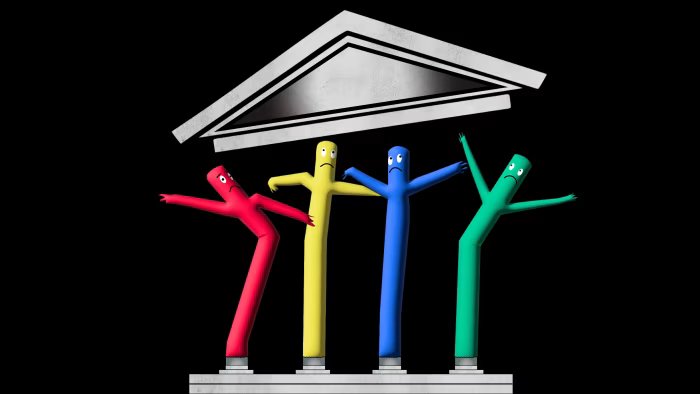
Stay informed with free updates
Simply sign up to the Central banks myFT Digest — delivered directly to your inbox.
Right now, two big questions are haunting watchers of the US Federal Reserve: will the Fed cut interest rates next week? And will President Donald Trump name Kevin Hassett, his economic adviser, as its next chair?
On the first issue, “yes” seems the likely answer, even though inflation exceeds the Fed’s 2 per cent target. And on the second? The prediction market Kalshi gives Hassett a 74 per cent chance of victory — never mind financiers’ reservations.
But as those two debates bubble, there is a third issue that should be considered too: do Fed officials even know how they should tackle inflation in the first place?
This might seem an odd question. After all, whenever the Fed board meets, there is much obsessive commentary about inflation targets and rates. But it matters. For as Mervyn King, the former Bank of England governor, observes, the whole central bank edifice is now resting on increasingly wobbly foundations.
“Central banks no longer have a theory of inflation,” he recently told a Harvard seminar. “The current popular characteristic of inflation targets is totally different from [their] original purpose.”
To understand his remarks, we need some history. During King’s tenure at the BoE, he initially seemed to accept the so-called “Great Moderation” mantra that dominated then, which assumed that growth and inflation were benign because central banks commanded extraordinary credibility with their use of 2 per cent inflation targets. But after the 2008 financial crisis King admitted that this assumption was flawed and subsequently argued that economic models alone were not a reliable compass given radical uncertainty and the vagaries of human behaviour.
That, in turn, affects how we conceive of inflation. The economist Milton Friedman used to argue that “inflation is always and everywhere a monetary phenomenon”, shaped by central bank money creation. However, this monetarist approach is limited since the velocity of monetary circulation can change and private players create money.
So a second approach, advanced by economists such as John Cochrane, rejects monetarism and argues instead that higher inflation devalues government debt — a theory King also dislikes, since it is almost impossible to measure.
Then there is a third approach, which has dominated central banking in recent decades: a focus on expectations. This assumes that if central bankers name a 2 per cent inflation target, and move interest rates to hit that, they will deliver that goal.
This worked well in the era of the Great Moderation. But King thinks the causality has now become confused, since economists seem to assume that merely setting a target will deliver the goal, without understanding the transmission mechanism. “This is the King Canute theory of inflation,” he laments, invoking the 11th-century monarch who is purported to have tried — and failed — to control waves with words. Or, to use another metaphor, central bankers are now akin to shamans, using verbal intervention to shape prices.
Either way, rising inflation in the US (and elsewhere) raises the question of whether an expectations-based approach still works. And if it does, should central bankers raise rates now? Or cut them even as they breach that 2 per cent target?
Or should they accept that there are so many variables that the causality in this whole equation is unclear? After all, as King quipped, history shows that “countries with high inflation rates over a long period have high interest rates and countries with low inflation have low interest rates. Perhaps this is why President Trump believes that cutting interest rates will bring down inflation.” Call this another variant of voodoo economics.
So where do Trump’s favoured Fed players stand on this? Stephen Miran, currently a Fed governor, is now trying to square this circle by arguing that what he calls “regulatory dominance” is crucial. He also fears that inflation data is wrong.
Other candidates for the Fed chair, like Kevin Warsh, are more orthodox: he recently called for a narrow price stability mandate, with a more monetarist bent.
Christopher Waller, a current Fed governor, seems more dovish. And Hassett? His views are harder to discern, since he has not set out a clear intellectual monetary framework in recent years. Instead, the main clues to his ideas have come from television interviews, where he, like Trump, insists that rate cuts are needed since inflation is low, prompting scorn from orthodox economists.
Maybe Hassett will now defy his critics by defending central bank independence, or even presenting a clear theory of inflation. But until then, we face a situation in which, even as the issue sparks obsessive investor debate (and alarm among voters), there remains an intellectual hole at the heart of central banks’ thinking about inflation. We should remember that next week — particularly when all eyes focus on Jay Powell, the monetary shaman still leading the Fed.
gillian.tett@ft.com