dailynewsnblog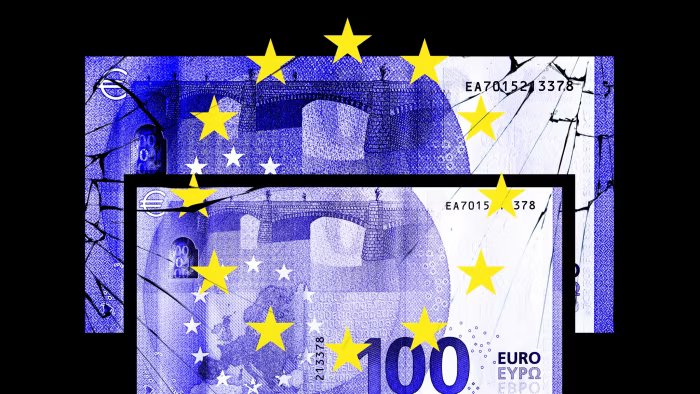
Unlock the Editor’s Digest for free
Roula Khalaf, Editor of the FT, selects her favourite stories in this weekly newsletter.
The EU’s single market is called the jewel in the bloc’s crown. Together with the single currency and the Schengen passport-free travel area, it represents one of history’s most consequential voluntary efforts to share sovereignty.
Yet things are not well. As a Financial Times series lays bare, the integration of national markets remains elusive in services, is incomplete in goods, and is in many ways going backwards rather than progressing. Simply put, national authorities leave too many obstacles in the way of equal access to their markets for other member states’ companies and workers: in the history of the single market, only one French baker has ever had their certificate from their home country recognised in Germany. National rules, even if well-intentioned, means cross-border activity must carry the cost of multiple sets of regulations, such as on labelling.
IMF and European Central Bank estimates of these non-tariff barriers are shocking, equivalent to tariffs of 45-65 per cent for goods and 100-110 per cent for services. That is certainly a big overestimate — but as ECB president Christine Lagarde told the FT’s Global Boardroom last week, even if it is only half as much, the cost is still enormous.
At a time when the EU worries about its competitiveness and finds its productivity lagging behind its geoeconomic rivals, leaving the single market to rot would be disastrous. The bloc is well aware: last year’s reports by former Italian prime ministers Enrico Letta and Mario Draghi were both about how to realise the promise of the EU’s unified scale. The right policies, which vary by sector, are no mystery. Making them happen is a different matter.
There are three across-the-board strategies the commission should pursue as a matter of priority. One is (as Letta recommends) to shift from using directives — which each capital then tailors for its own purposes — to regulations, which impose identical rules throughout the bloc. Beyond new legislation, there must be an agenda to convert existing directives into regulations. Brussels has promised one in the financial policy field.
The second is to put in place opt-in “28th regimes” to coexist alongside national rules where it is politically too difficult to harmonise them. Both reports recommend this for the corporate code, and the commission has promised imminent proposals. It is crucial to get this right: a nimble, effective corporate code specially tailored to enabling innovative start-ups to scale up easily, but without excluding others.
The third is enforcement, where Brussels has fallen asleep at the wheel. It is the commission’s duty to vigorously police member states’ resistance to letting goods, services, capital and labour flow freely according to EU law. But the rate of enforcement actions has been in decline. Enforcement efforts need to be adequately resourced and receive the political attention to make would-be European champions feel the commission has their back.
Adding a tier of specialised commercial courts to the EU judicial system with the power to process single market-related disputes swiftly, as three academics have proposed, could work wonders.
These strategies essentially amount to the commission taking its gloves off. It has much more power to make the single market work than it is currently using. And where the politics is too paralysed, Brussels should encourage and help along “coalitions of the willing”, where some but not all states integrate their markets further.
A step change in the single market is justified in Europe’s self-interest — but beyond that it would show the world that the ideal of frictionless cross-border exchange is far from dead.