dailynewsnblog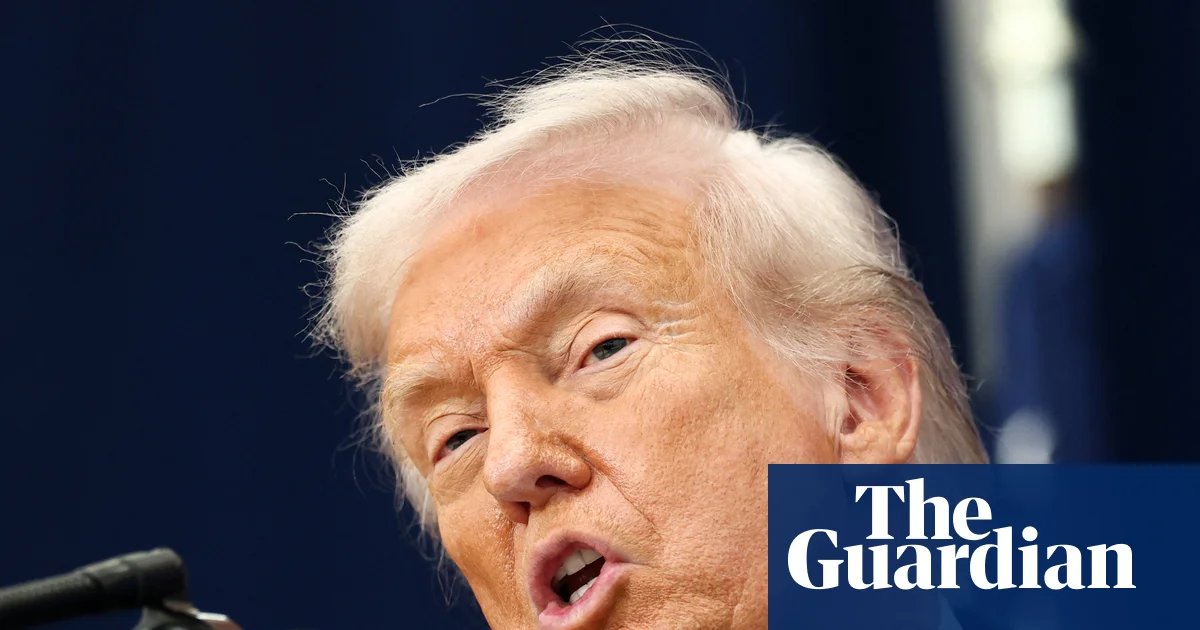
Donald Trump and senior members of his administration have dramatically escalated their hostile language towards immigrants in the US after anAfghan man was named a suspect in last week’s shooting of two national guard members in Washington DC.
In recent days, the US president has made sweeping statements, claiming that there were “a lot of problems with Afghans”, and went on a tirade against Somali immigrants, calling them “garbage” whose country of origin “stinks”.
Critics have described the recent derogatory remarks as “alarming”, “awful”, “dehumanizing” and “vile”.
Just hours after the shooting, and after authorities reported that the suspect had arrived in the US in 2021 through a Biden-era evacuation program for Afghans and was later granted asylum under the Trump administration, the US president declared: “We must now re-examine every single alien from Afghanistan who has entered our country under Biden.”
JD Vance took up the baton when he commented on the shooting.
“We will first bring the shooter to justice, and then we must redouble our efforts to deport people with no right to be in our country,” he said.
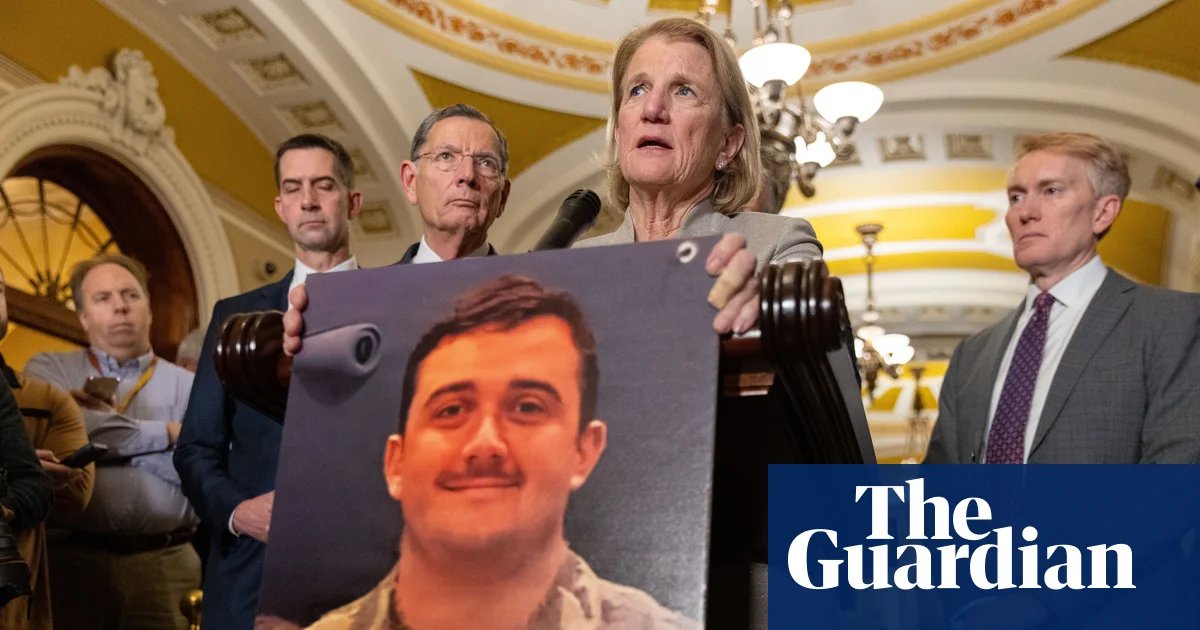
Several other Republican lawmakers went even further. The US senator Tommy Tuberville of Alabama called via X for an immediate ban on “all ISLAM immigrants” and to “DEPORT every single Islamist who is living among us just waiting to attack”, while Texas congressman Chip Roy urged the administration to “stop importing Islamists. Deport Islamists. Reject Sharia law. Defend our Western Civilization.”
That evening, US Citizenship and Immigration Services announced an immediate suspension of all immigration requests relating to Afghan nationals “indefinitely pending further review of security and vetting protocols”.
Over Thanksgiving, Trump vowed to strip US citizenship from naturalized immigrants “who undermine domestic tranquility”, said he would “permanently pause migration from all third-world countries” and deport “any Foreign national” deemed “non-compatible with Western Civilization”.
When pressed by a reporter during Thanksgiving remarks on whether he was blaming all Afghans for one man’s actions, Trump replied: “No, but we’ve had a lot of problems with Afghans”, adding: “Many of these people are criminals.”
In the same address, Trump turned his attention to Somali immigrants, whom he has increasingly targeted in recent weeks after reports of government fraud among pockets of Minnesota’s large Somali population – the largest Somali community in the US, most of whom are US citizens or legal permanent residents.
“If you look at Somalia, they’re taking over Minnesota,” Trump said. Asked what Somalis had to do with the DC shooting, he responded: “Nothing, but Somalians have caused a lot of trouble.”
He singled out Democratic representative Ilhan Omar of Minnesota – who came to the US from Somalia as a refugee when she was a child and became a US citizen in 2000 when she was 17 – accusing her, without evidence, of having “probably” entered the US illegally, and said she is “always wrapped in her swaddling hijab”.
Then, in a cabinet meeting on Tuesday, Trump described Somali immigrants as “garbage” who “contribute nothing”. He added: “Their country is no good for a reason. Their country stinks. We don’t want them in our country.”
White House press secretary Karoline Leavitt called the remarks an “epic moment”.
Omar called Trump’s remarks “vile”, while saying they were not a surprise. She also hit back with an essay in the New York Times on Thursday saying Trump is lashing out at her and her community with bigotry because he “knows he is failing”.
Meanwhile, the homeland security secretary Kristi Noem endorsed what she called “a full travel ban on every damn country that’s been flooding our nation with killers, leeches and entitlement junkies”.
The administration’s intensified rhetoric has been accompanied by further restrictions on immigration, including halting the ability of Afghans to obtain US visas, pausing immigration applications filed by immigrants from 19 non-European countries and halting all asylum decisions.
Administration officials have also said that there will be an “increase” in Immigration and Customs Enforcement (ICE) activity in Minnesota.
Top White House adviser Stephen Miller defended the various sweeping measures, dismissing an editorial by the Wall Street Journal arguing that “the alleged shooting by an Afghan ‘partner’ shouldn’t condemn all who assisted the US [military mission in Afghanistan] and now live here”.
“This is the great lie of mass migration,” Miller wrote on X. “You are not just importing individuals. You are importing societies. No magic transformation occurs when failed states cross borders. At scale, migrants and their descendants recreate the conditions, and terrors, of their broken homelands.”
In response to the intensifying anti-immigrant rhetoric and new restrictions in the wake of the shooting, Democratic lawmakers and immigration advocates have accused the administration of using the tragedy to advance it’s anti-immigrant policies, and have warned that xenophobic rhetoric “creates danger” and could lead to violence.
Church World Service, a faith-based group that helps resettle refugees, issued a statement denouncing what it described as the administration’s “campaign of collective punishment” after the shooting.
after newsletter promotion
In a joint statement this week, several Democratic lawmakers described Trump’s comments as “xenophobic and unacceptable”.
Susan Benesch, the executive director of the Dangerous Speech Project, a research group that studies speech that can inspire violence, said that xenophobic language was not new for Trump.
But what stood out to her this time was the “virtual silence from [other] Republicans” objecting to the rhetoric. When Trump described several African nations, as well as Haiti and El Salvador in 2018 as “shithole countries”, a number of Republicans condemned the remarks.
Benesch said the rhetoric over the last week was “alarming and awful”. She said Trump’s “garbage” remark was a “classic form of dehumanization”.
“If you use dehumanizing, degrading and frightening rhetoric about groups of people, and then you also take significant policy decisions against them, then those decisions reinforce the impact of the language,” she said.
Lynne Tirrell, who specializes in the intersections of language with social and political philosophy at the University of Connecticut, described Trump’s statements as “reckless speech”. Trump’s rhetoric, she says, “licenses” people to go ahead and call “Somalis garbage because the president said it”, and it “seeps into the culture” in a way that “licenses everyday, ordinary people to use this language” and to possibly “follow through with non-linguistic behaviors of how you treat garbage”.
“That, to me, is terrifying,” she said.
On the ground in Minnesota, Dieu Do, a community organizer with the Minnesota Immigrant Rights Action Committee, said that she has already seen a spike in panic and fear among Somali residents and a noticeable uptick in ICE operations in the state in recent days.
The leaders’ rhetoric, she said, is placing a “very clear and visible target on the backs of not only Somali immigrants, but immigrant communities from the African diaspora, and also all immigrant communities”.
Shawn VanDiver, CEO of #AfghanEvac, said many Afghan refugees in the US that he has spoken to are afraid to leave their homes and feeling “terrified” and “attacked”.
Jeff Joseph, president of the American Immigration Lawyers Association (AILA), said the administration’s claims of concerns around “improper vetting” of Afghan refugees “just ignores the reality of the immigration situation”.
“Having represented individuals who have gone through the Afghan process, the special immigrant process, they are vetted by the US military, they’re vetted by the Department of Justice, they fill applications out and go through biometrics processing,” he said.
Joseph said that, in general, he supports continuing to look at and finding ways to improve vetting procedures but said that is not what the new policies do.
Instead, he said, the administration is targeting entire countries “with a sledgehammer” and pausing applications for asylum “not based on targeted intelligence” but simply based on where people were born.
AILA’s executive director, Ben Johnson, also weighed in, warning: “Weaponizing this tragedy to advance an anti-immigrant agenda is not only unjust, but also dangerous.”
When asked for comment about the various criticisms of the administration’s recent remarks and policies, a White House spokesperson reiterated the claim that the Afghan suspect, whom they referred to as an “animal”, would not have been here if not for Joe Biden’s policies and said that Trump was “absolutely right to highlight the problems caused by the radical Somali migrants”.