dailynewsnblog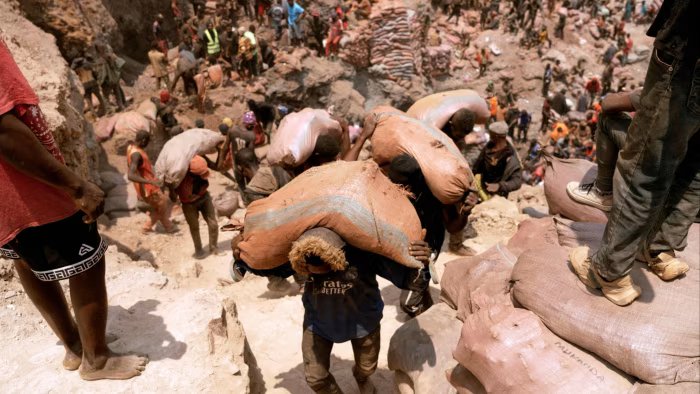
Unlock the White House Watch newsletter for free
Your guide to what Trump’s second term means for Washington, business and the world
The Democratic Republic of Congo has agreed to give US buyers preferential treatment for minerals sold by its state-owned mining companies, just one day after Washington brokered a fragile peace treaty between the country and neighbouring Rwanda.
The US government and Swiss trader Mercuria on Friday each announced up to $1bn in fresh funding for minerals ventures in the DR Congo, the world’s biggest producer of cobalt and second-biggest producer of copper.
Washington and Kinshasa signed an extensive critical minerals, economic and security agreement on the heels of Thursday’s treaty, which paves the way for greater US access to the DR Congo’s wealth of minerals.
The DR Congo’s president Felix Tshisekedi has sought US security support to halt the deadly war raging in the east of the country in exchange for access to its minerals, which include gold, tin and copper.
The US International Development Finance Corporation (DFC) said it intends to provide up to $1bn in finance for the Lobito Railway, which connects copper-producing regions to Western customers through a port on the Atlantic Ocean.
The DFC will also support a new marketing joint venture between state-owned miner Gécamines and Mercuria, that will sell Gécamines’ copper and cobalt — and give American companies a right of first refusal for its metals.
“We’ll be involved with sending some of our biggest and greatest companies over to these two countries,” US President Donald Trump said on Thursday at the signing ceremony. “Everybody is going to make a lot of money.”
Ben Black, chief executive of DFC, said the projects would “help to secure vital supply chains, expand private-sector opportunity and strengthen America’s global competitiveness”.
Mercuria will invest up to $1bn in the joint venture through pre-financing arrangements and credit lines, and provide logistical support such as warehousing and transportation for the minerals, the company said.
Guy Robert Lukama, chair of Gécamines, said the deal with Mercuria gives it the ability to “strategically direct” its minerals to “end-user markets that align with our vision of strong and sustainable growth”.
Gécamines holds minority stakes in mines that entitle it to receive a portion of the minerals produced, including its 20 per cent stake in the giant Tenke Fungurume copper-cobalt mine run by China’s CMOC.
The Congolese mining group controls an estimated 500,000 tonnes of copper production through these stakes, roughly 2 per cent of global annual production, according to analysts.
Kostas Bintas, head of metals at Mercuria, said the deal with Kinshasa would give the country more choice over how and to whom it sells its minerals.
“There is a broader trend, countries around the world with mineral resources are trying to get more control of their resources, particularly in assets where they themselves are shareholders,” said Bintas.
Chinese companies are by far the biggest producers of copper and cobalt in the DR Congo.
The US-DR Congo critical minerals agreement, signed Thursday, lays out ways the two countries will work together, including by creating a strategic mineral reserve that will “ensure predictable and durable supply of critical minerals . . . for the United States”.
It also indicates US support for infrastructure projects, including the Grand Inga Dam and the Lobito project.
Other DR Congo state-owned enterprises will also offer a first right of refusal on minerals being exported from certain projects to US buyers, such as Entreprise Générale du Cobalt, which buys the mineral from informal mines.
Industry sources say a range of mining projects — including the Rubaya coltan mine, the Western Forelands copper exploration project, the Manono lithium deposit and the Mutoshi copper-cobalt mine — could also benefit from the new US tie-ups.
“This peace agreement is a huge step forward and it does help unlock these mineral resources,” said Rob Strayer, president of the Critical Minerals Forum, a Darpa-funded consortium of miners and consumers.
He added that, “the success or failure of the joint partnership is going to depend on the private sector being involved”.
But the surge of funding and deals comes amid signs of the fragility of the peace deal, the ratification of which coincided with a surge in fighting that forced hundreds of Congolese refugees across the border into Rwanda.
Rwanda-allied M23 rebels and the Congolese army have accused each other of violating an earlier ceasefire, which never fully came into effect.
Additional reporting by William Wallis