dailynewsnblog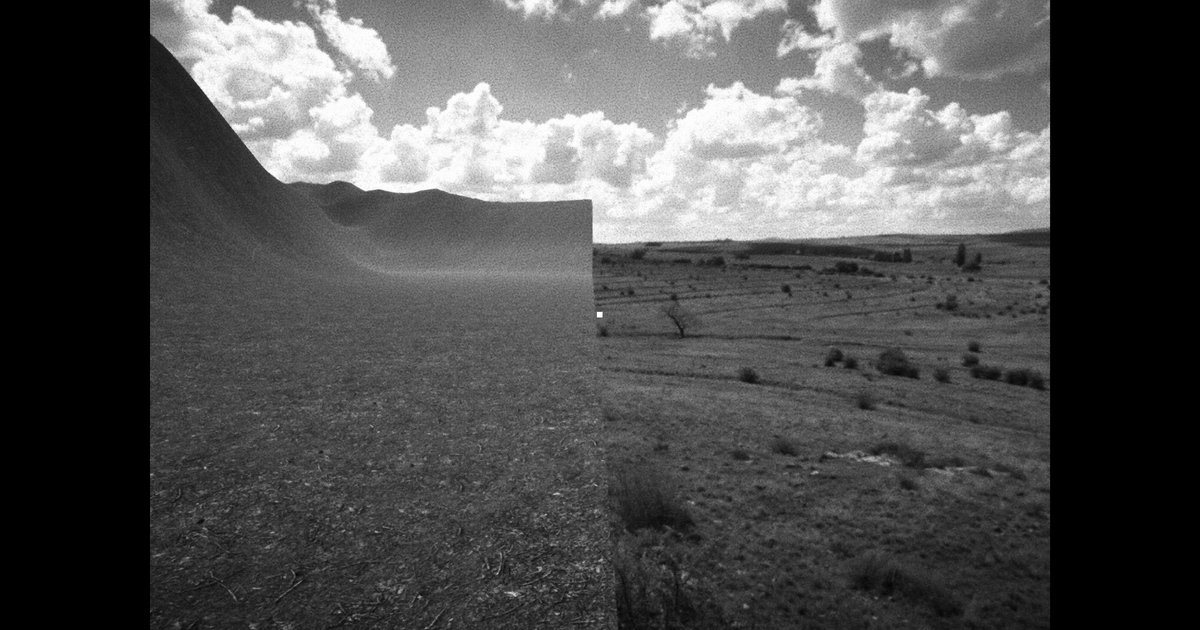
Significant story spoilers for Horses follow. Also, here is some possibly appropriate music.
Towards the end of Santa Ragione’s grotesque horror game Horses there’s a story beat that involves snipping a hole in a wire fence, so another character can escape the game’s monstrous Farm. The escape is thwarted, and the hole boarded up, but later on, while confused about my objectives, I went back and found the repair incomplete, the planks not quite covering the tear. So I slipped through.
My explicit goal for that day was to enter an enclosed shed, tucked away from the main building. At first, I figured that this was all part of the design, and that I’d unearthed the route to a rear entrance. I walked along the fence, looking for another gap. But then I glanced back, and realised that I could no longer quite see the wall by the Farm, just a couple weird rogue apostrophes of stone. I wondered if I had, in fact, accomplished what I feel is your tacit real objective in Horses – to fully divest from the game’s means of representation and bust clean out of the simulation.
As I discuss in my review, Horses explores how methods of producing images become methods of control, discipline and brutalisation, with the player enlisted as both the operator of those technologies and their victim. It draws upon the violence embedded in the history of film – I referenced horse-breeding in my review; I could also have mentioned that pretty much all film emulsion is produced using gelatin derived from bones and skin – while prompting a little thought about the dastardliness of certain game design conventions that portray the body as something to itemise and subjugate.
The secret villains of the piece are arguably the camera and interface, and Horses eventually plays this idea out by letting you sabotage the workings of a massive film projector. In the process, the project risks self-contradiction, because the game doesn’t end when you snip the reel. For that act of sabotage to be fully resonant, the simulation would need to unravel and die the second you close the scissors.
In fairness, I think the giant projector is intended to be a literal object within the plot and setting, however bizarre, and the story does wind up shortly afterward. You could also argue that the ending is about reclaiming the game’s own technology, not just sabotaging it, via some symbolic changes of costume and perspective. That was approximately the conclusion I came to at review time. But perhaps this mere portrayal of sabotage is better understood as a ‘failure’ that must be resolved by applying your antagonism more ingeniously. Perhaps Horses is secretly an immersive sim – one of those self-hating shuttleboxes that is always goading the player to be a more disobedient animal, to short-circuit every intended solution and obliterate the design entirely.
So snap your leash and smash the bars of your cage. I love going off-map in videogames, because videogames can be very obnoxious about keeping you in. It’s an urge that blossoms every time Battlefield scolds you for leaving a mission area, and every time a brittle pile of boxes or a mocking cordon deny you access to a curious alleyway. Thankfully, videogame worlds are never as solid as they seem. You can make use of noclip settings and mods, of course, but it’s more satisfying, more agreeably vindictive to find and actualise gaps in the fence without ever exiting the game.
You lean artfully into a wall texture, striving to ‘convince’ the simulation that you’re moving in an acceptable way, to persuade it via some kink of half-felt computer logic that you’re already on the other side of the wall, that you have to be there, because otherwise the numbers won’t add up. You jimmy WASD like a rusty lock, rotating your character in the hope that an elbow or an ankle might jut through. And maybe once in a hundred times, the geography relents, and you step out into terra infirma, a hesitant offworld where you are ‘genuinely’ free – where your much-trumpeted Videogame Choices actually matter because the outcomes aren’t quite so pre-ordained, where navigation may be possible but the rules don’t fully apply, a realm of slants and distortion and inversions.
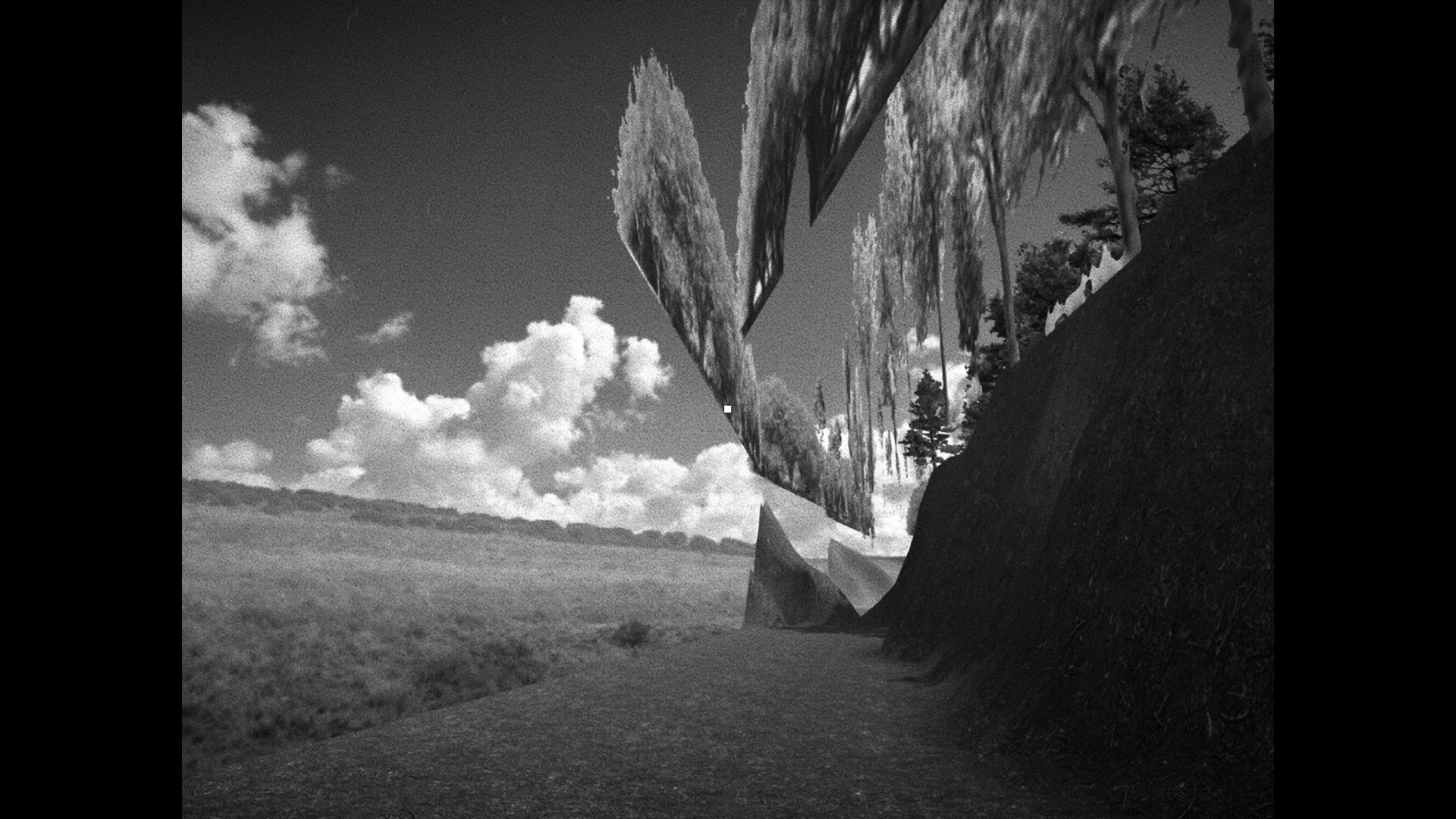
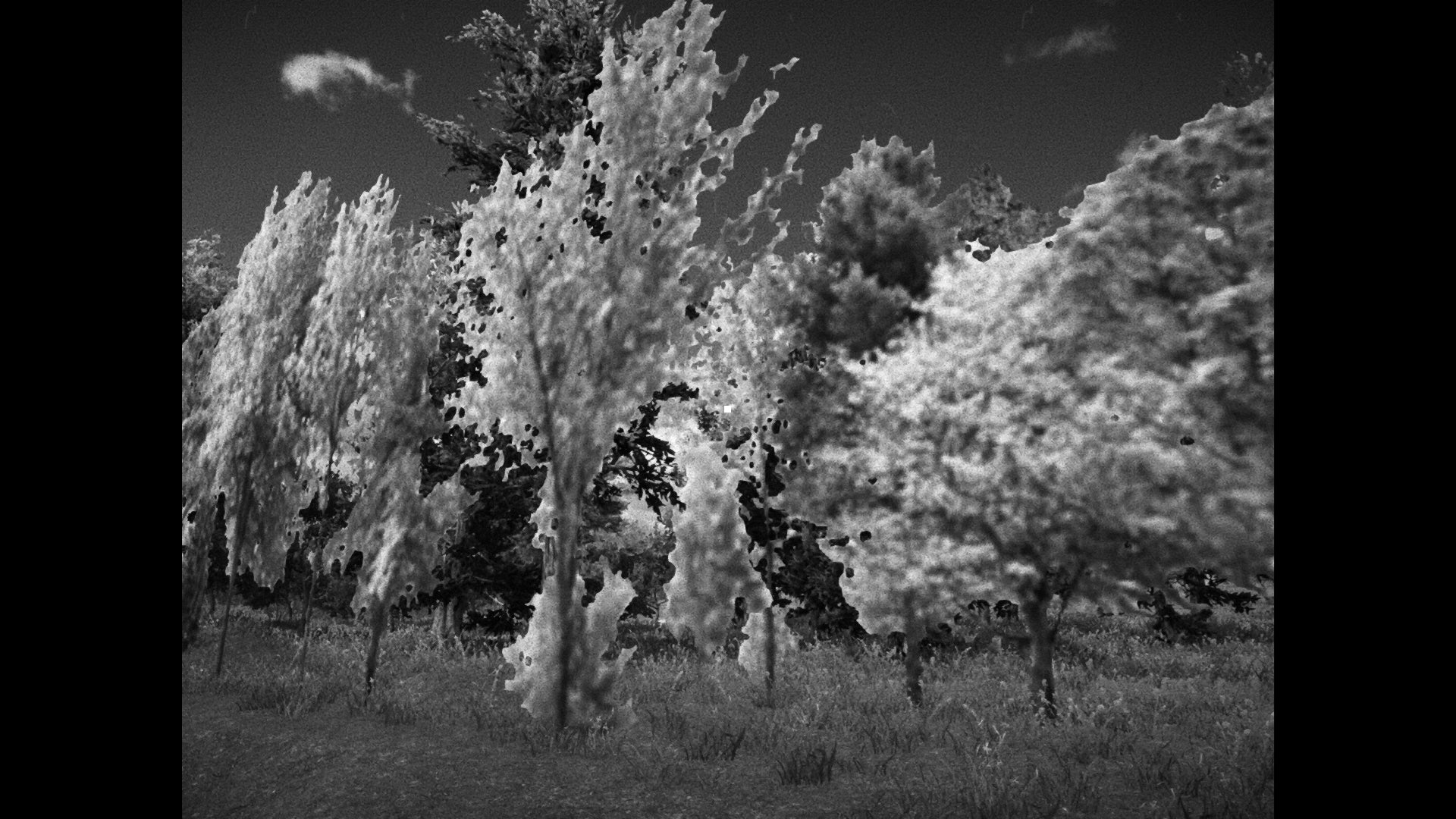
Beyond that fence, the agonised hybrid film/farming sim language of Horses erupts into beautiful edges and mottles. The Farmer’s suffocating gaze is forgotten, and you are finally able to walk among the furthest trees. They are V-Rally trees, Crash Bandicoot trees – spackled X-rays of lungs strung up along the hillside to disguise the abrupt dissolution of the geography behind. The grass and cow parsley continue bravely for a few metres before yielding to the sheer strangeness of the soil, its mesh of roots and stones curving and humping like a blanket thrown over surgical equipment.
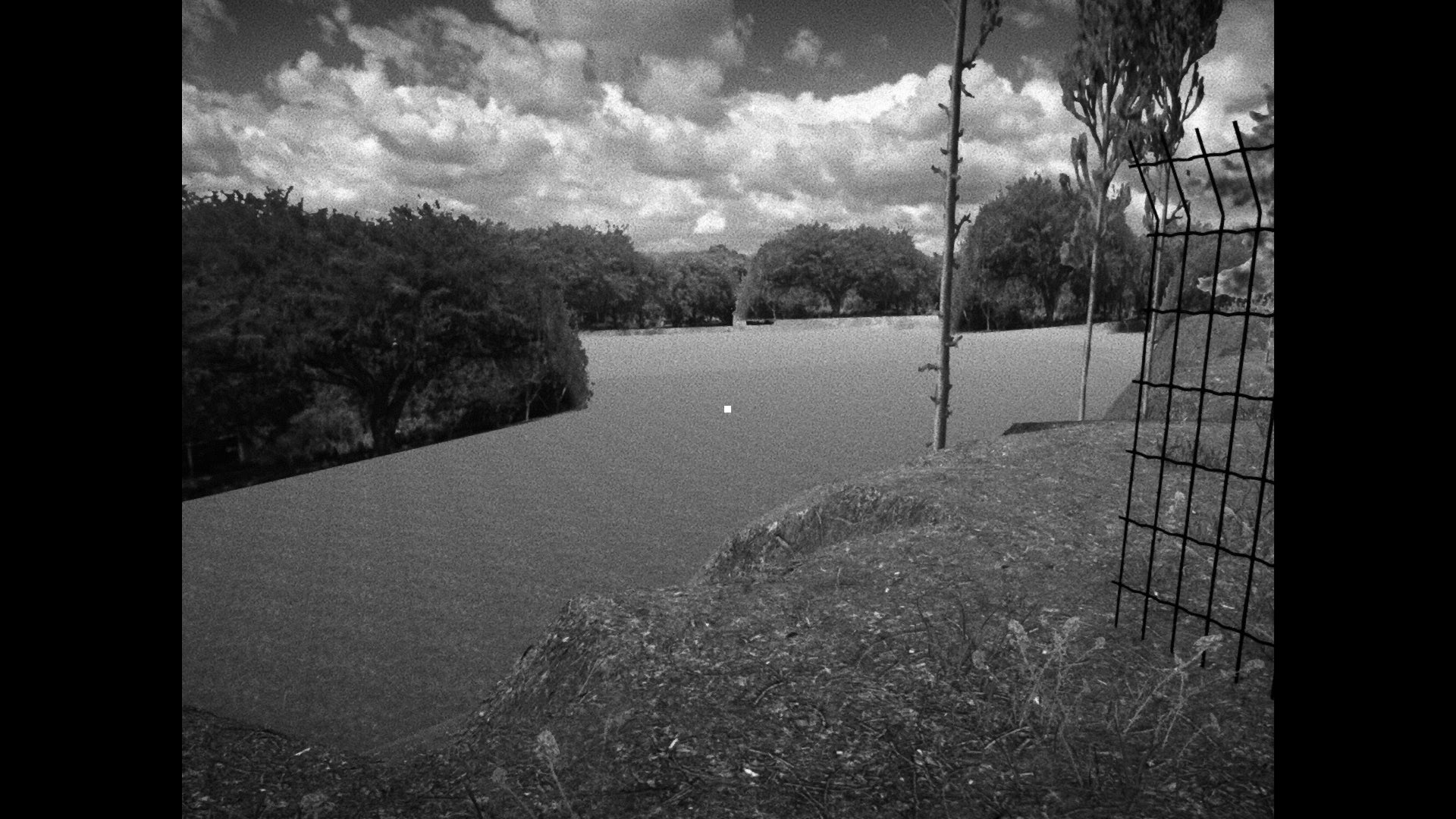
Traversal becomes treacherous because out here, you finally have to worry about gravity. I looked back at the Farm, small and unimportant amid its half-visible walls, and fell down a sheer slope onto the shores of a photograph. I’d reached the threshold of what I think game developers still call a skybox, the landscape terminating in a picture of somewhere else, wrapped around the navigable plane. In for a penny, in for a pound, I said to myself, and threw myself over the lip.
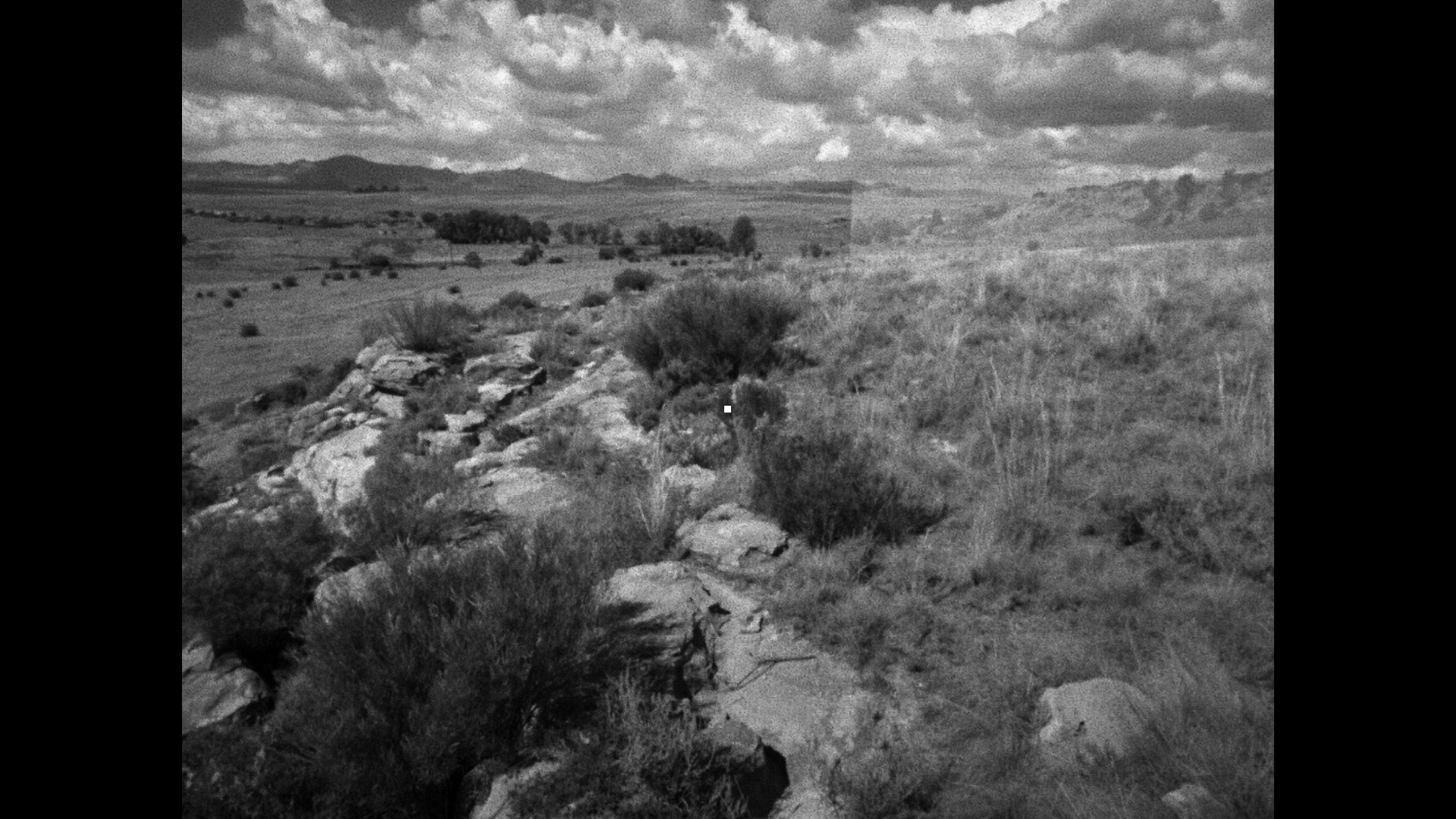
I’m still not sure if I’ve actually broken Horses. I did, after all, literally push through a hole in a fence, which seems a bit on-the-nose as noclip strategies go. It remains possible that Santa Ragione have engineered this opportunity, much like Analgesic Productions building “prototype” environments into Anodyne 2: Return to Dust. Still, it’s nice out here. No Farmer or horses or “horses” to worry about, the projector rattling away but without purpose, the image unchanging. While I eventually reloaded and finished the game ‘properly’, I still have that save with the broken fence, and as far as I’m concerned, my time in Horses ends here.