dailynewsnblog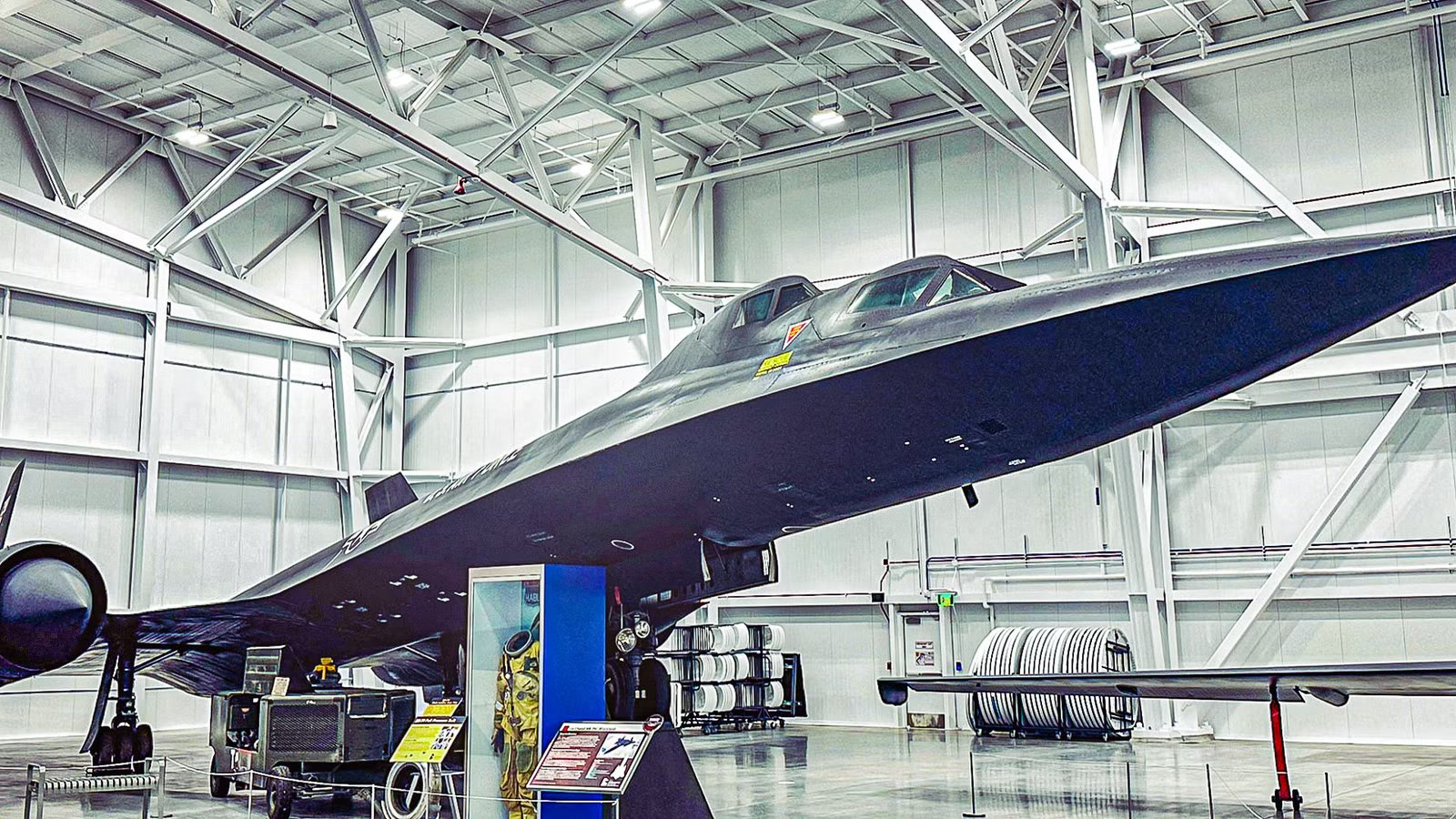
In the epic saga of the Lockheed Martin SR-71 Blackbird, there was a peculiar footnote. One of the US Air Force SR-71B trainers was destroyed when it crashed during an emergency landing in 1968, leaving the Air Force with just one airframe to train new pilots. This was a major bottleneck for the program, as the USAF looked to Skunk Works to provide a new airplane.
At this point in the Blackbird program, all the specialized tooling that Lockheed Martin had invented to work with these specialized titanium alloys had already been destroyed under federal orders. After serial 61-7957 was lost, Skunk Works could not create a new replacement, leaving no other choice but to piece together a substitute from mothballed airframes.
Dubbed ‘The Bastard,’ the method of building the airplane resulted in some aerodynamic and mechanical issues that made it the most problematic plane in the Blackbird fleet. It’s not very surprising considering it was a Frankenstein of disused parts, made to fly at the fastest supersonic speeds any production jet has ever performed. The persistent issues resulted in a very short service life of just over 500 flight hours, with the plane touching down for the last time after just seven years.
The Bastard’s Story: The Misfortune Of Aircraft 61-7981

The one and only SR-71C was constructed from the rear fuselage of YF-12A serial 60-6934 and the forward fuselage of an engineering mock-up originally intended for static display. The donor aircraft for the rear fuselage was damaged in a landing accident in 1966. 60-6934 was the first of only three interceptor prototypes built for the Blackbird family, based on a heavily modified Central Intelligence Agency A-12 variant.
Aircrew reported persistent yaw at supersonic speeds, which was suspected to be due to a few solenoids that were not perfectly straight after the two halves were joined to make the plane. Early flights were also said to experience engine stalls due to misalignment of the doors that controlled bypass airflow. Skunk Works engineers did their best to correct alignment, and pilots made the plane perform as best they could to accomplish the mission, but it was still a ‘black sheep’ in the Blackbird family.
The first flight of the SR-71C took place on March 14, 1969. It primarily served as a training aircraft at Beale Air Force Base in California, where it logged 556 flight hours. The final flight of ‘The Bastard’ took off on April 11, 1976. The unusual jet now resides at the Hill Aerospace Museum at Hill AFB as part of a collection of more than 70 historic aircraft. The museum offers free admission and occasionally hosts ‘open aircraft days’ where guests can get up close and personal, sometimes even the chance to sit in planes like the SR-71C.
Finding Frankenstein’s Flaws: The Making Of The 60-6934

Lockheed Martin test pilot Robert ‘Bob’ Gilliland and reconnaissance systems officer Steve Belgeau would be the guinea pigs who found severe trim and control issues on the initial flight of the SR-71C. Their discovery suggested that Frankenstein had fundamental alignment issues. Following the problematic maiden flight, the aircraft was sent to Edwards Air Force Base for a series of 16 intensive test flights. Test pilots eventually isolated two major mechanical and aerodynamic defects caused by the hybrid construction.
Test pilots found that a constant four-degree yaw refused to dissipate in a flight. A battery of tests was conducted to determine whether this was a physical issue or a sensor error. A Nomex yaw string mounted to the aircraft’s exterior would reveal the truth. During flight, the cockpit instruments indicated a yaw, but the string remained perfectly centered, proving that the pitot boom was physically mounted at a four-degree angle.
|
Specification |
Lockheed SR-71 Blackbird |
|---|---|
|
Crew |
2 (Pilot and Reconnaissance Systems Officer) |
|
Max Speed |
Mach 3.32 (2,193 mph / 3,530 kmh) |
|
Service Ceiling |
85,069 feet (25,929 meters) |
|
Powerplant |
2 × Pratt & Whitney J58 axial-flow turbojets |
|
Thrust |
34,000 lbf (per engine) with afterburner |
|
Range (Unrefueled) |
3,200 nautical miles (5,926 kilometers) |
|
Max Takeoff Weight |
172,000 pounds (78,018 kilograms) |
|
Empty Weight |
67,500 pounds (30,600 kilograms) |
|
Length |
107 feet, 5 inches (32.74 meters) |
|
Wingspan |
55 feet, 7 inches (16.94 meters) |
Catch what other flight trackers miss
Emergency squawks, holds, NOTAMs — live signals, no signup.
Open tracker
Catch what other flight trackers miss
Emergency squawks, holds, NOTAMs — live signals, no signup.
Open tracker
Yes, the SR-71 also had dynamically variable engine inlets and bypass doors that required very precise alignment to be properly synchronized. Because the front and back of the plane came from different models, the automated systems were fighting each other, leaving the inlets in non-streamlined positions. This created massive, uneven drag that made the aircraft fly sideways through the air.
Engineers at Skunk Works would eventually correct all of these issues by physically realigning the pitot boom and recalibrating the inlet control systems. The aircraft was declared operational after all the issues were resolved and delivered to the 9th Strategic Reconnaissance Wing at Beale. Throughout its career, it still had a reputation for being harder to handle than any of the other planes. Pilots described it as having a permanent ‘bend’ in the airframe.
How The Lockheed SR-71 Blackbird’s Titanium Fuselage Withstands Extreme Thermal Stress
The technology behind the fastest warbird of all time.
The Tragic End Of Serial 61-7957: Blackbird Down

The way that the SR-71B trainer was lost, leading up to the construction of the SR-71C, is a very dramatic story of its own. Tail number 61-7957 was the second trainer version constructed of only two examples made before the assembly line was shuttered. The jet began service in 1966 at Beale AFB, and it logged just over 400 flight hours on 268 sorties during two years of service before it met its tragic end.
On January 11, 1968, instructor pilot Lieutenant Colonel Robert Sowers was training student pilot Captain David Fruehauf on a mission over the Pacific Northwest. On this sortie, the jet would suffer a catastrophic double generator failure, leading to a mid-air emergency. The vast majority of electrical systems were immediately inoperable, and the aircrew had to limp the jet nearly 1,000 miles back to base, according to Habu.org records.
The pilots managed to successfully bring the crippled jet back to Beale and commenced an emergency landing procedure. It was this phase of flight that led to the mechanical anomaly that caused the jet’s fiery doom. The crew pitched the nose up ten degrees on the way down to the runway, but the critically low fuel level in the tanks, combined with the attitude of the plane, starved the engines of fuel.
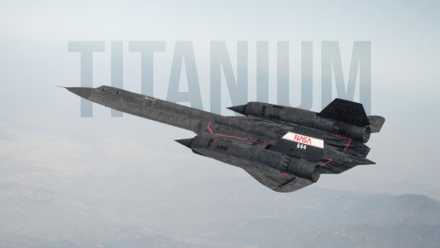
Why The SR-71 Blackbird’s Titanium Airframe Will Be Nearly Impossible To Replicate
The fallout of shuttering Skunk Works’ unique factory.
Gone In A Flash: Punching Out In The Nick Of Time

The Pratt and Whitney J58 engines began sucking air, and what is known as fuel cavitation, causing a dual-engine flameout just a few miles from touchdown. Pilots had no way to restart the engines at low altitude with all of their electrical systems out of action. They were forced to eject just 3,000 feet (914 meters) above ground level.
Habu.org records this statement from Don Person, a Blackbird crew chief who was on the tarmac and watched as Sowers and Fruehauf ejected. He recounted:
“…. two SR-71s were flying that afternoon, 957 and my aircraft 969. An emergency was declared, but we did not know which aircraft had trouble. We were waiting on the taxiway looking north and saw an SR-71 approaching. About 2 miles out, it took a pitch up, and we then saw two chutes. An aircraft crashed in the dragger ponds where gold was mined. My heart was thumping as you can imagine when another SR-71 came into view, and it was an ‘A’ model, 969. Boy was I glad to see it land….”
The crew helplessly watched as they hung from their parachutes as the jet flipped over and dove inverted to the ground, crashing 7 miles from the runway in a farmer’s field. Sowers was supposed to eject first as he was in the rear seat, but being the instructor, he insisted that Fruehauf punch out first, which he initially protested, but ultimately ejected as commanded. Fruehauf reached the ground and removed his helmet and survival gear to find his instructor already taking a smoke break.

The SR-71 Blackbird’s Final Flight Set 4 Speed Records In Just 64 Minutes
The final day that the legendary jet streaked through America’s skies.
Lessons Learned From A Harrowing Crash

In the aftermath of the catastrophic mishap, emergency crews found the plane upside down and mostly burnt to ash. They were able to extract the generator from the plane because it had hit the ground inverted and confirmed that it had been contaminated, leading to the disastrous breakdown. The demise of tail number 61-7957 potentially saved as many as six other planes from the same fate, as they were found to have at least one generator with the same contamination following a fleet-wide inspection.
The unsuccessful emergency landing also revealed a dangerous flaw that led pilots to a kind of ‘trap’ in the emergency experienced by Sowers and Fruehauf. The fuel boost pumps would normally have prevented fuel cavitation, but with the electrical system completely inoperable, the gravity-fed fuel delivery became a life-threatening liability.
As a result, aircrew were trained to approach the runway with a very flat pitch attitude should they ever experience dual generator failure, leading to complete electrical power loss. Skunk Works also learned that the cockpit could use improvement for future emergency scenarios.
Following the crash and a similar night-flight loss in 1967, the Air Force modified the instrument location and improved the annunciation logic across the fleet to provide more prominent warning flags for critical systems like the artificial horizon. According to the National Security Journal, the incident also reinforced the need for stricter pilot qualifications, leading to a new requirement for 50 daytime hours in the SR-71 before a pilot could be cleared for night supersonic training.