dailynewsnblog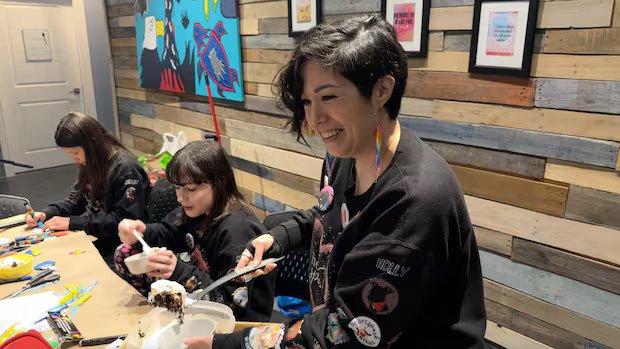

Listen to this article
Estimated 4 minutes
The audio version of this article is generated by AI-based technology. Mispronunciations can occur. We are working with our partners to continually review and improve the results.
There’s no rest for Holly Hashimi once she finishes her day job with the Alberta government.
She spends much of her free time making bracelets and fidget toys to sell at local markets. She’s chasing down grant applications. She’s organizing or brainstorming fundraising ideas.
Hashimi is the founder of Heartspark, a non-profit after-school club in Fort McMurray dedicated to supporting girls between 9 and 13. She often uses her own money to keep programming free.
“I just keep working and fundraising to make sure that [we’re] not scraping the bottom of the barrel and in an emergency situation because in the end, it will come out of my pocket.”
Pivoting to a business-mindset is becoming common in Fort McMurray’s social non-profit sector. But with many organizations struggling to keep staff and programs funded, adapting to the evolving fundraising landscape has been difficult for some.
For years, the region’s non-profits were powered by an abundance of generous donors and lucrative corporate and government grants. Then came the economic uncertainty following a global collapse in oil prices in late 2014, the COVID-19 pandemic and an April 2020 flood.
Non-profits now describe a cutthroat fundraising environment. Grants are competitive and fewer people donate to campaigns. Some people interviewed for this story did not want to offer details about future fundraisers, afraid their ideas would be stolen.

‘It was so little effort to raise money’
Karen Barker, who leads a non-profit called The Children’s Centre, says her organization is considering layoffs and program cuts as she struggles to find funding. The non-profit caters to struggling families with children below the age of five.
Barker often thinks about a 2003 truck raffle she hosted where people would spend hundreds on $20 tickets. Today, she feels she would be lucky if the organization sold just one ticket.
“Not all staff can put their time and effort on the weekends into work that you’re not getting paid for,” said Barker.
“It is evenings, it is weekends, it is whatever you have to do to get the job done. There’s been hours and nights that we’ve been here till 8 p.m., 9 p.m. just trying to get grants figured out.”
Raising money in Fort McMurray used to be easy, says Paula Galenzoski, executive director of the local branch of the United Way.
In 2014, an $8-million fundraising campaign exceeded its target by nearly $200,000 in three months. Last year, the United Way mustered around $890,000.
“It was really so little effort to raise money. … It really didn’t have that scarcity feel that we feel now,” said Galenzoski, adding she wants to see more non-profits collaborate and share resources with each other.
“If you look at comparable communities, we’re now much more in line with what other communities our size are raising, even though that number is still low.”

Shifting toward a business-first model can be the best way forward for non-profits, said Suavek Bartosinski, executive director of the Boys and Girls Club (BGC) of Fort McMurray.
His organization rents their field and gym in the building they operate to other groups. The club also runs a monthly vendor market and rents out a bouncy castle for parties.
Bartosinski says his organization is “excelling” at cutting debt, but success comes at a cost. The club has slashed staff by 50 per cent since 2023, leaving a “skeleton team” that’s the smallest the organization has ever had.
“We have to do what we have to do in order to get through the situation that we’re in. We’re just trying to follow the highest and best path,” Bartosinski said.