dailynewsnblog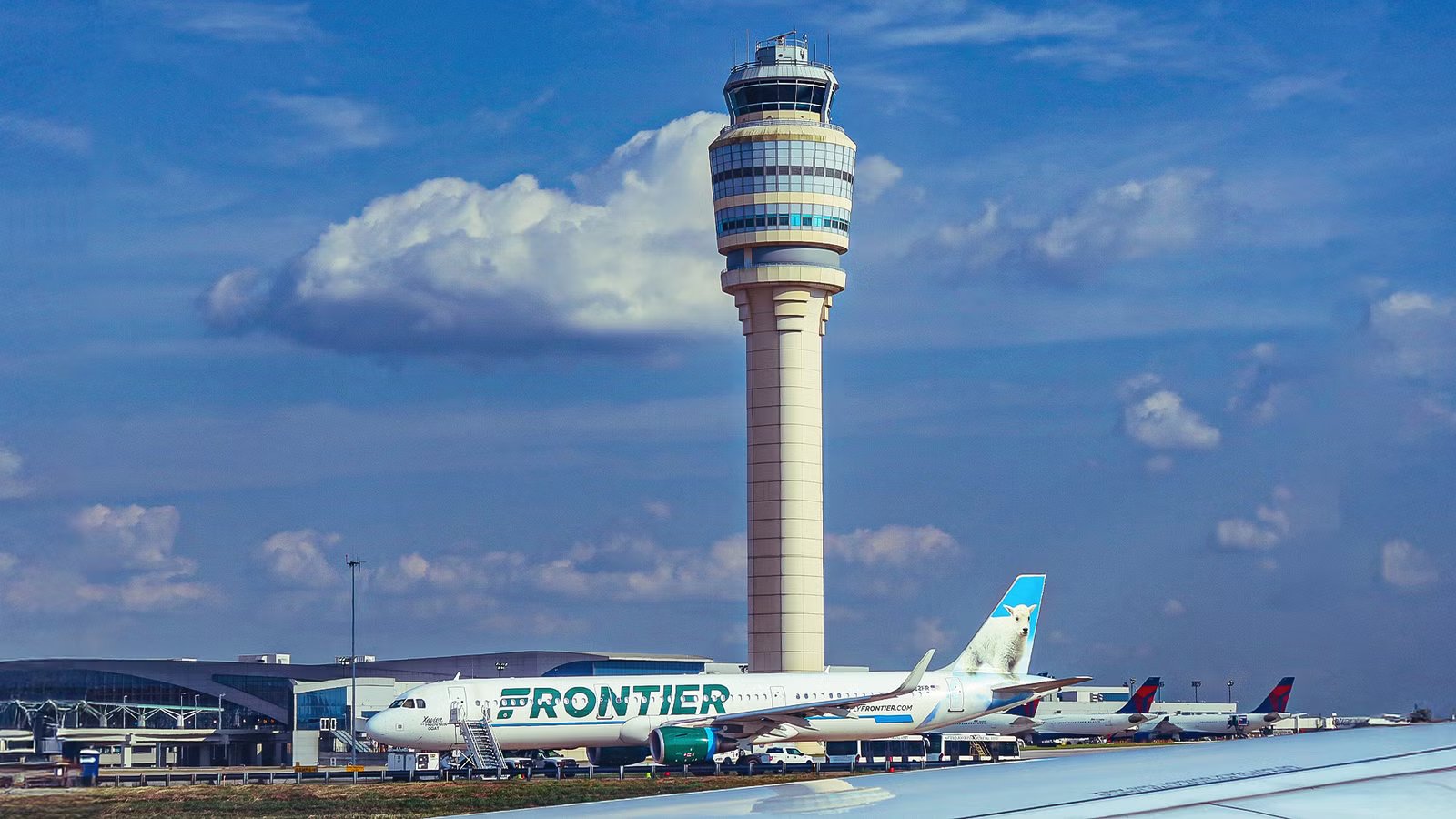
There are various ways to grade how “busy” an airport is, and this impacts the rankings. The busiest airport is typically regarded to be  Hartsfield-Jackson Atlanta International Airport as it has the most passengers annually (106.3 million in 2025). However, Chicago O’Hare also lays claim to being the busiest airport in the United States by number of takeoffs and landings. In 2025, O’Hare had 857,392 aircraft movements, placing it ahead of Atlanta’s 805,268 movements.
Regardless, both of these airports’ air traffic control (ATC) systems use an assortment of software dating back to before the iPhone. While that may sound dramatic, the devil is in the details. Overall, the US’ ATC is made up of a network of systems that are both older and more modern than many people may expect. The system is also in transition to the much more modern Next Generation Air Transportation System (NextGen), which is expected to continue rolling out into the 2030s.
If It Ain’t Broke, Don’t Fix It

The world is full of examples of old technology developed many years ago. New systems may have been developed, but the old systems were never replaced. Often, upgrades are layered on top, but the underlying system remains the same legacy system. Often, it works well enough and avoids the gargantuan task of replacing the old system. This is true of many banks’ software. Sometimes, it’s just entirely infeasible to change a system; this is true of the sides of the roads countries drive on. For example, Hong Kong drives on the left and mainland China on the right.
At other times, there’s no need to change an old system. The world’s time was standardized based on British local time centered on Greenwich in London, driven by a need to standardize railroad times and telegraph times. There are times when old technology remains operationally useful even after becoming technologically outdated. Famously, until 2019, the US nuclear weapons system still ran on a 1970-era computing system that used the old 8-inch floppy disks.
The system remained in use mostly because it worked, even if the cost of maintaining such an old system got larger over time. The old system was also considered resistant to cyberattack. The US Air Traffic Control, using old software systems, is perhaps somewhat analogous to the issues that modern banks face and what the US Air Force faced with its nuclear weapon system.
When Regulations Get In The Way

Like the US nukes and modern banks, there are enormous challenges to overcome in upgrading ATC systems. ATC modernization efforts are constrained heavily by safety certification and interoperability. It can be a huge task to get a new system to meet new FAA safety standards. This is across the aviation sector and is one of the major limitations of developing new aircraft, new engines, and even new seats.
As an example of seats, delays in FAA approvals on some of its new Allegris business class seats prevented Lufthansa from accepting many of its new Boeing 787-9 for a period of time. Some aircraft were put into service with uncertified seats blocked off. In ATC, a software defect could result in false radar tracks, corrupted flight plans, crash displays, nationwide disruptions, and more that could lead to catastrophic results.
Legacy systems become difficult to replace because the entire ATC ecosystem has been adapted around them. Controllers are trained around specific display layouts, alert sounds, keyboard shortcuts, and more, leading to a major retraining burden. Like certain other systems, ATC prioritizes reliability, continuity, safety certification, and risk minimization. The system can’t just shut down for upgrades, and a new system has to be able to work with all the other relevant systems.
Hartsfield–Jackson Atlanta International Airport Remains North America’s Busiest By Total Passengers
With over 100 million passengers handled in 2025, ATL continues to dominate global rankings for the world’s busiest airport.
Not All ATC Systems Are Old

It is also important to keep in mind that while parts of the air traffic control system in the US use floppy disks and Windows 95, not all of it does. Some parts have been modernized. The FAA currently relies heavily on two major nationwide platforms. One is ERAM, which is used for high-altitude en route control and is relatively modern. It is used at 20 major Air Route Traffic Control Centers responsible for managing aircraft cruising between cities. That system replaced old software whose roots stretched back to the 1960s.
The second system is STARS, which is responsible for airport approach and departure. It is used in Terminal Radar Approach Control facilities at airports and manages arrivals, departures, sequencing, radar displays, and other things. Some parts of the system are ancient, including analog voice switching, copper wiring, paper flight strips, old telecommunications infrastructure, displays, and other features (including the use of floppies).
|
FAA By the Numbers (per FAA) |
|
|---|---|
|
US airports |
19,482 |
|
Average daily flights handled by FAA |
44,360 |
|
Daily passengers |
Over 3 million |
|
Certified traffic controllers |
11,000 |
|
Air route traffic control centers |
21 |
As a rule of thumb, large airports tend to have advanced STARS integration, digital coordination tools, newer networking, and other improvements compared with smaller airports that often use older local equipment and paper strips. It is also important to emphasize that “old” is relative. The pressure of rapid, repeated modernization cycles does not apply to all industries equally. An iPhone 6 from 2014 may seem badly outdated by today’s models, but an earlier Boeing 787 Dreamliner from the same year would be considered relatively modern compared with legacy Boeing 767s still in service.
Running On Software Before First iPhone

The first iPhone debuted in 2007, the year that Microsoft launched Windows Vista. Even the busiest American airports indeed run on ATC software that predates the iPhone, but this is a little misleading. But it is true that the country’s busiest airports still rely on core air traffic control software architectures developed before the iPhone. However, the system is not static, and various aspects of the system have been, and are being, repeatedly upgraded since.
STARS, along with other aspects of major terminal control software infrastructure, was originally designed in the 1990s and first deployed in the 2000s. Today’s STARS is not literally unchanged 1990s code and is better thought of as a continually renovated control system rather than an antique frozen in time. It can also be pointed out that the underlying iOS software architecture is around 19 years old, having been developed by Apple since 2005.
That said, iOS’ roots are older still, with it being built on the Darwin operating system, an open-source Unix-like system first created by Apple in 2000. Darwin is, in turn, based on the Mach microkernel and BSD, meaning that the oldest genetic codes can trace back to the 1970s and 1980s. The Android operating system traces to the early-1990s Unix lineage. This is not to say iOS and Android are old, but to point out these systems evolve into something very different over time, and this is a more difficult, tedious, and risk-averse process for ATC systems.
Why Are Air Traffic Controller Trainees Getting A Raise?
Becoming an air traffic controller involves a rigorous and demanding process that requires extensive training and certification.
The FAA’s Next Generation Air Transportation System (NextGen)

America’s ATC systems are being upgraded. The Next Generation Air Transportation System (NextGen) is the FAA’s long-term, multi-billion-dollar program to modernize the National Airspace System (NAS). This will shift ATC from the older ground-based radar and voice-centric systems to a more satellite-based, digital, automated, and data-driven system.
NextGen is rolling out across the country. In 2024, the FAA stated, “NextGen has delivered $10.9 billion in benefits between calendar years 2010 and 2023 from more than 20 NextGen capabilities through more than 200 implementations across the country.” The aim of the new system is to increase safety, capacity, efficiency, flexibility, and resilience, and also reduce delays and fuel consumption for aircraft.
The FAA also says, “NextGen modernization also enables a shift from tactical and reactive air traffic control to strategic integrated air traffic management. An overarching FAA goal is Trajectory Based Operations (TBO), an air traffic management concept providing a common understanding of planned aircraft flight paths in three spatial dimensions plus time for all stakeholders.” These things take time, with planning having started around 2003 with the Vision 100 Act. Now, many core capabilities are deployed, although full integration is not expected to be complete until the 2030s (there is no ‘completion date’).
Helping Relieve ATC Staffing Shortage

Besides aging infrastructure, one of the biggest issues facing the FAA is a shortage of trained air traffic controllers. This is another impetus to update old systems. Even if old systems work, they may be inefficient and labor-intensive. In 2026, Reuters reported that the FAA was sharply reducing its target for air traffic control staffing as it sought to “modernize scheduling and increase the time employees spend managing traffic.” The new target is now set at 12,563 certified controllers, down from 14,633.
The FAA’s 2026-2028 Air Traffic Controller Workforce Plan explicitly ties technology upgrades to workforce efficiency. The lower staffing targets are to be aided by gains from automation, machine learning tools, better scheduling systems, and digital infrastructure. It is also looking at ways to train crews faster. This said, while updating the system should help relieve some pressure on the staffing problem, it will not fix it entirely.
As stated, the pre-May target was 14,633 certified controllers, but as of 2026, the FAA only has around 11,000 certified controllers, meaning it would still be understaffed with the new target. Even modernized systems rely on humans to monitor automation, resolve conflicts, handle emergencies, and other factors. In the short term, modernization efforts can worsen staffing strain by increasing training burdens or even inadvertently encouraging existing staff to retire a little earlier than go through new training.
Catch what other trackers miss
Emergency squawks, holds, NOTAMs — live signals, no signup.
Open tracker
Catch what other trackers miss
Emergency squawks, holds, NOTAMs — live signals, no signup.
Open tracker