dailynewsnblog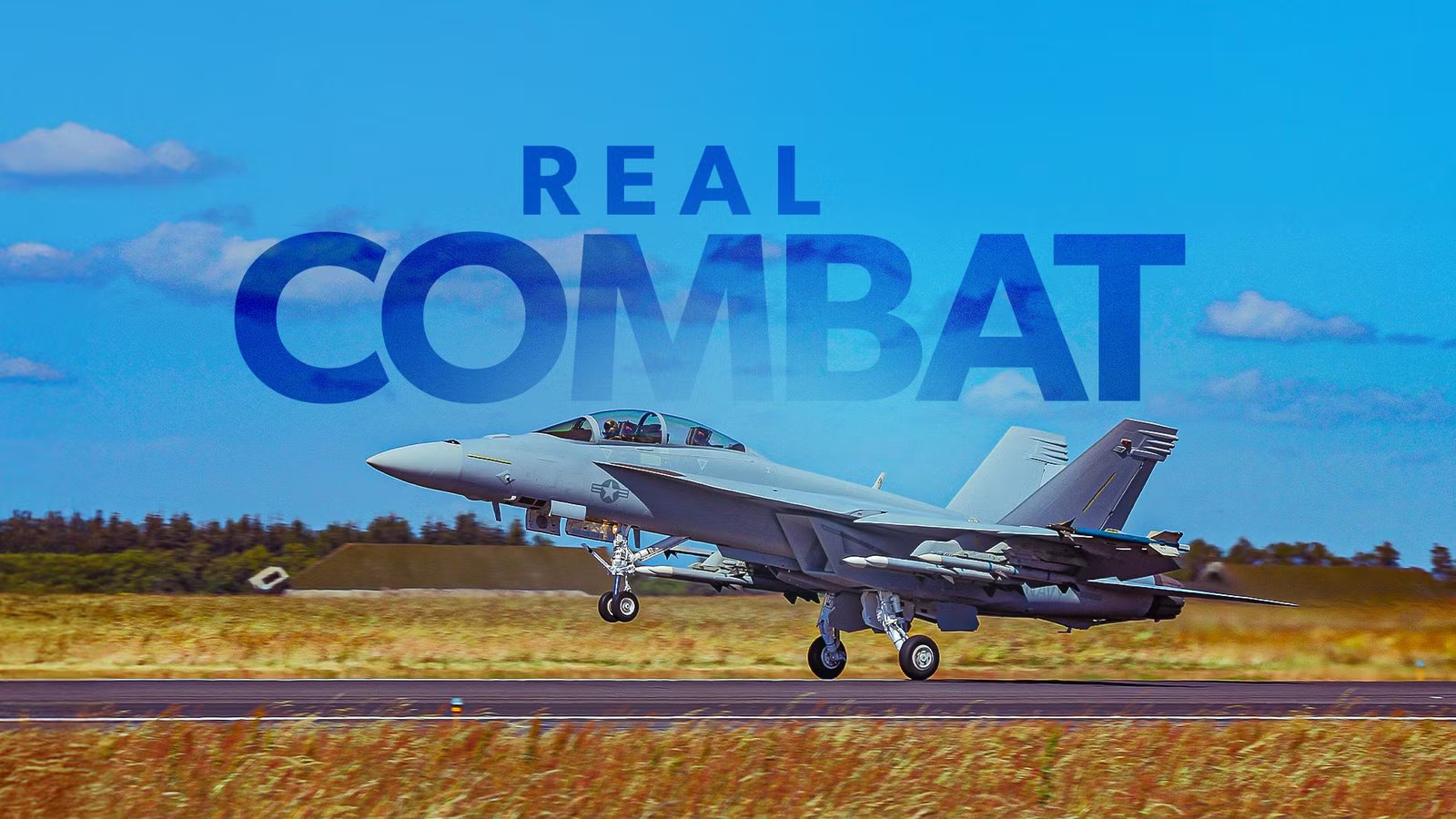
Although much of the dialogue regarding air warfare is centered on next-generation platforms like the 5th-gen Lockheed Martin F-35 Lightning II or the  Boeing 6th-gen F-47, even the existing fighters like the LM F-22 Raptor and Chengdu J-20 Mighty Dragon are essentially exquisite hangar queens. Some exceptions exist, like the Northrop Grumman B-2 stealth bomber and the Russian Sukhoi Su-57 Felon, which are both important elements of their respective air forces, but for the most part, 4th and 4.5-gen airframes do the heavy lifting.
Even in the 21st century, the Fairchild Republic A-10 Thunderbolt II, better known as the Warthog, proves that it doesn’t take a cutting-edge flying piece of tech to get the job done. The US Air Force has tried to retire it time and again, yet during Operation Epic Fury, it has proven to be one of the most effective drone-killing aircraft available. Similarly, the General Dynamics F-16 Fighting Falcon is the workhorse of more than 25 nations around the world. The US Navy, the indisputed global leader of Naval Aviation, is armed with the F-35C, yet the venerable Boeing F/A-18E/F Super Hornet is still the primary strike fighter.
The reasoning is simple. Although many of the most popular fighters and bombers serving on the front line of conflicts from Ukraine to Iran lack the best technology available, their performance and reliability make them the best solution for modern air forces. Aerospace manufacturers around the world promise staggering technology in their latest and greatest warplanes, yet these ‘glass cannons’ are often far removed from the battlefield, and it is the simpler, cheaper, and more familiar platforms that win the day.

The bottom line is cost per capability. The most cutting-edge 5th and 6th-gen tactical aircraft in the world cost roughly double what their preceding counterparts do. This technology is over-engineered for the vast majority of missions on the 21st-century battlefield. A 4th or 4.5-gen plane is good enough for 49% of missions that are dirty, messy, or boring. That cost advantage is compounded by higher readiness levels that are typically found with older, proven designs, which also have the advantage of a large and well-established supply chain support apparatus.
In a conflict like those in the Middle East or counter-insurgency operations, the primary goal is to loiter over a battlefield for hours and drop bombs on visible ground targets. A Super Hornet, an A-10, or an F-16 can carry significantly more ordnance externally than an F-35 can internally. Stealth is irrelevant when the enemy is a ground insurgent with no radar.
The MQ-9 Reaper has been a vital element of the US and Israeli campaign during Operation Epic Fury thanks to its low cost and the ability to maintain persistent aerial surveillance without risking human life. A significant number have been lost to enemy fire, owing to the low-tech level of the drone compared to crewed platforms, but the much lower cost of the airframe and high mission value offset the attrition.
Unlike crewed fighters limited by pilot fatigue and shorter fuel cycles, the MQ-9 maintains a persistent presence over Iranian territory. Reapers act as battlefield commanders. They use their advanced sensor suites to find targets and then call in other ‘shooters,’ aka crewed fighters and bombers.
The cost disparity is even more extreme in the strategic strike fleet. The B-2 Spirit is a $2 billion asset that must be kept in climate-controlled hangars to protect its skin. A single flight hour costs roughly $70,000 to $85,000 per hour. Despite being nearly 70 years old, the B-52’s massive payload and lower operating cost make it the preferred missile truck once air superiority is established.
Tailhook On Target: Super Hornets Take The Lead

While initial ‘Day One’ strikes often rely on stealth bombers and cruise missiles, carriers sustain long-term support for a campaign. Operation Epic Fury, like every other American expeditionary military operation, heavily relies on the US Navy carrier strike group deployed off the shore of Iran. The 2026 joint operation has seen air wings from both the USS Gerald R. Ford and USS Abraham Lincoln provide crucial air support in the form of surgical strikes against a wide range of targets.
The Ford is America’s newest carrier, with magnetic catapults and other advanced systems, but both the Ford class and the Nimitz class offer four and a half acres of sovereign US deck space anywhere they go. The super carriers of the US Navy house thousands of aircrew and sailors who sustain as many as 80 aircraft per ship. The self-sustained, mobile air base is the linchpin of American power projection anywhere on the globe.
|
Aircraft |
Mission Role |
Estimated Sortie Volume |
Reported Combat Attrition |
Primary Mission Tasking |
|---|---|---|---|---|
|
F/A-18 Super Hornet |
Carrier Strike |
Very High |
Precision strikes on bunkers, infrastructure |
|
|
F-16 Fighting Falcon |
Multirole / Anti-drone |
High |
Daytime strike & drone hunting |
|
|
MQ-9 Reaper |
ISR / Strike |
High |
24 |
Persistent surveillance |
|
F-15E Strike Eagle |
Deep Strike |
Medium |
4 |
Precision strikes on bunkers, infrastructure |
|
F-35 Lightning II |
SEAD / Strike |
Medium |
Suppression of enemy air defenses |
|
|
A-10 Thunderbolt II |
CAS / Anti-drone |
Medium |
1 |
Low-altitude drone hunting |
Unlike long-range platforms or cruise missiles, a Super Hornet can launch a sortie, return to ‘the Boat,’ rearm, and retarget mobile adversaries. Operating from the Arabian Sea and Red Sea, carrier aircraft had shorter flight times to Iranian coastal targets compared to heavy bombers flying from the United States. A single carrier air wing provides everything from electronic warfare via the Boeing EA-18G Growler, to airborne command and control, from the Grumman E-2D Hawkeye.
How The Boeing F/A-18 Super Hornet Stacks Up Against The F-35C In 2026
The US Navy’s strike fighters go head-to-head.
The Warthog Rides Again: A Case Study In Timeless Design

Since the United States launched a joint attack on Iran in support of Israel, the A-10 fleet has seen markedly increased demand. It has reportedly flown a wide range of missions, including drone hunting, maritime strikes, and combat search and rescue. The US has also relied on it to protect US personnel and embassy facilities in the region, including in Iraq, where it provided close air support against Iranian-backed militias.
Following a strong performance in an anti-drone role during Operation Epic Fury over Iran, the USAF has updated its 2027 plans. The new fleet structure would leave 54 aircraft to support three operational squadrons through 2030, according to Air & Space Forces Magazine. This comes as welcome news to analysts who consider the F-35 as a kind of ‘glass cannon’ compared to the Warthog.
|
Aircraft |
Generation |
Cost Per Flight Hour |
Maintenance Per Flight Hour |
Mission Capable Rate Estimate |
|---|---|---|---|---|
|
F-22 Raptor |
5th |
$85,000 |
30.0 |
50% |
|
F-35A Lightning II |
5th |
$39,000 |
10.0 |
50% |
|
B-2 Spirit |
5th |
$170,000 |
50.0 |
50% |
|
F/A-18E/F Super Hornet |
4.5 |
$30,000 |
6.0 |
75% |
|
F-16C/D Falcon |
4th |
$25,000 |
4.0 |
75% |
|
A-10 Thunderbolt II |
4th |
$20,000 |
3.0 |
75% |
|
MiG-29 Fulcrum |
4th |
$15,000 |
12.0 |
50% |
|
B-52H Stratofortress |
2nd |
$75,000 |
15.0 |
75% |
A rocket pod containing seven projectiles can be mounted on the same hard point as a single missile. A single rocket costs between $25,000 and $40,000, while an AIM-120 AMRAAM costs more than $1 million. According to the war zone, the A-10 equipped with APKWS II enables the US to counter drone swarm tactics without exhausting expensive missile inventories.
By using the APKWS to counter low-speed drone threats, the US saves its limited stocks of AIM-9X and AIM-120 missiles for high-end threats such as manned fighters and cruise missiles. There is even a plan to upgrade the system for simultaneous ‘fire and forget’ targeting.
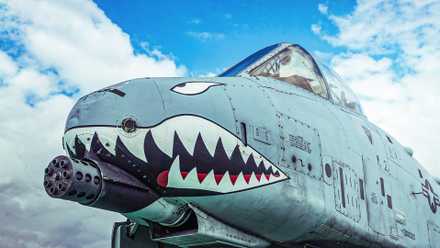
How The Fairchild Republic A-10 Warthog’s Titanium Bathtub Protects Pilots From Ground-Level Ballistics
The story behind America’s flying tank buster.
The Saga Of The Viper: No Sunset In Sight For The F-16

Originally developed by General Dynamics in the 1970s to create a pure dogfighter for the US Air Force’s ‘Fighter Mafia,’ Lockheed Martin is taking over the program and has continued to improve it. With more than 4,600 examples delivered today, the F-16 is the most mass-produced fighter jet for sale today that is still being produced. The first models were only made to be daytime dogfighters, but later Block 50 or 70 variants, as well as retrofitted F-16s, have evolved to be exceptionally versatile multirole jets.
In 2026, legacy examples of the F-16 are some of the most popular second-hand fighter jets that money can buy, while the factory-fresh Vipers deliver much of the capability that their newer counterparts, like the F-35, can at a fraction of the cost to air forces with narrower mission scopes.
Ukraine provides the best example of why the F-16 remains a staple airframe in the inventory of more than two dozen air forces around the world. Like the A-10, Ukrainian F-16s have been upgraded with Sniper XP targeting pods and APKWS laser-guided rockets, allowing them to hunt Russian drones similar to the Shahed efficiently, even when swarm attacks are launched. Ukrainian President Vladimir Zelensky gave these comments to Reuters, saying the Viper is four to five times better than its Soviet predecessors:
“The F-16 is a fighter that has become a multirole aircraft which can fulfill the entire spectrum of airborne tasks. The MiG-29 unfortunately, is from the last century.”
Looking back at the USAF as the air power leader, F-16CM Block 50s are also hunting drones alongside A-10s in Iran to great effect. Israel has also relied on the F-16 for decades, and still uses its Vipers to perform quick reaction alert interceptions while also pioneering deep strike tactics that leverage the Falcon’s adaptable airframe to install new drop tanks, electronics, and weapons that keep the F-16 one step ahead of threats.
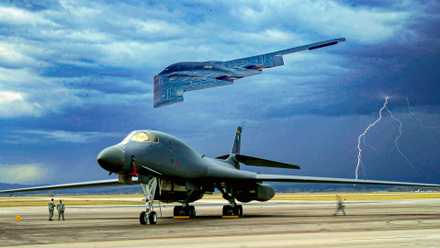
Why America’s Oldest Strategic Bombers Are More Valuable Than Ever
The weary warbirds that continue to defend the skies.
Don’t Knock The BUFF: The B-52 Stratofortress

The B-52 is currently the most useful bomber in the US fleet because it functions as a highly adaptable, cost-effective arsenal ship that can perform almost every mission type except stealth penetration. In one of the most counterintuitive military recapitalization projects in history, the USAF is retiring more modern stealth B-2 and supersonic Rockwell B-1 Lancer bombers as it procures the new B-21 Raider while simultaneously reinvesting in the much older B-52.
To create the new high-low bomber mixed fleet, America is investing in an upgrade program dubbed the B-52J that will modernize the BUFF. The B-52 fleet is now flying overland missions in support of Operation Epic Fury, seeing the most combat action they have had in decades. After being upgraded with new engines, avionics, and weapon systems, their extended service life could potentially reach 100 years before final decommissioning. Once again, the reasoning comes down to readiness and operational costs.
The B-2 and B-1 are facing massive readiness issues due to severe wear and tear on their delicate systems. The B-2s are getting some upgrades to extend their service lives as a ‘bridge’ to integrate a sizable number of the new B-21 Raiders, but the Lancers are in the process of being sunset. The supersonic B-1 has a huge payload capacity, even compared to the B-52, but the stresses of its high-performance flight profile have made the aircraft unviable for future sustainment.
The B-52H Stratofortress remains because it is the most efficient follow-on platform for the conflicts of tomorrow. The new fleet of 100 to 200 B-21s will be the ‘door kickers’ and penetrate enemy airspace while taking out the most dangerous elements of enemy air defenses. Even before aerial support has been established, the BUFF is uniquely capable of carrying external weapons like hypersonic standoff cruise missiles that can be launched from hundreds of miles away, with targeting assistance from the Raider.
Catch what other trackers miss
Emergency squawks, holds, NOTAMs — live signals, no signup.
Open tracker
Catch what other trackers miss
Emergency squawks, holds, NOTAMs — live signals, no signup.
Open tracker