dailynewsnblog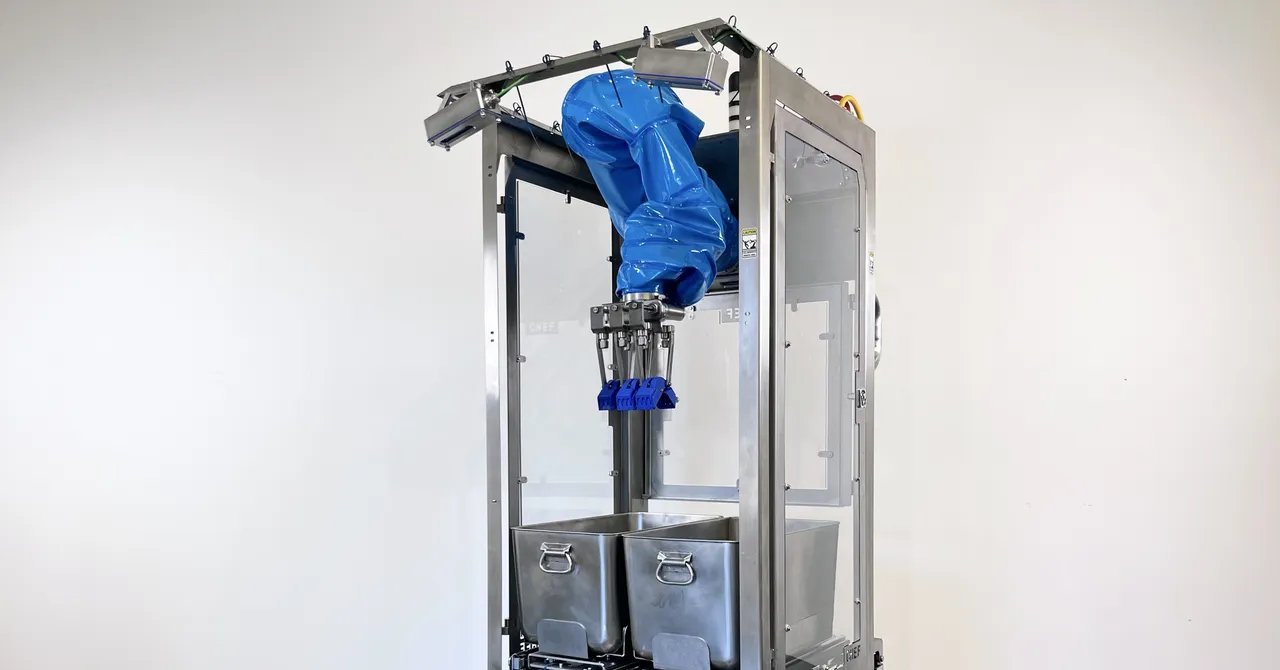
These potato-salad-slinging AI chefs aren’t taking anyone’s jobs. Not yet, anyway. They’re just here as volunteers.
Project Open Hand, a nonprofit founded in 1985 by local grandmother and HIV-awareness advocate Ruth Brinker, prepares and packages meals to meet the diverse nutritional requirements of people who need them. The effort began in response to the AIDS crisis, but the nonprofit has since expanded the meals it makes for people with conditions such as heart disease, diabetes, or chronic kidney disease.
But it takes many people to make these meals, and Project Open Hand has struggled to entice volunteers to help fill the meal kits. The organization is housed in a four-story building in San Francisco’s Tenderloin district. During peak hours, the place feels like a big operation, usually bustling with people. Some of them are there in need of the free meals, some are staff and volunteers there to make the food and keep the place running.
The process of putting together medically tailored meal boxes can get complicated. Different patients have different needs, so the meals that go out for donation cannot be one-size-fits-all and have to account for allergies and nutrient requirements based on people’s needs and medical conditions. That’s where the robots come in.
“It’s not even that they’re faster,” says Alma Caceres, a sous chef who works on the meal prep process at Project Open Hand. “It’s that we don’t have the volunteers.”
Chef Robotics is a San Francisco company that makes “physical AI for the food industry.” It’s one of the many companies focused on building robots that can better handle physical objects. Chef’s automated robots focus specifically on plating—no cooking or chopping—just the act of getting the food on a plate at scale. It has clients for its robo-made meals, such as Amy’s Kitchen and Factor, the frozen-meal company. Chef Robotics is also training its robots to eventually handle more complex tasks, like assembling a hamburger piece by piece.
The partnership with Open Hand came from a chance conversation between employees from the two organizations on the Bay Area Rapid Transit. When presented with the idea, Project Open Hand’s CEO, Paul Hepfer, said the cost of renting the robots felt worth it. (Yes, they pay a subscription fee.)
“Nonprofits often operate under a scarcity mindset, and I think that’s a disservice to the people we serve, because then you’re not looking for innovations or quality improvements,” Hepfer tells WIRED. “There’s not a whole lot of robots, AI, and innovation in the Tenderloin, I would bet.”