dailynewsnblog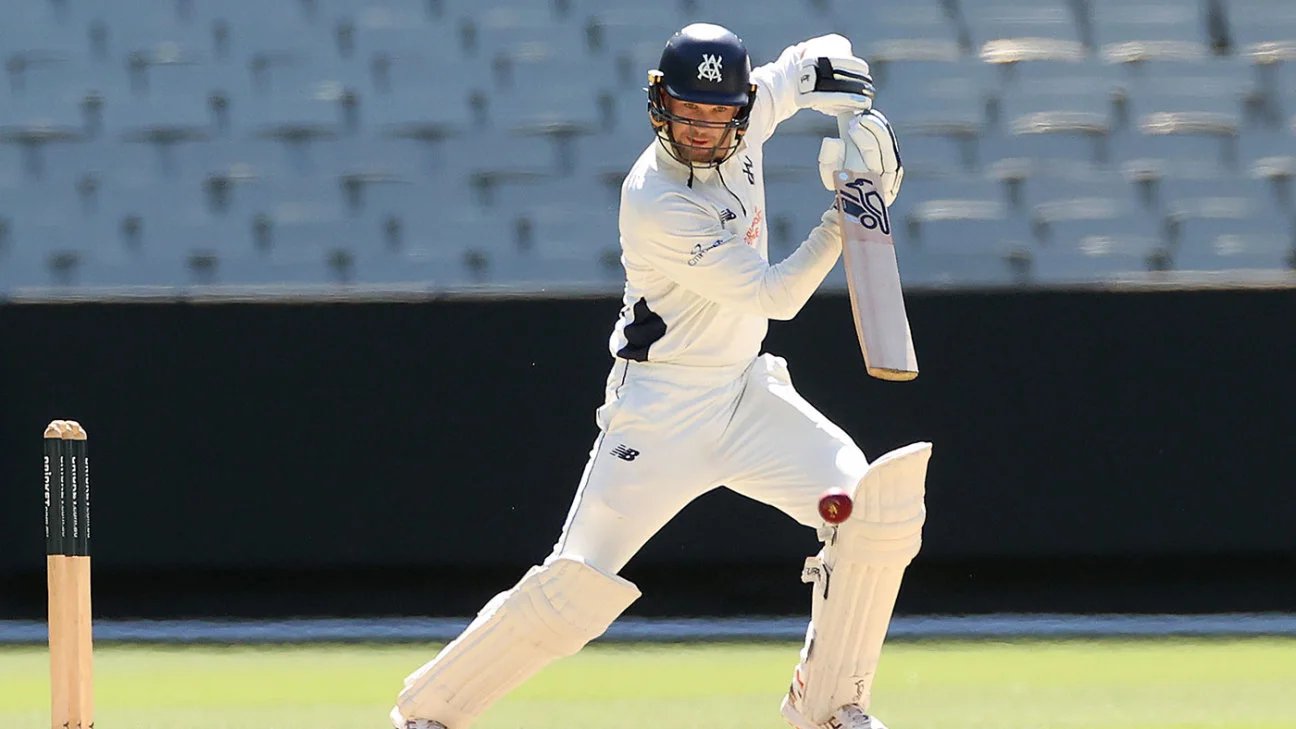
Only two players, Ben Compton and Shan Masood, have scored more first-class runs globally in the same period. No one, therefore, is better qualified to talk about the challenge of Shield batting right now.
As it stands with one round to go, there is a distinct possibility that no batter will pass 800 runs for the regular season for the first time in a completed home and away Shield summer since 2017-18, discounting two Covid-reduced seasons in 2019-20 and 2021-22.
“I kind of feel like a few years ago, potentially the drop-in wickets they stopped breaking up and they stopped reversing,” Hansdcomb said. “So, we had to try and figure out a way to get the game moving forward at some stage. So that kind of happened at the start of the game, and then they were the result wickets, and the [states] that produced flat wickets were getting draws. And so then when you’re the side that’s getting half your games with draws, and everyone else is getting a result, you kind of get left behind a little bit.
“So it kind of feels like everyone now has made result wickets, which is a bit of a shame, because it’s making batting really tough. And I feel like reverse swing has gone a little bit out of the game as well, because the ball doesn’t get roughed up anymore. The squares are really, really green, really soft. I don’t know if we’re losing a little bit of the sort of Australian reverse swing and that fiery pace. But if that’s the way the game’s going, that’s the way it’s going.”
Being comfortable as well with playing and missing, understanding that you’re going to miss a lot of balls, and you might get hit a few times as well, but if you’re still out there, then you’re doing your job
Peter Handscomb on his batting mindset
Victoria are attempting to become just the second side in Shield history to win eight games in a season when they host South Australia on Saturday in what may be a preview of the final if Queensland can’t defeat Tasmania.
To Handscomb’s point, there have been more three-day finishes (nine), than draws (seven) across nine rounds to date this season, including two three-day games in the most recent round while several of the draws have been rain-affected.
There is a suggestion the current version of the Kookaburra ball, with two coats of lacquer and a more pronounced seam, has also played its part as the Dukes ball did in 2017-18. But Handscomb echoed the sentiments of others in believing the pitches are more the issue as the ball rarely if ever wears.
“Probably more the surface, I think, than the ball,” he said. “It just feels like there’s always some something in it, because it’s not roughing up the ball as much. Then you’ve got conventional swing, you’ve got a hard seam. So it always feels like it’s doing something.”
How then do you survive as a batter? Handscomb has two centuries, two half-centuries and three ducks across a rollercoaster season to highlight the lottery that Shield batting is right now.
“I think for my game, I’m trying to keep it as simple as possible, not trying to play a heap of shots,” Handscomb said. “I’m trying to keep it to a point where I feel I could score off some balls in certain areas, and then everything else is just defend like crazy and hope that it doesn’t take your edge.
“Being comfortable as well with playing and missing, understanding that you’re going to miss a lot of balls, and you might get hit a few times as well, but if you’re still out there, then you’re doing your job.”
Handscomb is still hopeful of adding to his 20 Test matches. There is a vacancy at No. 5 in Australia’s Test side following Usman Khawaja’s retirement but it would appear more likely he would be considered for the five-Test tour of India early next year given his experience in those conditions. But his form in Shield cricket will be largely irrelevant for that tour, as he noted, given how little spin was being bowled in the competition due to the pitches.
“We’ve seen some amazing spinners playing for Australia, and what they can do in a Test match, and how they can crack the game open by just changing the pace up of not just having a constant fast bowler the whole time,” Handscomb said. “So being able to use the spinner in a long format game, there’s a nuance to it, and it’s a shame that these green wickets are sort of taking them out a little bit.”
Handscomb was asked whether the Shield’s bonus points structure could be looked at for the second half of the game to bring spinners back into the equation. Currently the competition has batting and bowling bonus points: 0.01 of a bonus point for every run over 200 scored during the first 100 overs of their first innings (350 after 100 overs registers 1.5 bonus points) and 0.1 of a bonus point for every wicket a team takes during the first 100 overs of their opponent’s first innings (10 wickets before 100 first-innings registers 1 point).
“Potentially you could change the points system,” Handscomb said. “I’m not smart enough to tell you how that should change. But if there’s a way to incentivize a longer game, then that’d be great, or bringing spinners in, or whatever. I don’t know how to do it. But it is a shame that we’re seeing games sort of finishing day two, day three, and spinners aren’t getting the go, and batters are just fighting for their life each time they’re batting.”
Alex Malcolm is an associate editor at ESPNcricinfo