dailynewsnblog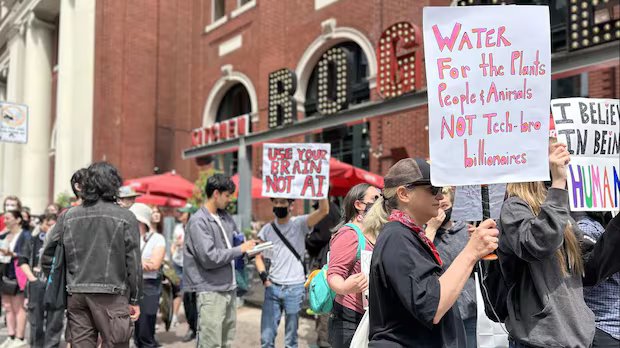

Listen to this article
Estimated 4 minutes
The audio version of this article is generated by AI-based technology. Mispronunciations can occur. We are working with our partners to continually review and improve the results.
Hundreds of people marched through Vancouver on Saturday to protest two planned AI data centres in the city, raising concerns about the amount of water and energy such facilities can use as the region faces tighter water restrictions.
The demonstration began at Waterfront Station, where protesters gathered before marching toward Granville Island as they chanted against artificial intelligence and carried signs opposing the construction of new data centres in Vancouver.
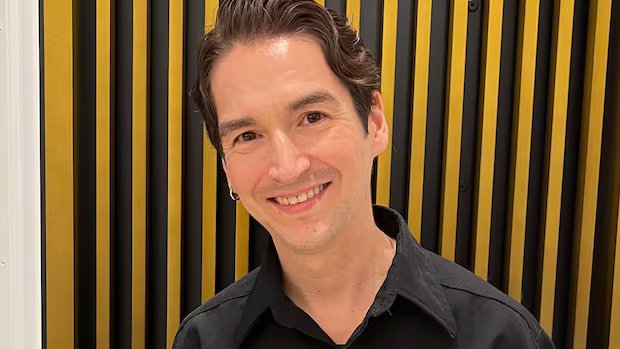
Torin LaRocque, who organized the protest, said he wants the city and federal government to stop the projects.
“We should just not have any data centres in Canada, period,” he said. “Instead of focusing on these giant corporations, our government should be focusing on its citizens,” LaRocque said.
Telus is proposing two new AI data centres in Vancouver and an expansion of its existing facility in Kamloops as part of Ottawa’s Enabling large-scale sovereign AI data centres initiative.
Federal Artificial Intelligence Minister Evan Solomon has said the project would expand Canada’s “sovereign compute capacity” while helping domestic commercial and academic interests to compete in the global AI economy.

The first Vancouver project, located at the former Hootsuite headquarters in Mount Pleasant, will come online later this year. A second facility at 150 West Georgia Street is planned for 2029.
The project has the backing of the B.C. government, which rolled out its own AI data centre power policy in January.
The City of Vancouver is also throwing its support behind the proposal, with Mayor Ken Sim calling the data centres “world-class facilities.”
But protesters say the public has not been given enough information about the environmental impacts and raised concerns over rising electricity demand and massive water consumption linked to AI data centres.

Telus will build a new AI data centre in B.C., under the federal Enabling Large-Scale Sovereign AI Data Centres initiative, Minister of Artificial Intelligence and Digital Innovation Evan Solomon announced on Monday. The project ‘reflects the kind of ambitious infrastructure that we need as a country,’ Solomon said.
“Why should we be using so much water for these AI data centres rather than using that water to help our people,” said LaRocque.
The protest comes as Metro Vancouver remains under Stage 2 water restrictions, which bans lawn watering, and prepares for the likely move to Stage 3 restrictions sometime in June.
Linda Parkinson, director of water services at Metro Vancouver, said there is no regional policy specifically for data centres.
She said a facility of that size would be treated like any other large water user.
“Both the city and Metro would have concerns and questions about a large water user coming in,” Parkinson said.
She said the key question would be whether the facility recycles water and avoids drawing heavily from the region’s water system.
Telus has touted the project as a green initiative.
According to the company, the facilities will run on 98 per cent clean hydro power and recycle enough waste energy to heat 150,000 homes. It says the projects will also use 90 per cent less water than a traditional data centre, and that it is working on plans to incorporate recycled water from B.C. Place stadium.

Emily Lowan, leader of the B.C. Green Party, who was at the protest, said she is skeptical of claims that the projects can be built sustainably.
“It feels like our politicians are just blindly chasing the AI bubble,” Lowan said. “I think we need to … take a step back, evaluate the risks.”
She said the proposed sites could be used instead for housing or other community needs.
“I think this is an incredibly inefficient use of land, both in the heart of downtown Vancouver and Mount Pleasant,” she said.
The federal government says no federal funding has been committed or distributed to the project so far.
In a statement Saturday, a spokesperson for Solomon’s office said residents’ questions about energy use, water use, noise, grid impacts and local benefits are part of the federal assessment.
Concerns about data centre power and water use have become a flashpoint in communities across North America as tech companies seek to expand their operations to keep up with AI’s growing power need.
One 2023 study estimated that generating between 10 and 50 medium-sized responses with AI chatbot ChatGPT used half a litre of water, while a separate study by the International Energy Agency, estimated data centres used 140 billion litres of water globally just for cooling in 2023.