dailynewsnblog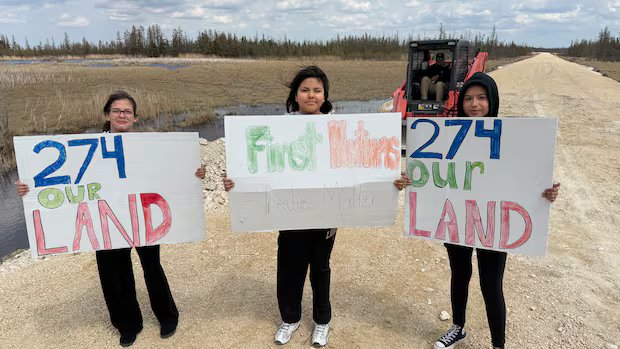

Listen to this article
Estimated 4 minutes
The audio version of this article is generated by AI-based technology. Mispronunciations can occur. We are working with our partners to continually review and improve the results.
Bit by bit, a provincial gravel blockade along an access road east of Lake St. Martin tumbled earlier this week, as a group of First Nations in Manitoba’s Interlake region gathered to remove it and get answers about why it was put there in the first place.
An orange track loader machine scooped gravel off the new Lake St. Martin Access Road, leading to a flood-outlet channel diversion, as demonstrators held signs reading “274 Our Land” and “First Nations Treaties Matter,” while chanting “This is our land” on Friday.
Chief Lawrence Letander of Dauphin River First Nation said the province didn’t notify Interlake First Nations before it restricted access to their hunting territory — a swath of land where community members also harvest traditional medicines.
He said he’s not sure when the gravel was put there or why that area was blocked off.
“That’s what we’re going to go find out,” Letander said before the group marched past where the line of gravel once stood.

“Obviously, they’re infringing on our treaty rights. We have every right to hunt here. We’ve hunted here for many, many years,” he said, hoping that the wildlife and traditional plant medicines haven’t been affected by construction in the area.
After a devastating 2011 flood around Lake St. Martin destroyed homes and displaced residents for years, the province built an emergency outlet channel to divert flood waters, according to a 2019 environmental assessment report for the access road.
The Manitoba government has proposed building a 23-kilometre-long permanent flood-outlet channel, repurposing the emergency channel in the project, which will also include a water-control structure and a bridge.
Infrastructure Minister Lisa Naylor said in a statement to CBC News that a gate was installed to restrict access where the newly-built access road meets Idylwild Road “as part of the environmental licensing process.”
“This gate was originally meant to limit environmental impacts of increased access to the area from construction of the new Lake St. Martin Access Road,” Naylor said, adding that the gate is “being reconsidered” due to feedback from First Nations.
The minister says the government respects the rights of First Nations and officials will continue to meet with Indigenous leaders. She said the province is focused on “working together in partnership to find solutions that build trust nation-to-nation.”

Interlake Reserves Tribal Council executive director Karl Zadnik, whose group represents seven First Nations in the region, says the province breached their treaty rights by blocking access to traditional hunting territory.
He said “the province has lied to us” and hasn’t adequately consulted First Nations about the channel project and the potential impact of construction on the land and their livelihoods.
“When you look back to the lack of good faith the province has in terms of trying to negotiate with us, you can clearly see it evident here by putting a blockade and restricting our access,” Zadnik said, stressing that the government previously promised not to block access to the lands.
“They have violated and breached the treaty right, the treaty right of all these people here, the future generations,” he said.

Zadnik says Interlake First Nations leaders will be meeting with Minister Naylor and Premier Wab Kinew early next month.
“We just want them to be forthright because we thought we were resetting this relationship when the new government came in, and there’s been no reset yet,” he said.
“We want to work together. We want to continue trying to get to a good-faith dialogue. Most importantly, we don’t want to be restricted on our lands and access to these lands for the livelihoods that we practice culturally,” he said.