dailynewsnblog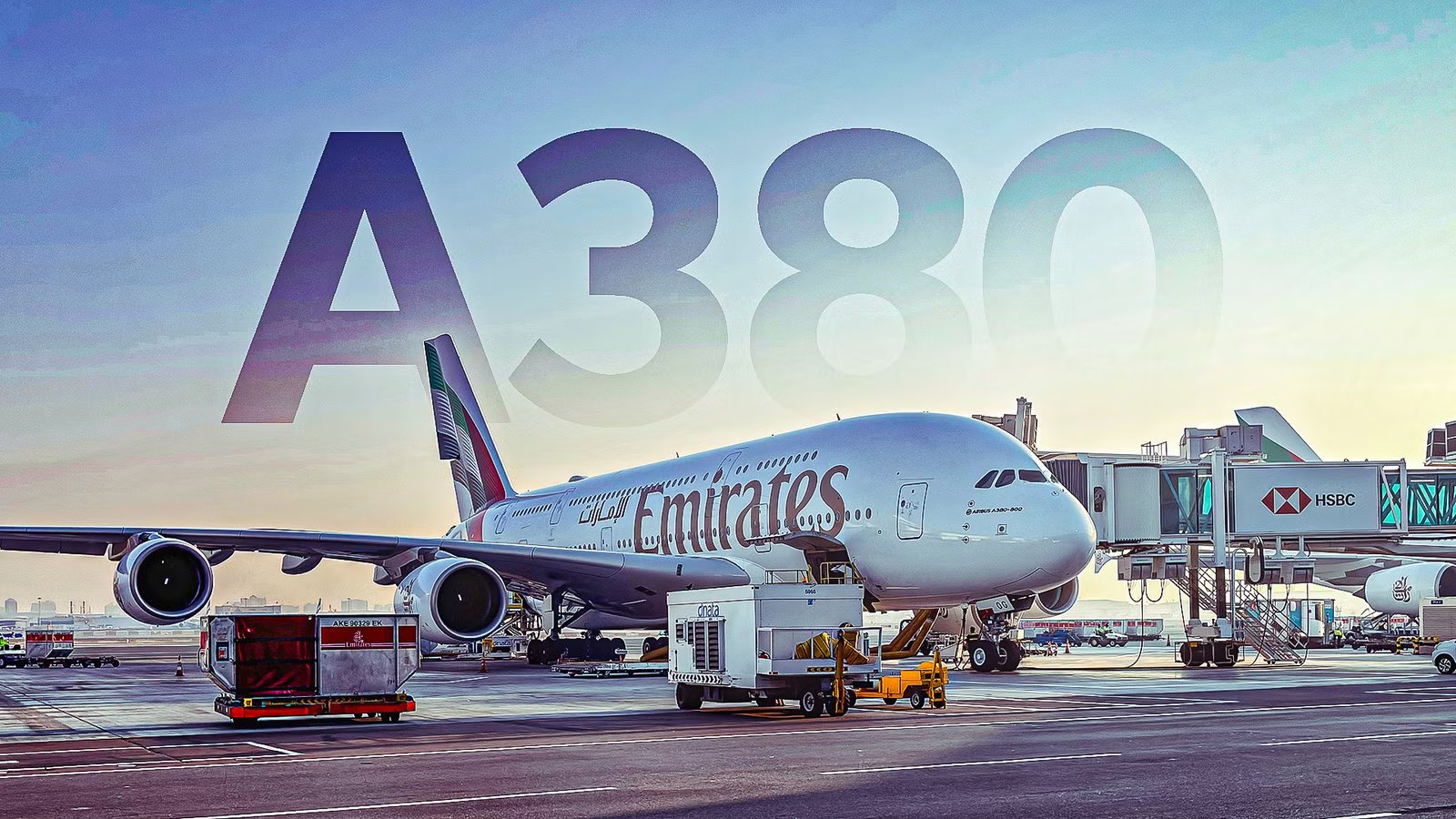
With peak summer season travel approaching, Dubai-based  Emirates has made a few changes in its network operations for the month of June, which sees the airline remove Airbus A380 aircraft from services on six routes. Some of these changes could be attributed to the low passenger demand on the routes, which makes operating an A380 financially unviable, while the others can be due to the airline undertaking cabin retrofits on a subfleet of its A380s.
That being said, the airline will still fly to these destinations. However, the carrier will be utilizing smaller aircraft types such as the Boeing 777 and the Airbus A350, the latter of which the carrier continues to take delivery of, with two new airframes joining the airline’s fleet earlier this week.
Six Destinations Won’t See The Emirates A380 This June

As per the latest scheduling data from Cirium, Emirates will not be operating its A380s on six of its routes across five countries. The data shows that the destinations of Copenhagen Airport (CPH), Osaka International Airport (KIX), Washington Dulles International Airport (IAD),  Munich Airport (MUC), Manchester Airport (MAN), and
  London Gatwick Airport (LGW) were scheduled to see a total of 286 flights (one-way) operated by the quadjet across the month of June, but this is no longer the case.
Loading map…
Drag to explore
These changes could be the airline potentially reacting to low customer demand on some of these routes as a result of the ongoing regional conflict. However, by deploying smaller aircraft on these routes, the carrier can right-size its operations across the month of June by ensuring it does not deploy excess capacity, while also reducing its operational costs. The following are the changes made:
|
Route |
Number Of A380 Flights (One Way) |
Replaced With |
|
|---|---|---|---|
|
Previous Schedule |
New Schedule |
||
|
DXB-CPH |
16 |
Boeing 777 |
|
|
DXB-KIX |
30 |
||
|
DXB-IAD |
30 |
||
|
DXB-MUC |
60 |
||
|
DXB-MAN |
90 |
||
|
DXB-LGW |
60 |
Boeing 777 / Airbus A350 |
|
However, it is worth noting that not all of these A380 cuts can be attributed to the demand being insufficient. This is because on some of these destinations, Emirates uses its subfleet of 15 A380s, which are configured in a high-density seating capacity. These aircraft are undergoing cabin retrofits to reduce their overall capacity and introduce more business class seats and premium economy cabins onboard, and therefore, some of these aircraft will not be available to fly over the course of the coming months.
Less Dense And More Premium A380s

With the first of the 15 airframes recently completing the cabin retrofit, the airline has stated that it aims to undertake and complete the retrofits on the remaining 14 high-density configured airframes by the end of this year. These retrofits will essentially remove 120 economy seats from the upper deck of the A380, and instead have 56 premium economy seats, along with 18 more business class seats installed.
This reduces the A380’s overall capacity from 615 to 569, but adds 74 more premium seats, which can bring in higher revenue for the airline. Considering that the airline has stated it will take approximately 30 days to finish the retrofit on each aircraft, the airline has seven months to complete the cabin upgrades on 14 aircraft. As such, multiple airframes in these configurations are expected to be undergoing retrofits simultaneously.
So how does this affect the routes mentioned above? Well, the airline usually deploys these 15 airframes consistently across nine destinations, which include Copenhagen, London Gatwick (multiple services), and Manchester, which account for three of the six destinations listed above.

Massive 569 Seats: Emirates’ Brand-New Airbus A380 Now Has 9 Routes [Map]
Emirates’ new 569-seat A380 now brings premium economy to nine more destinations.
The Airline’s Network And Operational Recovery

While the entirety of the Middle East was impacted and several airlines faced significant disruption at the start of the conflict, airlines restarted operations shortly thereafter, utilizing safe corridors within airspace, while operating more diligently. While some carriers recovered better than others, Emirates saw the fastest network recovery over the past few months.
The United Arab Emirates (UAE) was one of the first countries to reopen its airspace, which allowed airlines based in the country to resume operations and rebuild their networks. Despite several disruptions in the region, Emirates operated resiliently and earlier this month recorded its network recovery to exceed 96%. When it comes to the number of flights operated, according to the Gulf Airline Recovery Index dashboard set up by FlightRadar24, as of May 22, Emirates has recovered over 85% of its flights when compared to the last week of February.
In comparison, fellow airlines such as Etihad Airways and Qatar Airways have their flight recovery within the range of 70-80% and 60-65%, respectively. Meanwhile, airlines such as Gulf Air and Kuwait Airways, despite being late to resume significant operations, have also recovered rapidly, indicating 80% and 70% flight recovery, respectively.