dailynewsnblog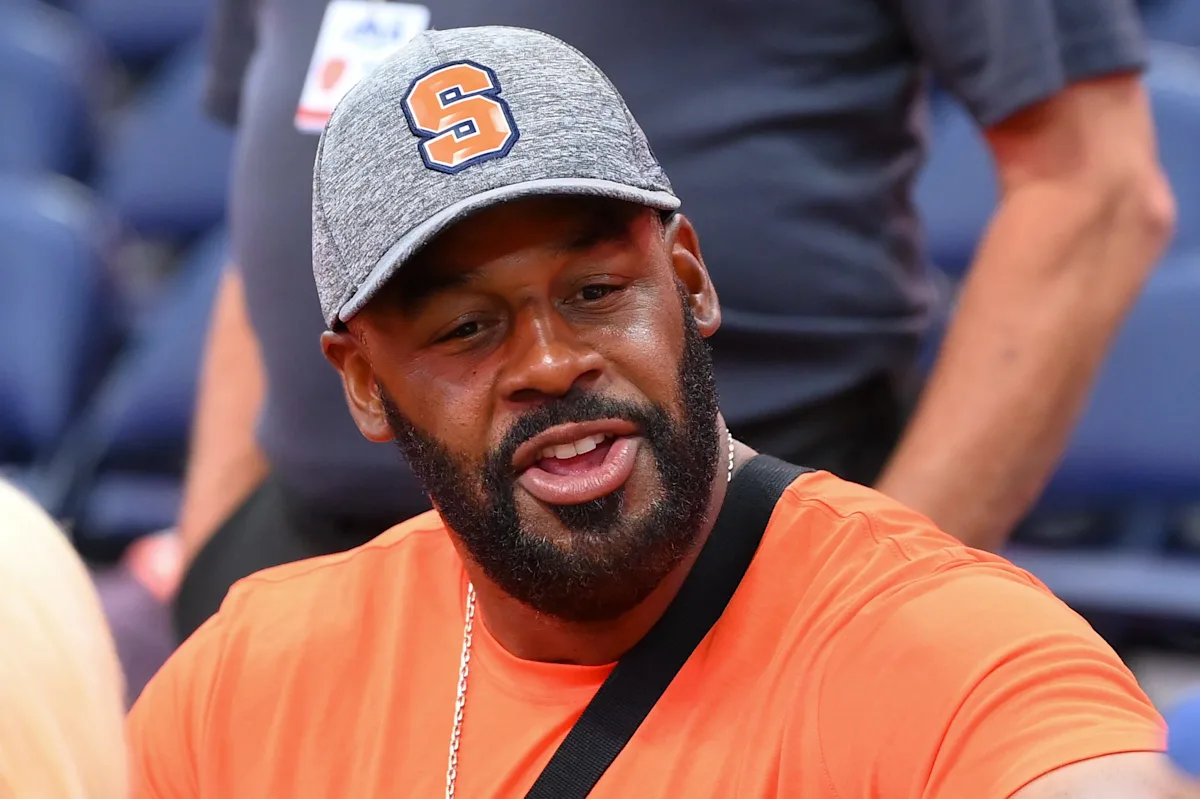
The Philadelphia Eagles have long valued rare athletic profiles, whether they come from traditional football backgrounds or from athletes who sharpened their instincts, speed, toughness, and body control in other sports.
That history has included Olympic track athletes, college basketball players, baseball prospects, rugby converts, skiers, high school dunkers, and players whose multi-sport backgrounds helped explain why they looked different once they reached the football field. The list ranges from franchise icons to short-term roster experiments, but each player represents the competitive range that has helped shape Philadelphia’s personnel philosophy.
Advertisement
Here is a ranking of some of the best multi-sport athletes in Eagles history.
No. 1 belongs to Terrell Owens, whose basketball background added another layer to one of the most physically dominant wide receiver careers in NFL history. Before Owens entered the Pro Football Hall of Fame, he played college basketball at the University of Tennessee at Chattanooga and appeared in the 1995 NCAA Tournament. His strength, leaping ability, body control, and competitive edge translated to football, where he became one of the league’s most feared wide receivers. Owens’ tenure with the Eagles was brief, but his impact was enormous. He helped push Philadelphia to Super Bowl XXXIX, played through a serious leg injury on the sport’s biggest stage, and remains one of the most talented players ever to wear an Eagles uniform.
Donovan McNabb ranks No. 2 after building one of the strongest multi-sport résumés of any franchise quarterback in team history. McNabb was a football star at Syracuse, but he also spent two seasons as a reserve guard for Jim Boeheim’s nationally ranked basketball program. He was part of the 1996 Syracuse team that reached the national championship game before losing to Kentucky. McNabb’s basketball background showed in his footwork, vision, balance, and ability to create outside structure. With the Eagles, he became the best quarterback in franchise history, leading Philadelphia to five NFC championship games, one Super Bowl appearance, and the most successful sustained run of the Andy Reid era.
Jordan Mailata checks in at No. 3 because his transition remains one of the most remarkable athletic development stories in modern NFL history. Mailata arrived from Australia as a former professional rugby league player who had never played organized American football before entering the NFL Draft process. The Eagles selected him in the seventh round in 2018 and developed him into a franchise left tackle. His rugby background gave him rare movement skills, toughness, and open-field athleticism for a player of his size. Still, his rise also required years of technical development under offensive line coach Jeff Stoutland. Mailata’s path from rugby prospect to elite NFL tackle makes him one of Philadelphia’s greatest scouting and development success stories.
Advertisement
A.J. Brown ranks No. 4 after turning his baseball background into part of his identity as one of the NFL’s top wide receivers. Brown was a highly regarded center fielder at Starkville High School in Mississippi and was selected by the San Diego Padres in the 2016 MLB Draft. He signed with the Padres before choosing football. His outfield experience is evident in the way he tracks deep passes, adjusts to the ball in the air, and wins out through contact. Brown has compared tracking a football to tracking a fly ball. That skill helped him become one of the most productive receivers in Eagles history during his time with the team.
Devon Allen lands at No. 5 as one of the most accomplished non-football athletes ever to spend time with the Eagles. Allen was a world-class hurdler before attempting an NFL comeback, winning three national titles in the 110-meter hurdles and representing the United States in two Olympics. He joined the Eagles as a wide receiver and spent time with the organization during the 2022 and 2023 seasons, flashing the elite speed that made him one of the world’s best hurdlers. Allen’s football career never matched his track résumé, but few athletes in team history can match his pure speed or international accomplishments.
Nick Foles is No. 6 because of his basketball background before becoming one of the most important players in Eagles history. Foles played both football and basketball in high school, and that athletic base helped shape the coordination and touch that later defined his quarterback career. At Westlake High School in Austin, Texas, Foles was a three-year starter, a two-time team MVP, and averaged roughly 15 points and 11 rebounds per game. Foles drew serious collegiate interest and received basketball scholarship offers from top programs such as Georgetown, Baylor, Gonzaga, and Texas. His place in franchise history is secure because of Super Bowl LII, where he delivered the greatest postseason run by a quarterback in Eagles history and won Super Bowl MVP honors.
Cooper DeJean ranks No. 7 because his high school profile looked more like a small-town athletic legend than a normal football résumé. Before becoming one of the Eagles’ most promising defensive backs, DeJean played football, basketball, and baseball while also competing in track and field in Iowa. On the basketball court, he scored 1,832 career points, placing him among the top scorers in state history. He also recorded 218 career steals and displayed the type of explosion that later showed up in coverage and the return game. In track, DeJean posted elite marks in the sprint and long jump, giving Philadelphia another defensive back whose football instincts are supported by broad athletic development.
Advertisement
Jalen Carter checks in at No. 8 after entering the NFL as one of the most physically gifted defensive tackle prospects in recent memory. Long before he became a disruptive force for the Eagles, Carter was also a standout basketball player at Apopka High School in Florida. His size, coordination, and explosiveness made him a natural on the court, where he played above the rim and competed against quality AAU competition. Former coaches have described him as a complete athlete who could move like a smaller player despite his frame. Those same traits now show up on Sundays, where Carter’s balance, power, and short-area quickness make him one of the league’s most difficult interior defenders to block.
Randall Cunningham ranks No. 9 because his athletic range helped redefine what the quarterback position could look like in Philadelphia. Cunningham was known for his rare arm strength, improvisational ability, and open-field speed, but his background also included track and field. He competed in the high jump in high school, a fitting detail for one of the most explosive quarterbacks of his generation. Cunningham’s athleticism was not a side note to his career. It was central to his game. He became one of the NFL’s most dangerous dual-threat quarterbacks and helped pave the way for future passers who could win both inside and outside the pocket.
Marquise Goodwin lands tied at No. 10 despite a brief Eagles connection because his track résumé is too strong to ignore. Goodwin was an Olympic long jumper who represented the United States and won major international medals while also playing wide receiver in the NFL. His Eagles tenure was affected by timing and circumstances, but his speed and jumping ability made him one of the best pure athletes ever to sign with the franchise. Because he never played a game, Goodwin’s case is different from players who became Eagles stars, but as a multi-sport athlete, his résumé belongs near the top of any list.
Jeremy Bloom lands tied at No. 10 with Goodwin as one of the rare athletes to bridge Olympic skiing and NFL football. Bloom was a standout freestyle skier and two-time Olympian before Philadelphia selected him in the fifth round of the 2006 NFL Draft. His Eagles career was short, but his athletic résumé was unique. The balance, speed, body control, and fearlessness required in moguls skiing made Bloom one of the most unusual prospects the franchise has drafted. His football career did not develop into a long-term role, but his two-sport profile remains one of the most distinctive in team history.
Advertisement
DeVonta Smith checks in at No. 12 after using his basketball background to support one of the most polished wide receiver games in football. Smith played basketball while growing up in Louisiana and at Amite High School, where his slender frame did not prevent him from playing a physical game. He has said basketball forced him to battle in the post and embrace contact, lessons that translated to football. Smith’s ability to win contested catches, control his body near the sideline, and play bigger than his listed size reflects the value of that background.
Lane Johnson ranks No. 13 after following an unconventional athletic path that began far from his current role as one of the greatest offensive tackles in Eagles history. Johnson played quarterback in high school, competed in track and field, and later developed into an elite offensive lineman after moving through multiple positions. In track, he competed in throwing events, including the shot put, showing the lower-body power and explosiveness that later helped him become one of the NFL’s most dominant right tackles. His movement skills remain rare for a player of his size and are a major reason he has been able to handle elite edge rushers for more than a decade.
Eric Allen, Clyde Simmons, and Jalen Hurts also deserve recognition. Allen’s track background helped support the speed and recovery ability that made him one of the best cornerbacks in franchise history. Simmons’ track and field experience added to the athletic profile of one of Philadelphia’s most productive pass rushers. Hurts, like many modern quarterbacks, was a multi-sport athlete whose strength, toughness, and body control have helped him become one of the NFL’s most dangerous players near the goal line.
Advertisement
The Eagles’ best multi-sport athletes show there is no single path to NFL success. Owens used basketball athleticism to dominate at wide receiver. McNabb brought a court vision to the quarterback position. Mailata turned rugby power into elite offensive line play. Brown’s baseball background helped make him one of the league’s best downfield receivers. Allen and Goodwin brought Olympic speed into an NFL locker room. At the same time, DeJean and Carter arrived with the type of broad athletic profiles that explain why Philadelphia continues to value players who competed beyond football.
For the Eagles, multi-sport backgrounds have often been more than trivia. They have helped identify traits that transfer on Sundays, from tracking the ball and changing direction to absorbing contact and competing under pressure. In a league built on specialization, Philadelphia’s history shows that some of the most gifted athletes are still shaped by everything they played before football became the main event.
This article originally appeared on Eagles Wire: Eagles’ top multi-sport athletes include McNabb, Owens, and Mailata