dailynewsnblog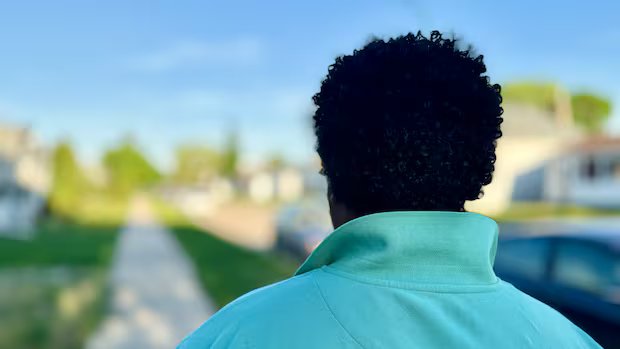
As a full-time single parent, Abdiweli Mohamed pours what little money he has into his two children. He gets by on provincial assistance, food banks, local charities and hand-me-downs from neighbours in Winnipeg, but money is always on his mind.
Mohamed, 36, had to stop working to care for his children, both under five years old, after separating from his wife two years ago. He worries about affording essentials like winter clothes, school supplies and dental appointments. He buys nothing for himself.
Mohamed, an immigrant from Somalia, once received monthly $1,236.50 payments through the Canada Child Benefit (CCB) because his wife, the children’s mother, is a Canadian citizen. The benefit is a tax-free payment from the government to help eligible families with the cost of raising children under 18.
But since his separation, Mohamed is no longer eligible to receive the benefit for his Canadian children because he’s fallen into what a tax court judge has described as a crack in the legal system that’s been “ignored” for decades.
“This case is an unhappy one all the way around,” Justice Michael Ezri wrote in last month’s decision on Mohamed’s case.

Mohamed is legally allowed to live in Canada. The government says deporting him to war-torn Somalia would put his life at risk. Immigration officials and a judge say he’s a law-abiding, tax-paying citizen doing his best to raise his kids alone — the kind of struggling parent the benefit is meant to help.
The problem for Mohamed is that the Canada Child Benefit rules don’t consider those factors. Instead, a parent needs to have the right formal immigration status — which Mohamed does not. He’s not a temporary resident, a permanent resident or a refugee. He’s in limbo.
“Sometimes, I feel hopeless,” Mohamed said in an interview from his home, his kids playing in the background. CBC News is not showing Mohamed’s face to protect the identities of his children because they are minors.
“I’m very grateful for everything Canada has done for me and, at the end of the day, the law is the law and it’s nothing personal … but it’s seriously heartbreaking because I’m stuck.”
The judge and immigration lawyers say legislation should be revisited to consider criteria for parents who will never be deported, but don’t have the right legal immigration status to qualify for the help. The lawyers said benefit eligibility shouldn’t be tied solely to immigration status in cases like Mohamed’s, since Canada’s severely backlogged immigration system can keep parents waiting in limbo for years.
“This is so egregious. It just shows you that both tax law and immigration laws failed him,” said Jamie Liew, a law professor at Carleton University in Ottawa.
In separate statements, the ministries in charge of immigration and tax law in Canada said they were both aware of the judge’s ruling in Mohamed’s case. One ministry said the ruling is being reviewed, while another cited privacy and declined to comment further.
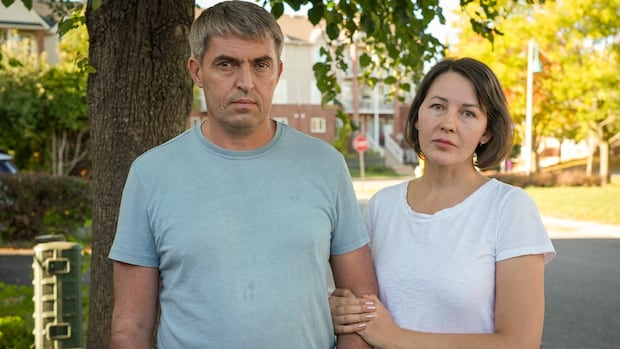
Olha Kuskho and her family applied for permanent residence in June after fleeing the war in Ukraine. She’s one of thousands of applicants under the humanitarian and compassionate program, now facing decades-long processing times, according to updated numbers from Canada’s Immigration Department.
An undocumented upbringing
Mohamed spoke about his immigration history, his financial status and his court case concerning the CCB in a series of interviews last month.
He fled Somalia with his mother and siblings when he was nine years old. He grew up in Texas, but was undocumented and never obtained American citizenship.
In 2015, Mohamed was arrested in Dallas County after he was stopped by police. He panicked and gave the officer a friend’s identification.
“At the time, I was afraid of possible immigration consequences and handled the situation poorly,” he recalled.
Court records show Mohamed, then 25, pleaded guilty to a misdemeanour count of failure to identify and spent five days in county jail.
Mohamed decided to flee to Canada in 2018. He informed American immigration officials and crossed the northern border illegally but, shortly after he arrived, he phoned the RCMP to report himself for processing.
He applied for refugee status, but does not qualify due to his criminal conviction in the United States. He faced deportation, but Immigration, Refugees and Citizenship Canada (IRCC) allowed him to stay after a pre-removal assessment found he wasn’t a danger to the Canadian public and his life would be at risk if he was sent back to Somalia.
It took five years for the preliminary assessment to become final, but his deportation was stayed for good in 2023 — which means he cannot be removed from Canada.
Not a refugee, citizen or permanent resident
During those five years, Mohamed got a work permit, took a variety of jobs in shipping, paid taxes and met his wife. The couple married in 2020 and had two children before their separation in 2024. One of the children has since been diagnosed with a disability.
“I want to put right up front that I find Mr. Mohamed is a responsible individual whose brushes with the law are long in the past,” Ezri wrote.
The children’s mother is no longer involved in the children’s care, the court heard, so Mohamed needs to qualify on his own to keep receiving CCB as a single parent.
He declined to comment on his former spouse, citing his children’s privacy, but the judge confirmed the mother is not permitted to contact or care for the children last month.
Since he’s not a Canadian citizen or a refugee, tax law says he has to be either a temporary resident, permanent resident or “protected person” as defined by immigration law to qualify.
Mohamed doesn’t fit into any of those categories.
Temporary resident status is off the table because his work permit explicitly states the document “does not confer temporary resident status.”
Permanent residency would be next up, but any hope of that designation is years away. Mohamed applied last July on humanitarian and compassionate grounds but the government’s website estimates his case will take “more than 10 years” to process. (Other applicants have been told they might wait half a century.)

Finally, Mohammed doesn’t qualify for formal “protected person” status under immigration law for the same reason he cannot get refugee status: the old criminal conviction in Texas.
“And so Mr. Mohamed is stuck,” Ezri wrote in his ruling.
“[Immigration law] allows him to remain in Canada potentially indefinitely because he cannot be safely returned to Somalia but it carefully and exhaustively shuts him out of the status of having ‘refugee protection.'”
‘The people who suffer are the kids’
In documents reviewed by CBC News, Canadian officials said Mohamed has been a law-abiding resident since he arrived in 2018 and does not pose any criminal risk. He has no history of violence or negative interactions with Canadian police.
“I am satisfied that Mr. Mohamed is rehabilitated and leading a pro-social life at this time,” the delegate for Canada’s immigration minister wrote in 2023.
In a statement to CBC News, IRCC said the ministry is aware of the court’s decision in Mohamed’s case but “cannot comment on individual cases” under privacy law nor “speculate on future policy decisions.”
The Ministry of Finance, which is responsible for administering the CCB, said staff are reviewing the judge’s decision. In an email, deputy spokesperson Marie-France Faucher said Ottawa “remains committed to a tax and benefit system that is fair and transparent.”
Lawyers suggested tax law could be amended in a few ways to widen CCB eligibility requirements for parents like Mohamed who are allowed to stay in Canada but don’t have specific immigration status.

Announced in January, the Liberal government’s grocery benefit and one-time GST top-up will begin landing in Canadians’ bank accounts Friday. Prime Minister Mark Carney said 12 million people will receive the payment, meant to ‘help with the pressures on cost of living.’
They said the rules could also consider other factors like a parent’s tax contributions or the citizenship or residency status of the children.
“Unfortunately, the people who suffer are the kids. That’s often the very sad thing,” said Nadine Edirmanasinghe, a lawyer with Community Legal Services of Ottawa who’s practiced immigration law for 15 years.
Liew, the Carleton professor, also said immigration law can act as a second, lifelong punishment for immigrants with a criminal history if the fact of an old conviction, not their rehabilitation or current risk level, blocks them from getting status they might otherwise have had.
“He actually presents as a very, a very tragic story,” said Liew, who’s practiced immigration law for more than 20 years. “It’s very troubling.”
Issue left unaddressed for 25 years
In his ruling, Ezri said another judge flagged the issue affecting parents like Mohamed back in 2001.
In a similar case that year, the man had been allowed to stay in Canada indefinitely on humanitarian grounds, obtain work and pay taxes, but he wasn’t eligible for what was then called the Child Tax Benefit — the predecessor to the modern-day CCB — for his Canadian child because he didn’t fit into the right status category.
The judge at the time suggested the Senate inadvertently missed the problem when they updated Canada’s immigration and tax law that fall, after the ruling came out, because they were under pressure to move quickly on new legislation after the Sept. 11 terrorist attacks in New York.
Since the issue has not been fixed since, Ezri said he had no way to grant Mohamed eligibility despite believing he should get the money.
“I very much regret this decision coming as it does some 25 years after an almost identical problem was flagged by this Court for the consideration of Parliament and then ignored,” the judge wrote.
During interviews, Mohamed said he accepted the court’s result. He said he respects the Canadian immigration system, Ezri and opposing counsel, who he said showed compassion for his children, but understood “the law tied their hands.”
He has since filed his case with the Federal Court of Appeal.
“It has its challenges, but it made me a better person,” Mohamed said of the court process.
“I’m in the best country in the world. I’m safe. I have my two beautiful children. They’re safe. They’re well-fed. They’re loved,” he added. “But it’s not easy.”

![Lufthansa Expands: 9 New Routes For The Summer [Map & List]](https://dailynewsnblog.com/wp-content/uploads/2026/06/a350.jpg)