dailynewsnblog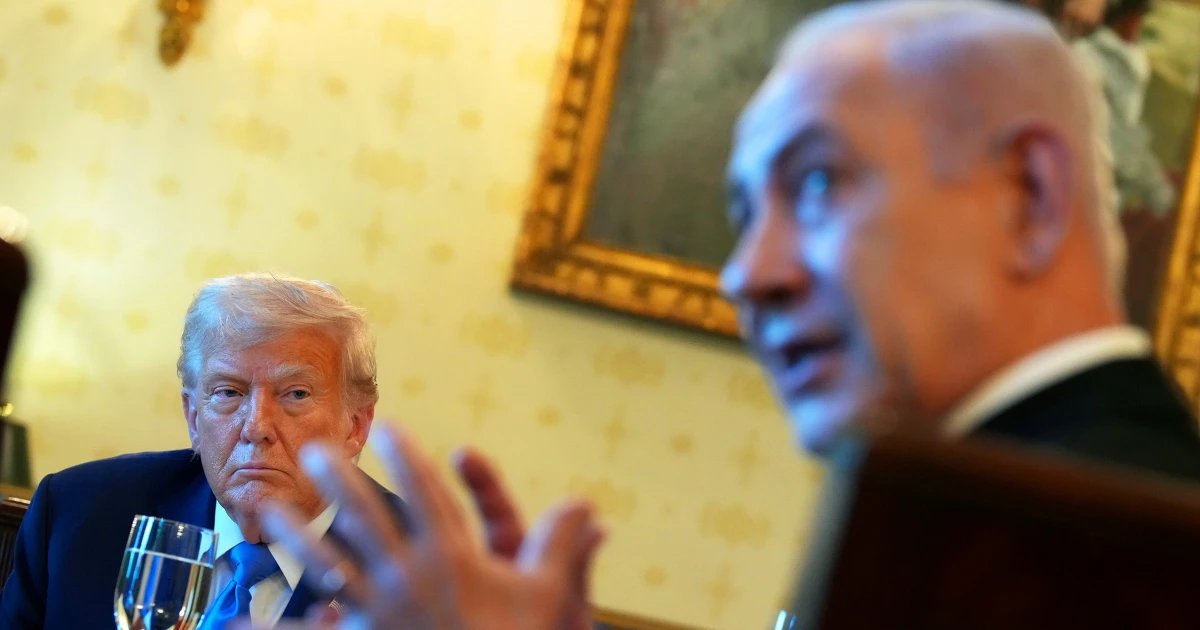
The renewed fighting overnight between Israel and Iran has deepened the political peril in which Israeli Prime Minister Benjamin Netanyahu finds himself only months before elections that amount to the most formidable challenge yet facing his decades of leadership.
Subscribe to read this story ad-free
Get unlimited access to ad-free articles and exclusive content.

Netanyahu had already endured mounting criticism from both his political opponents and allies who demand that he escalate Israel’s fight against Hezbollah in Lebanon, even if it meant defying President Donald Trump — Israel’s first-ever wartime ally and a hugely popular figure in the country.
Critics of Netanyahu latched onto Trump’s repeated public humiliations of him, such as last week’s phone call in which Trump said he had called Netanyahu “f—— crazy” for continuing to launch attacks in Lebanon. Even Israeli military leaders openly complained that American restrictions had tied their hands in Lebanon.
The latest conflagration will test Netanyahu’s ability to navigate the treacherous diplomatic waters between the resolute military victories Israelis crave and the demands of an American president whom Netanyahu has repeatedly described as “the greatest friend that the state of Israel has ever had in the White House.”
“It puts him in a very delicate situation,” Gideon Rahat, a political science professor at the Hebrew University of Jerusalem, said of Netanyahu. “I think that Netanyahu was trapped under the claim that he’s serving U.S. interests and doing whatever Trump is telling him, and therefore he cannot respond.”

Just as the cross-continental crossfire began Sunday night, Israeli politicians took to social media to goad Netanyahu into a muscular response — and to set the stage to criticize him should he capitulate to Trump’s calls for calm.
“This is a moment of truth: Is Israel a sovereign state capable of defending itself,” Naftali Bennett, a former prime minister widely considered the top contender to succeed Netanyahu, wrote on X. “A weak or symbolic response will signal to our enemies that the blood of our citizens has been spilled with impunity; therefore, Israel must act with strength and effectiveness.”
Israeli National Security Minister Itamar Ben-Gvir, a far-right member of Netanyahu’s Cabinet, was more strident.
“Tonight Tehran must burn!” he wrote.
Bennett’s Together party, in which he partnered with opposition leader Yair Lapid six weeks ago, started strong in the polls. But recent surveys now have it running a close second to Netanyahu’s right-wing Likud Party.
Israeli polls have also reflected the Iran war’s declining popularity. In March, 60% of Israelis approved of the war’s military achievements so far, according to the Institute for National Security Studies, a figure that declined to 27% by last month.
For the moment, the military crisis itself appears to be over.
Iran’s Islamic Revolutionary Guard Corps headquarters announced via the semiofficial Tasnim news agency that it had “suspended” its military operations but would exact “far more severe and crushing measures” if “aggressions and hostile actions continue, including in southern Lebanon.”

None of the dozens of ballistic missiles Iran fired at Israel appeared to have struck their targets, nor did they cause any casualties, according to early Israeli reports. The Israeli strikes on Dahiyeh, a Hezbollah stronghold south of Beirut, which sparked the latest round of conflict Sunday, killed two people and injured around two dozen more.
But the full political impact for Netanyahu has yet to be felt, Israeli political experts said.
Trump has said he is continuing to negotiate an end to the war with Iran that would reopen the Strait of Hormuz to international shipping. But Iran has successfully bundled together the fighting in Lebanon with negotiations to end its conflict with the U.S. and Israel.
By allowing Iran to claim kinship between the war in the Persian Gulf and Israel’s fight over its northern border, the Trump administration placed the Lebanon conflict beyond Israel’s diplomatic grasp, said Yaakov Amidror, a former Israeli national security adviser and a fellow at the Jewish Institute for National Security of America, a Washington-based think tank.
“The Americans gave the Iranians the impression that they understand the connection” between the U.S.-Israeli war with Iran and Israel’s war in Lebanon, he said. “It was a huge mistake, legitimizing the influence of Iran in Lebanon.”

Iran’s effort to make common cause between the two conflicts was successful in April, when Iran effectively pushed Trump to prevail upon Netanyahu and Hezbollah to stop fighting before Tehran would begin negotiations to end the war and reopen the strategically vital Strait of Hormuz.
But last week, the State Department announced a renewed ceasefire between Israel and Lebanon that Hezbollah almost immediately rejected. Hezbollah was not part of the negotiations between Lebanon and Israel in Washington.
The angriest criticism of Netanyahu’s policies in Lebanon has come from residents of northern Israel. It was a Hezbollah attack on a northern Israeli town that prompted Israel to strike Dahiyeh, which elicited the direct Iranian strikes against Israel, according to Iran’s government.
Analysts warn, however, that Netanyahu should not be counted out — he is a consummate political survivor who remains adept at turning setbacks into subtle wins.
“He has already faced so many elections, and I’m not sure that this is the most problematic,” Rahat said. “He can say in one sentence that Trump is limiting me and the other sentence is that there was never a war in which Israel and the United States fought together against anyone. He can play both things.”