dailynewsnblog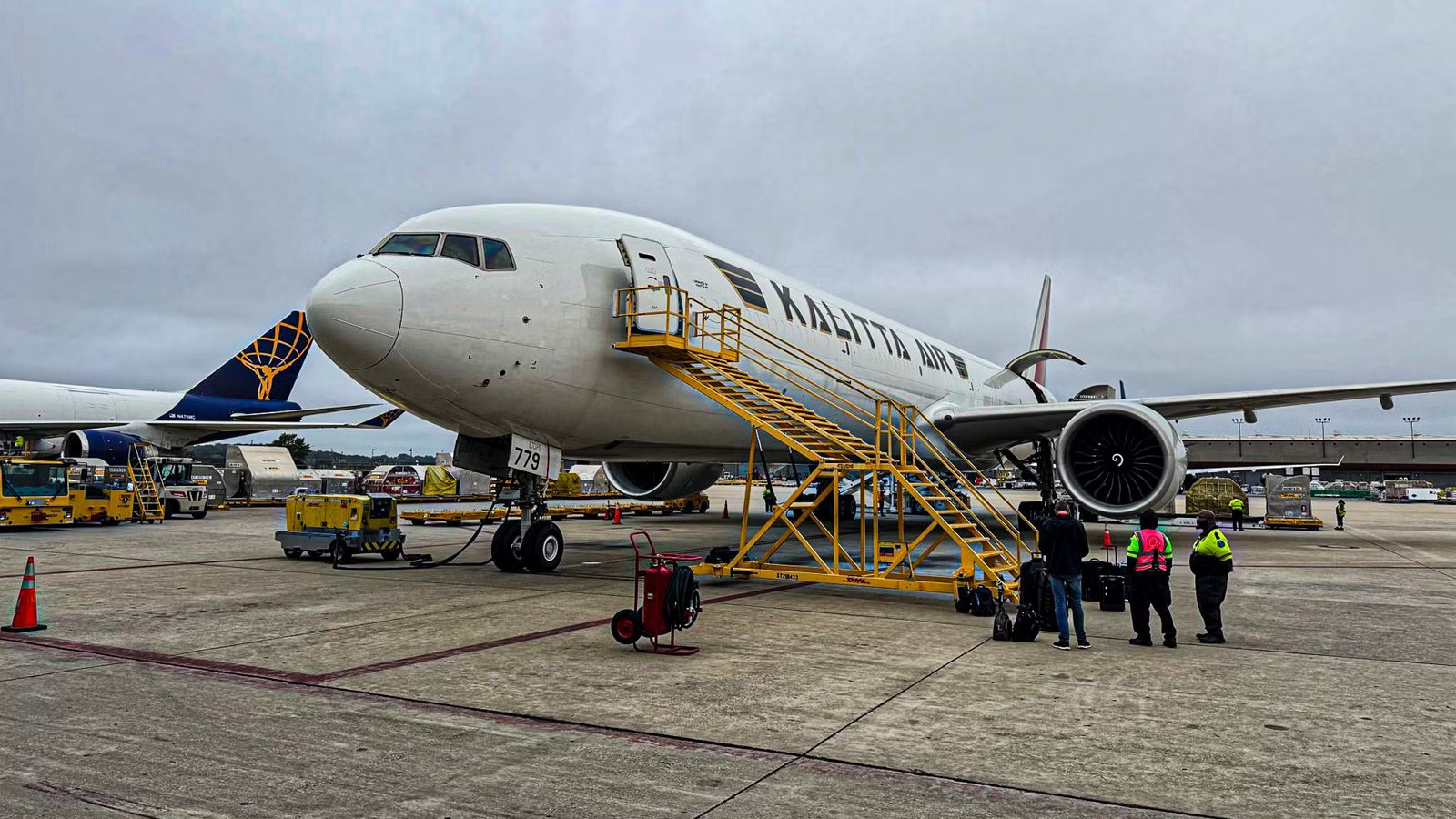
The global air cargo industry is facing a fleet replacement problem that has been building for years. The Boeing 747 freighter, which has served as the backbone of heavy air freight operations since the 1970s, is aging out of service across major carriers, and the factory-built alternatives have not been a complete substitute. The Boeing 777-200F, the primary twin-engine heavy freighter in production, carries meaningfully less volume than the 747s it is meant to replace, creating a gap on the volume-constrained e-commerce routes that now drive much of the industry’s growth.
The answer that has emerged is not a new aircraft. It is a retired one. Passenger Boeing 777-300ERs, being phased out by major carriers as newer widebodies arrive, are being acquired, cut open, and rebuilt as freighters through a conversion program that produces an aircraft with more volume than any other twin-engine freighter currently available. The economics are compelling, the timeline is faster than waiting for new-build deliveries, and the pool of candidate airframes is large and growing. The first converted jets entered revenue service in late 2025, and the program is now expanding rapidly.
The Viral Landing That Put A New Freighter On The Map

In late 2025, a video of a Kalitta Air cargo jet making a hard landing and a dicey go-around at Miami International started circulating on Reddit, accumulating nearly 2,000 upvotes. The aircraft in the clip was unusual enough that the comments filled quickly with questions about what it was. It had the general shape of a 777, but something was clearly different: a large main-deck cargo door on the forward fuselage that no standard 777 freighter carries. The post introduced a significant portion of the aviation community to a conversion program that had been quietly advancing through certification for years and had only just begun delivering aircraft to its first operator.
The aircraft is the  Boeing 777-300ERSF, a passenger-to-freighter conversion developed by Israel Aerospace Industries in partnership with lessor AerCap. It takes retired 777-300ER passenger jets, one of the most successful long-haul airframes ever built, and converts them into heavy freighters through an engineering process that is considerably more invasive than the name suggests.
The program received its Supplemental Type Certificate from both the FAA and Israel’s Civil Aviation Authority after an extensive testing campaign, clearing the way for AerCap to begin delivering aircraft to customers. Kalitta Air, a Michigan-based cargo carrier that signed on as launch operator in 2020, received its first two converted jets in September 2025 and had taken delivery of seven aircraft by the end of the year.
What It Actually Takes To Turn A Passenger 777 Into A Freighter

Converting a passenger 777 into a freighter is not a cosmetic process. The most significant structural change is the addition of a main-deck cargo door, which requires cutting a large opening in the forward left fuselage and reinforcing the surrounding structure to restore the load-bearing integrity that the cutout removes. That work alone involves significant structural modification to one of the most stressed sections of the airframe. The composite passenger floor, which is not designed to handle the point loads generated by cargo pallets and loading equipment, is removed entirely and replaced with reinforced aluminum flooring rated for freight operations.
Catch what other flight trackers miss
Emergency squawks, holds, NOTAMs — live signals, no signup.
Open tracker
Catch what other flight trackers miss
Emergency squawks, holds, NOTAMs — live signals, no signup.
Open tracker
A rigid barrier is installed at the forward end of the main deck, capable of withstanding 9g of force to protect the flight deck from shifting cargo in the event of a sudden deceleration. The changes extend beyond the structural work — cargo handling systems, tie-down fittings, and pallet locking mechanisms are installed throughout the main deck. The passenger cabin systems, including galleys, lavatories, overhead bins, and in-flight entertainment infrastructure, are stripped out entirely.
The electrical and environmental systems are reconfigured to support a cargo operating environment rather than a pressurized passenger cabin. By the time the conversion is complete, the aircraft’s interior bears no resemblance to the Emirates passenger jet it began its life as. The external airframe, wings, engines, and landing gear remain unchanged, which is where the economic case for conversion rather than new manufacture begins.
IAI’s facility in Tel Aviv manages the conversion process, with each aircraft taking approximately five to five and a half months to complete once the program reaches steady production. The first two aircraft delivered to Kalitta were 19.3 and 20.5 years old, respectively, former Emirates 777-300ERs that had accumulated a full passenger career before entering the conversion line. The FAA and CAAI certification process required extensive testing to validate the structural modifications, cargo system performance, and emergency egress configurations before the converted type was cleared for revenue operations.
Spotted: Boeing’s 1st 777-8 Freighter Rolls Out In Everett
The first Boeing 777-8F has completed its rollout, marking a significant milestone in the production of the next-generation cargo air transport.
Why The Numbers Make More Sense Than Buying New

The economic case for converting a retired 777-300ER rather than buying a new freighter comes down to a straightforward cost comparison. A midlife 777-300ER can be acquired on the secondary market and converted for a total of approximately $75 to $80 million, with the conversion work itself accounting for $30 to $35 million of that figure. A new-build Boeing 777-8F, the factory freighter variant currently in development, carries a list price well above that figure and comes with a delivery queue that stretches years into the future, given Boeing’s current production constraints.
For a cargo carrier that needs heavy freighter capacity now rather than at the end of a long order backlog, the conversion economics are difficult to argue against. The choice of airframe matters to the conversion program’s viability. The 777-300ER is the specific variant targeted because it is available in meaningful numbers on the secondary market, having been retired in volume by major carriers.
Those retired jets are typically 15 to 25 years old, with substantial airframe life remaining and well-documented maintenance histories from their time with major international carriers. The operating economics after conversion are also favorable. The 777-300ERSF’s twin GE90 engines burn significantly less fuel than the four-engine 747 freighters it is designed to replace, with AerCap estimating a 20 percent reduction in CO2 emissions per flight compared to a 747 freighter.
Kalitta Air And The Launch Of A New Freighter Era

Kalitta Air has been operating Boeing 747 freighters since the 1990s and built its network around the 747’s heavy-lift capability on long-haul charter and ACMI (aircraft, crew, maintenance, and insurance) routes. The decision to sign on as launch operator for the 777-300ERSF program in 2020 was a direct response to the question every 747 operator eventually has to answer: what comes next. The factory-built 777-200F was one option, but its volume limitations made it a partial rather than complete replacement for the 747’s cargo capacity.
The 777-300ERSF offered something closer to a genuine substitute, with a payload and volume profile that aligned more directly with the missions Kalitta had been flying on its 747 fleet. The first two aircraft reached Kalitta’s facility in Oscoda, Michigan on September 12 and 13, 2025, with revenue operations beginning in early October. Both jets were former Emirates 777-300ERs, aged 19.3 and 20.5 years, with the maintenance history and airframe condition typical of aircraft coming off a major international carrier’s fleet.
By December 2025, Kalitta had taken delivery of its seventh 777-300ERSF, completing its planned fleet growth for the year. Kalitta operates primarily in the ACMI and charter cargo market, providing aircraft, crew, maintenance, and insurance to customers who need lift on specific routes without committing to their own fleet. In that segment, payload and volume flexibility matter more than on scheduled network operations, and the 777-300ERSF’s capacity profile gives Kalitta a more versatile tool than the 747s it is replacing.
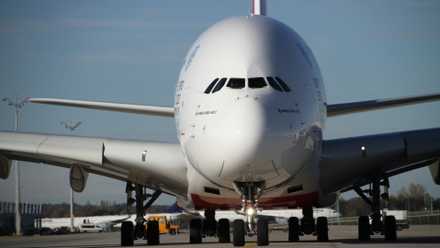
Would An Airbus A380 Converted Freighter Be A Good Idea?
Back in the day, Airbus decided to cancel its A380F programme, which would have been the second-largest cargo plane in the world behind the now destroyed Antonov An-225. However, there is now a decent number of A380s that have been retired and are in storage. It seems unlikely that any of these aircraft will carry passengers again, so will we ever see A380s converted to freighters?
Passenger A321s and A330-300s have both been successfully converted to freighters, so there would already be companies used to adding things like a cargo door into aircraft made mostly of composites. What’s more, the similarly sized Boeing 747-400 is often seen in the converted freighter configuration, so there is clearly demand for very large, second-hand cargo planes. What do you think? Would an A380 converted freighter be a good idea? Which cargo airlines would be interested in this plane? Share your thoughts in the comments!
This is user-generated content. The views and opinions expressed here are not
The 747 Replacement The Cargo Industry Has Been Waiting For

The 747 freighter fleet is aging out across the industry, and the replacement options have not always been a clean fit. The factory-built Boeing 777-200F carries approximately 25 percent less volume than the 777-300ERSF despite similar payload capacity. That gap matters because e-commerce, the fastest-growing segment of air cargo, is volume-constrained rather than weight-constrained.
A freighter that runs out of cubic meters before it runs out of payload capacity is the wrong tool for that market, and the 777-200F’s smaller fuselage creates exactly that problem on high-density e-commerce lanes. The 777-300ERSF’s 811 cubic meters give it a 14 percent advantage over a converted 747-400, helping to drive up revenue for operators.
The Boeing 777-8F will eventually succeed the 777-200F, but is not yet in service and carries a backlog that places new deliveries years away for most airlines. The 777-300ERSF fills that gap at a fraction of the cost and a five-month conversion timeline. This gives operators fast access to a high-revenue asset that can deliver results quickly, either bridging the gap until new aircraft arrive or expanding the fleet with supplementary capacity.