dailynewsnblog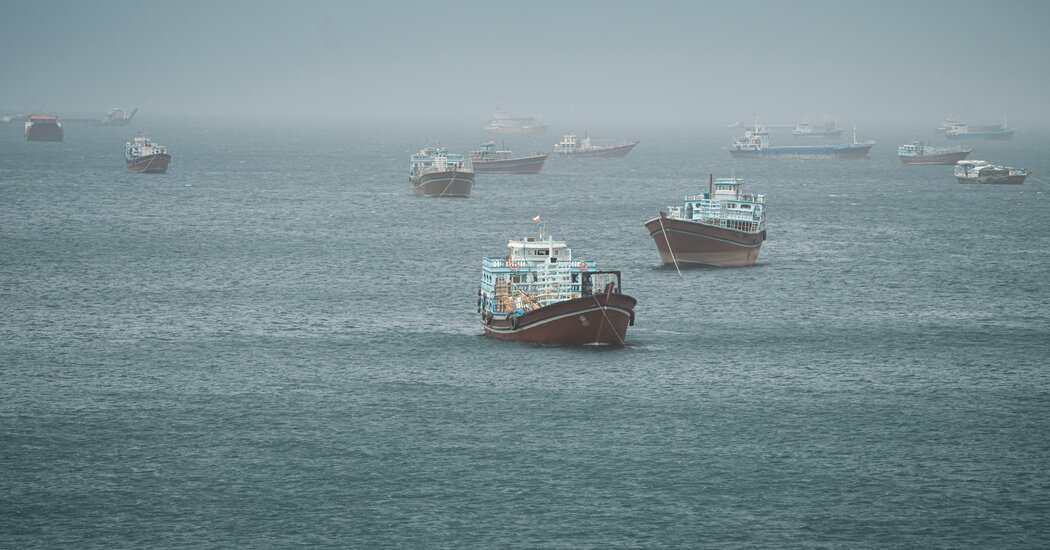
The temporary agreement that the Trump administration announced with Iran this weekend isn’t a peace deal. It isn’t a nuclear deal. It isn’t a missile deal.
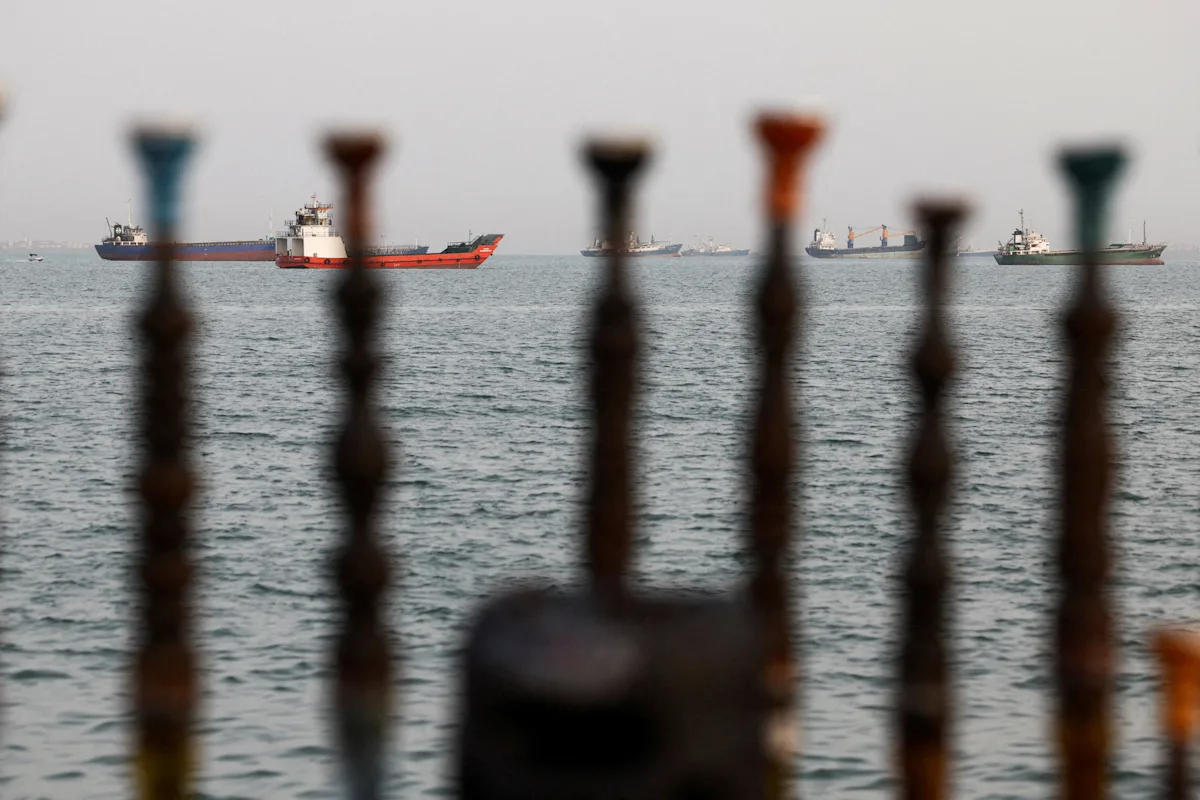
Those may yet come — perhaps in a few months, though a senior United States official said there was no agreed time limit for nuclear talks, or perhaps far longer if the history of negotiations with Iran holds. But for now, Mr. Trump has emerged with an arrangement that could extend a cease-fire and reopen the Strait of Hormuz, relieving the greatest energy disruption in modern times.
The best news from this at-the-brink negotiation between Washington and Tehran, mediated by a hard-line Pakistani general who a few years ago was on an American sanctions list, is that a conflict that easily could have spun further out of control appears to be de-escalating. Assuming both President Trump and Iran’s supreme leader, in hiding to avoid assassination attempts, approve the final wording, the choke point through which a quarter of the world’s oil passes should reopen.
That is no small thing at a time when Republicans feared they would be headed into the November midterm elections with gasoline hovering around $4.50 a gallon and a president pursuing a war most Americans tell pollsters they oppose. For the Iranians, the opening comes just as their battered economy appeared about to crack, from the loss of most of their oil revenue.
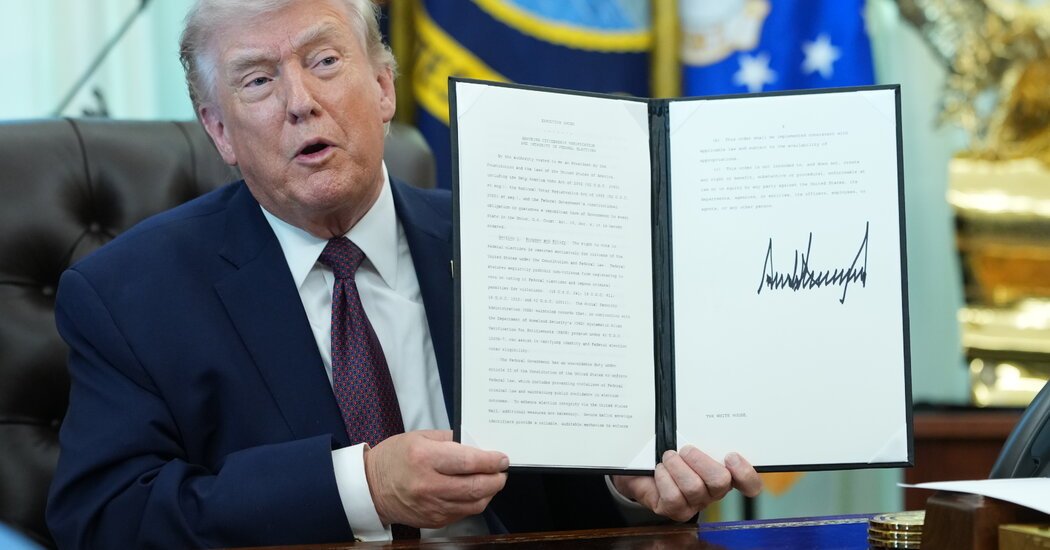
But for a president who had declared only 11 weeks ago that “there will be no deal with Iran except UNCONDITIONAL SURRENDER,” the agreement he announced this weekend was far short of that. And his tone was markedly different.
“The negotiations are proceeding in an orderly and constructive manner, and I have informed my representatives not to rush into a deal in that time is on our side,” he wrote on social media.
Until the supreme leader and other Iranian officials certify the understanding “the Blockade will remain in full force and effect,” he wrote.
He added: “There can be no mistakes! Our relationship with Iran is becoming a much more professional and productive one.”
Yet Mr. Trump essentially gave into the Iranian demand to kick the hardest issues down the road — while apparently succeeding in forcing the Iranians to end, at least temporarily, their stranglehold on of the world’s most vital waterways.
In the end, each side had little choice but to give ground. They chose the least-bad of what each saw as bad options. But all that does is begin to restore the status quo to roughly where it was on Feb. 28, when Mr. Trump and Prime Minister Benjamin Netanyahu of Israel launched a war to finally bring Iran’s nuclear and missile programs to an end.
So far, they have failed to achieve those goals: Iran is still in possession of more than 11 tons of nuclear fuel, including 970 pounds that is close to bomb grade — though it is buried under rubble, deep underground. An early plan to essentially stage a coup, overthrowing the government, placing a former Iranian hard-line president, Mahmoud Ahmadinejad, into power, never materialized.
If the strait does reopen, Mr. Trump’s aides say they are planning to enter a second phase to get back to a serious negotiation with the Iranians on the issues that triggered the war. A senior administration official, who declined to be named, told reporters on Sunday that the Iranians had already generally agreed to turn over their 60-percent enriched uranium — the stockpile that could be converted to a dozen or so bombs in relatively short order.
But the Iranians have said nothing about surrendering that fuel, which along with its power to shut off traffic in the strait is their best leverage. The U.S. official also conceded the exact mechanism by which Iran would dispose of their highly enriched uranium remains unresolved as does whether Iran, at the end of the negotiation, will ship out all of the additional uranium in its possession, according to the International Atomic Energy Agency.
The United States also said the Iranians had agreed, verbally, to some kind of suspension of enrichment of new nuclear fuel. But Mr. Trump himself told reporters nine days ago on Air Force One that Tehran’s leaders had backed away from a commitment to suspend that activity for 20 years, and it is unclear where they are on the issue now.
And Iran has so far refused to even discuss limits on the size and range of their missiles which the United States had said it would insist upon. That is a critical issue to the Israelis, who are within reach of many of Iran’s ballistic missiles.
Despite the confidence from the United States that all those issues would be resolved, it seemed possible that the negotiations and fragile cease-fire could collapse at any point. The U.S. official briefing reporters on Sunday repeatedly acknowledged they could not predict what Iran would ultimately agree to, or even if the supreme leader would formally sign off.
But the official said the reopening of the strait, which would not include any Iranian tolls, would remove the economic pressure, reassure the markets and create space to address the nuclear issues. The official did not say how the United States would deal with Iran’s claim over the past three months that it now has sovereignty over the strait, which had been traversed as international waters.
But the official did say that the agreement with the Trump administration amounted to a “walk-back” by the Iranians, because they will not be charging tolls.
Mr. Trump only added to the doubts on Sunday afternoon, when he declared on social media that “If I make a deal with Iran, it will be a good and proper one, not like the one made by Obama,” in 2015, which curtailed Iran’s nuclear activity, but did not eliminate it.
“Our deal is the exact opposite, but nobody has seen it, or knows what it is. It isn’t even fully negotiated yet,” he acknowledged. “So don’t listen to the losers, who are critical about something they know nothing about.”
Among the “losers” were prominent members of Mr. Trump’s own party. Republican Iran hawks said he had folded to pressure, and failed to finish the job. Among the harshest critics was Senator Roger Wicker, Republican of Mississippi and chair of the Senate Armed Services Committee, who had warned that “everything accomplished by Operation Epic Fury would be for naught!”
Mike Pompeo, Mr. Trump’s first-term C.I.A. director and then his Secretary of State, was equally dismissive, leading Steven Cheung, the White House communications director, to declare on social media that Mr. Pompeo “should shut his stupid mouth and leave the real work to the professionals.”
Longtime negotiators who had opposed the attacks also had their doubts.
“This is what happens widen a poorly conceived war of choice turned into a highly flawed ‘peace’ of necessity,” Aaron David Miller, a former Mideast negotiator, now at the Carnegie Endowment for International Peace, said on Sunday.
“Original, unrealizable war aims abandoned,” he said, “and now little leverage to secure what really matters — restraining Iran’s nuclear capacity and permanently opening the straits.”
Until a few days ago, the Trump administration was insisting it would not enter into any accord that did not deal with the hardest issue upfront: the nuclear program. But administration officials relented — in part because they needed to get the strait open and in part because they have come to recognize the complexity of negotiating on Iran’s vast nuclear complex, a task that took the Obama administration nearly two years and resulted in a 160-page agreement.
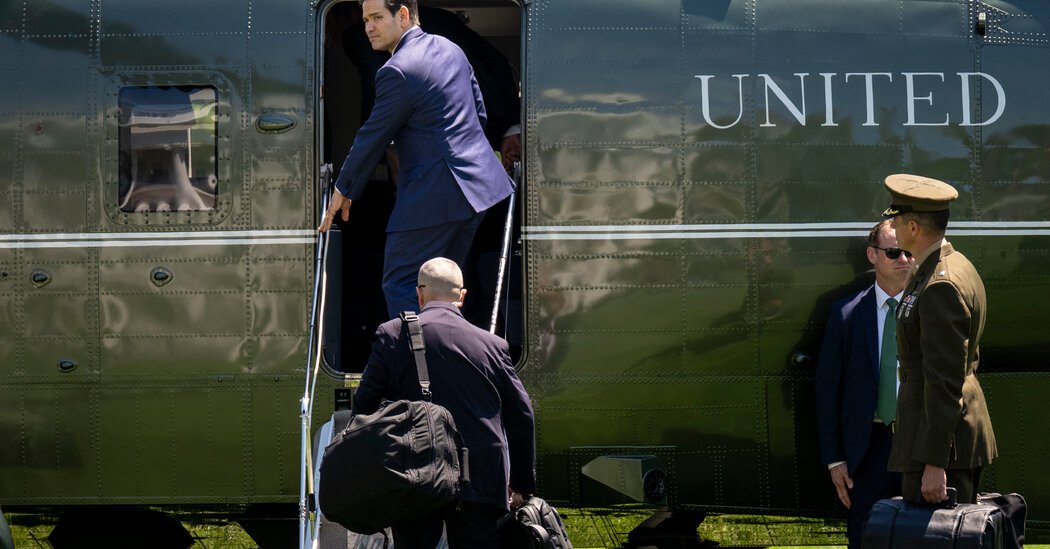
“You can’t do a nuclear thing in 72 hours on the back of a napkin,” Secretary of State Marco Rubio said in an interview in New Delhi, where he was on a diplomatic mission. “The straits have to be immediately reopened, and then we will enter, under agreed-to parameters, into very serious talks about enrichment, about the highly enriched uranium and about their pledge to never have nuclear weapons.”
When pressed on why Mr. Trump appeared to change course this time, the U.S. official said Iran was making significant accommodations, but the toughest decisions still lay ahead.
Two remaining mysteries are how the United States will ultimately deal with Iranian demands to unfreeze billions of dollars of frozen Iranian funds, and lift years of sanctions placed on Iran to prevent it from selling oil or buying goods and technology.
The U.S. official said those issues — among the most contentious for the cash-strapped Iranian government — had not even been addressed yet, though he held open the possibility that those could be part of a trade. “No dust, no dollars,” the official said, a reference to Mr. Trump’s repeated references to “nuclear dust,” his way of talking about the highly enriched uranium that is largely at the nuclear site at Isfahan that the United States bombed last June.
Mr. Trump has suggested he would never give Iran back its cash, comparing himself to President Barack Obama, who returned $1.7 billion that Iran had paid for weapons in the 1970s that were never delivered.
Mr. Obama “gave Iran massive amounts of CASH, and a clear and open path to a Nuclear Weapon,” Mr. Trump wrote Sunday on social media. “Our deal is the exact opposite.” But on those issues, there is no deal yet, at Mr. Trump himself acknowledged.