dailynewsnblog
On 24 May each year, Iranians celebrate a historic victory in the war with Iraq: the liberation of Khorramshahr in 1982.
This year, some were hoping a peace deal looking likely to be signed with the US might mark a similar turning point in their country’s history.
Last minute disagreements meant it looked unlikely a final Pakistani memorandum would be signed as hoped for on Sunday, but what seems clear is that the US has accepted it cannot achieve through war what it set out to do when it began the conflict on 28 February in terms of forcing Iran to make concessions over its nuclear programme.
Instead, the US has apparently had to promise to unfreeze billions of Iranian assets upfront, handing them over to a regime that is more hardline than the one that entered the war. In return, the strait of Hormuz will gradually be reopened and commercial traffic will return to prewar levels, releasing the chokehold on the world economy.
So, Iran receives its assets in return for restoring the prewar status quo. The amount of assets and the timing of their dispersal may turn on the concessions it gives on the nuclear file, especially its stockpile of highly enriched uranium. It was disagreement on this that triggered one of the last-minute hitches that held up a deal on Sunday, since Iran is insisting the nuclear talks cannot start with such inbuilt commitments.
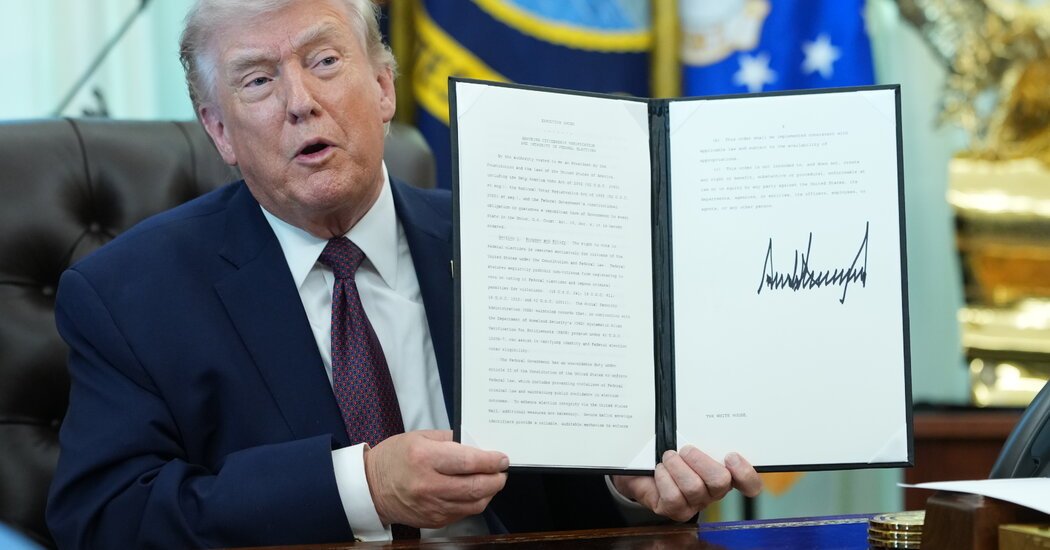
Donald Trump insists he does not make bad deals, and says this is not one. But both Democrats and Republican hawks have spent 48 hours challenging that assessment. Ben Rhodes, the Obama-era foreign policy adviser, put it pithily: “Nothing was accomplished by Operation Epic Fury [the US-Israeli war on Iran] except putting the IRGC [Islamic Revolutionary Guard Corps] in charge of Iran and the strait of Hormuz”.
Ali Vaez, director of the Iran Project at the Crisis Group, said: “DC’s Iran hawks got two wars, nearly every conceivable sanction designation, a blockade, threw a wrench in the global economy and will still claim that just a little more pressure and a touch more bombing will magically yield the concessions they still won’t be satisfied with.”
Trita Parsi from the Quincy thinktank argued Trump has merely managed to negotiate his way back to the position that was supposed to hold when the original ceasefire was announced, before that ceasefire was then upended by his decision on 13 April to impose a US blockade of Iran’s ports, leading Iran to reimpose its own de facto blockade.
In short, Trump, expending billions of dollars, has so far progressed no further on the nuclear issues than where he was at the last round of talks in Geneva on 26 February before the war was started. Little wonder Republican hawks such as Ted Cruz warned of a disaster.
Iran, in a statement issued by the foreign minister, Abbas Araghchi, rejected claims in the US media that Iran had agreed to send enriched uranium abroad or to accept a cap on enrichment for 10 years. He said Iran was only willing to discuss these issues within a 60-day time frame, hardly an advance on the position in Geneva. That does not mean Iran rules out concessions in this area, as Trump assured a nervous Israeli prime minister Benjamin Netanyahu in talks on Saturday, but that this goal will now have to be achieved through diplomacy, not military force. Similarly, Israel’s agenda about Iran’s missiles, drones and proxies has been deferred.
Indeed, the Iranian president, Masoud Pezeshkian, insisted the talks will show Iran is willing to prove to the west it is not seeking a nuclear weapon. The process of reaching agreement on Iran’s nuclear programme is laborious and technical, but it is achievable, especially if Iran does not believe it is negotiating under military duress.
But the abandonment of the military route at least for now would be a blow to Netanyahu in an election year. It also comes at a time when support for Israel within the US has eroded severely across nearly every demographic group except older Republican voters.
Israel is nevertheless resisting aspects of the memorandum, especially the Lebanon ceasefire framework. Israel is pushing Washington to include language allowing it to carry out military operations in Lebanon under the justification of responding to “any threat”.” Iran is rejecting that formulation and insisting on a sustainable and lasting ceasefire.
Nor is every aspect of the future governance of the strait of Hormuz agreed. Iran and Oman are in discussions about the role of a Persian Gulf strait authority, but Oman is unlikely to back the idea of tolls, and Iran may find its newfound weapon is a diminishing asset.