dailynewsnblog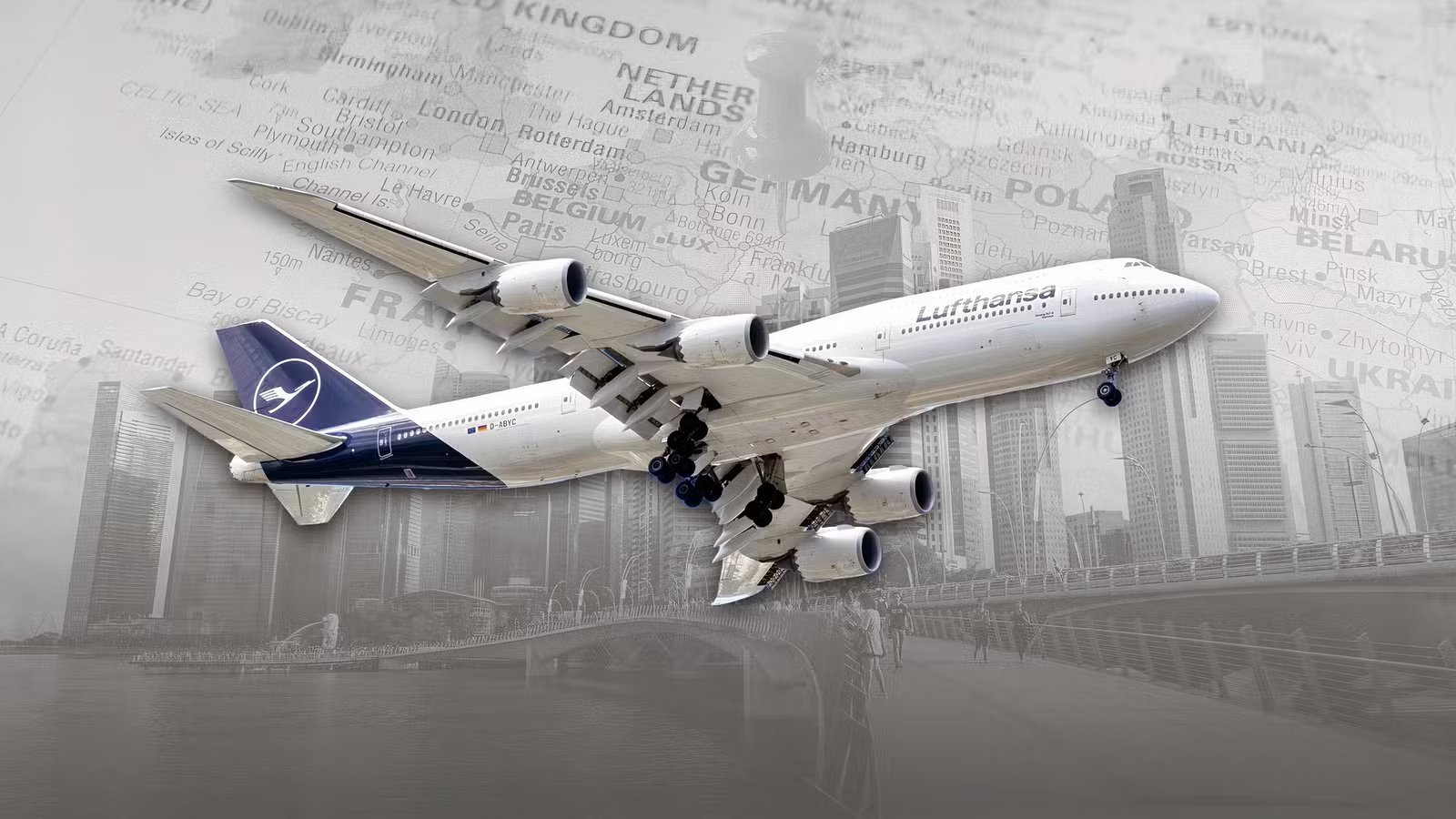
Boeing 747 pilots remain among the most specialized and highly respected aviators in commercial aviation. Even as the aircraft disappears from passenger fleets, the pilots qualified to operate the four-engine giant continue flying some of the world’s longest, heaviest, and most technically demanding missions. From ultra-long-haul cargo operations to premium international passenger routes, Boeing 747 flying still requires years of experience, advanced training, and seniority, factors that continue to support strong salaries across the industry.
This article examines how much Boeing 747 pilots earn in 2026, which airlines still operate the aircraft, and why cargo carriers have become the type’s primary home. It also explores how seniority affects pay, why Boeing 747 crews remain in demand despite the fleet’s decline, and how the aircraft’s gradual retirement is reshaping one of aviation’s most exclusive pilot markets.
Boeing 747 Flying Is No Longer Common, And That Increases Its Value

The Boeing 747 was once the backbone of intercontinental air travel. Airlines including  British Airways, Japan Airlines,
  Singapore Airlines, Cathay Pacific, Qantas, and
  United Airlines all operated large fleets of the aircraft during its peak decades. Today, however, only a handful of passenger airlines continue to fly the type, while cargo operators have effectively become the aircraft’s largest supporters, finding it almost impossible to replace.
That rarity matters financially. Airlines typically assign Boeing 747 operations to experienced long-haul crews because the aircraft is associated with demanding missions, complex international regulations, and high operating costs. Even though modern aircraft like the Boeing 787 and Airbus A350 are more fuel-efficient, the 747 still occupies an important niche in both the premium passenger and heavy cargo markets.
According to salary estimates compiled by ZipRecruiter, pilots identified specifically as “747 pilots” in the United States average roughly $135,000 annually in 2026. However, that number only scratches the surface because it includes a wide range of operators and experience levels. Data from Flight Crew International (FCI) Aero also highlights how Boeing 747-qualified pilots remain in demand globally due to the limited number of crews certified on the aircraft and the specialized nature of ultra-long-haul cargo operations. At major cargo airlines or premium international carriers, compensation can rise dramatically through hourly pay, international allowances, overtime, and profit-sharing agreements.
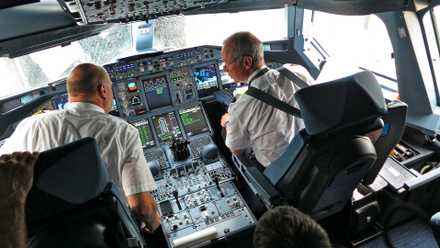
One reason salaries remain strong is the aircraft itself. The Boeing 747 is still one of the most technically demanding airliners in regular service. Pilots must manage four engines, enormous fuel loads, sophisticated long-range navigation systems, and augmented crew operations on flights that may exceed 14 or even 16 hours. Those responsibilities naturally command higher pay than shorter domestic narrowbody operations.
Cargo Airlines Have Become The Real Home Of The Boeing 747

In 2026, most Boeing 747 pilots work in cargo aviation rather than passenger transportation. Atlas Air, Cargolux,  UPS Airlines, and several other freight carriers continue relying heavily on the Boeing 747-400F and Boeing 747-8F because of the aircraft’s unmatched freight capacity and nose-loading capability.
Cargo aviation has transformed significantly since the pandemic years, with e-commerce growth creating persistent demand for large freighter aircraft. That demand has pushed salaries higher, especially at airlines operating international fleets. Atlas Air pilots, for example, are among the best-paid Boeing 747 crews in the United States. Publicly available pilot contract data from Airline Pilot Central shows that senior Atlas Air captains can exceed hourly rates of $330 per hour, while experienced first officers may surpass $220 per hour depending on aircraft and seniority.
In practice, total compensation can become enormous. International per diem payments, premium pay for overtime flying, training bonuses, retirement contributions, and profit-sharing programs can push annual earnings well beyond basic salary figures. Senior captains at major cargo airlines can realistically earn between $300,000 and $450,000 annually in total compensation packages.
However, the lifestyle can be demanding. Cargo Boeing 747 pilots often spend long stretches away from home operating irregular overnight schedules across multiple continents. A single trip might involve routes linking Anchorage, Hong Kong, Frankfurt, and Chicago over several days. Online discussions among pilots frequently describe cargo flying as financially rewarding but operationally exhausting due to jet lag, long rotations, and constantly changing schedules.
Still, many pilots prefer the cargo environment because it avoids some of the challenges of passenger flying. Freight operators generally experience less customer-service pressure, more flexible operational planning, and fewer disruptions tied to passenger logistics. For experienced long-haul aviators, that combination of high pay and operational freedom remains highly attractive.
How Long Will The Boeing 747 Remain Flying?
With deliveries of the jumbo jet having only ceased in recent years, the type looks set to continue flying for several decades to come.
Passenger Boeing 747 Pilots Still Command Prestigious Salaries

While passenger Boeing 747 operations are now rare, the pilots who continue flying them remain among the aviation industry’s elite. Lufthansa is currently the world’s largest passenger Boeing 747 operator, maintaining both the Boeing 747-400 and Boeing 747-8 Intercontinental in scheduled service. Korean Air and Air China also continue flying passenger variants of the aircraft on select long-haul routes.
At airlines like Lufthansa, Boeing 747 assignments typically go to highly senior pilots. European pilot pay structures differ from those in the United States, but compensation remains substantial. Estimates compiled by aviation career platforms such as Glassdoor and Payscale suggest that Lufthansa captains flying long-haul aircraft can earn the equivalent of roughly $200,000 to $320,000 annually depending on rank, seniority, and additional compensation. First officers generally earn less but still receive higher salaries than many in the industry.
 Lufthansa’s Boeing 747-8 network includes premium intercontinental routes from
  Frankfurt Airport to destinations such as New York City, Los Angeles, Tokyo, and Johannesburg — flights that often require augmented long-haul crews and generate additional duty pay.
By comparison, Korean Air‘s Boeing 747-8 operations are smaller and concentrated primarily on flagship long-haul routes connecting Seoul with major global hubs such as  Hartsfield-Jackson Atlanta International Airport, Los Angeles, and Paris. Pilot salaries at Korean Air tend to be lower than those at major US cargo operators or Lufthansa when converted directly into US dollars, but the positions remain highly prestigious within Asian aviation circles due to the airline’s strong long-haul reputation and comparatively limited Boeing 747 fleet.
Passenger Boeing 747 operations also come with unique responsibilities. Unlike many cargo flights, premium passenger services require crews to manage complex customer-driven schedules while maintaining operational precision at major global hubs. Long-haul passenger crews must also coordinate closely with cabin teams while managing fatigue mitigation during ultra-long-haul sectors that cross multiple time zones.
The Boeing 747’s four-engine design adds another layer of operational complexity. Even in the era of highly automated cockpits, pilots must monitor additional systems compared to twin-engine aircraft. Long-haul international operations also require familiarity with ETOPS alternatives, polar procedures, oceanic clearances, and constantly evolving airspace restrictions.
Despite the aircraft’s prestige, the number of available passenger Boeing 747 jobs continues to shrink. Airlines that once flew dozens of 747s have either retired the aircraft entirely or shifted toward smaller twin jets. That means pilots who currently hold Boeing 747 passenger assignments are often among the most senior and experienced individuals at their airlines.
Seniority Determines Income More Than Aircraft Alone

One of the biggest misunderstandings surrounding pilot salaries is the belief that aircraft type automatically determines pay. In reality, seniority remains the single most important factor in airline compensation systems.
A newly upgraded Boeing 747 first officer may earn less than a veteran narrowbody captain at another airline. Similarly, a senior Boeing 777 captain at a major US carrier may out-earn many Boeing 747 pilots simply because of contractual pay structures and years of service.
However, the Boeing 747 usually sits near the top of airline fleet hierarchies. Airlines rarely place inexperienced pilots directly onto the aircraft. Most Boeing 747 crews spent years flying smaller aircraft before eventually transitioning into long-haul widebody fleets. At many airlines, pilots may wait a decade or more before obtaining a Boeing 747 assignment.
That seniority progression significantly affects earnings. Junior first officers on the Boeing 747 may earn around $100,000 to $150,000 annually, depending on airline and region. Mid-career first officers often climb into the $180,000 to $250,000 range, while captains at major cargo or international carriers can exceed $350,000 annually once all compensation is included.
|
Airline |
Fleet Type |
Typical First Officer Earnings |
Typical Captain Earnings |
Notes |
|
Atlas Air |
Cargo |
$120,000-$230,000 |
$250,000-$450,000+ |
Major US cargo operator with an extensive global 747 network |
|
Cargolux |
Cargo |
$100,000-$190,000 |
$220,000-$350,000 |
Specialized heavy freight operations worldwide |
|
UPS Airlines |
Cargo |
$140,000-$240,000 |
$280,000-$400,000+ |
High seniority cargo fleet with strong union contracts |
|
Lufthansa |
Passenger |
$90,000-$180,000 |
$200,000-$320,000 |
Largest remaining passenger 747 operator |
|
Korean Air |
Passenger |
$75,000-$120,000 |
$150,000-$200,000 |
Limited but prestigious 747-8 passenger operations |
|
Air China |
Passenger |
Varies |
Varies |
Smaller active fleet with less transparent salary data |
The pilot shortage that emerged after the pandemic has also strengthened salary growth across the industry. Airlines worldwide continue struggling to recruit and retain experienced long-haul crews, especially for demanding widebody operations. As a result, compensation packages for Boeing 747 pilots remain highly competitive despite the aircraft’s shrinking presence.
How Much Money Do Airbus A380 Pilots Earn In 2026?
A closer look at how much flight crews get paid for operating the world’s largest airliner.
The Boeing 747’s Retirement Is Creating A Unique Pilot Market

The final Boeing 747 rolled off Boeing’s production line in 2023, officially ending one of aviation’s most important manufacturing programs. Yet the aircraft’s retirement has created an unusual situation for pilots still flying it.
Because relatively few airlines continue operating the Boeing 747, experienced crews have become increasingly specialized. Training new pilots on the aircraft is expensive, and many airlines prefer to move experienced internal crews into Boeing 747 positions rather than hire externally.
Cargo operators especially continue to value the aircraft because no other freighter fully matches its capabilities. The Boeing 747-8F remains one of the few aircraft capable of carrying very large freight loads and provides nose-loading access for oversized cargo. Sectors such as aerospace manufacturing and energy infrastructure still rely heavily on these capabilities.
As older captains retire, airlines face pressure to maintain qualified Boeing 747 crews even while fleets gradually shrink. This dynamic may continue supporting elevated salaries throughout the remainder of the decade.
At the same time, the Boeing 747’s prestige factor remains significant in aviation culture. Many pilots still describe flying the aircraft as the pinnacle of their careers. Even younger aviators who expect the fleet to continue shrinking often view a Boeing 747 assignment as a rare and highly respected achievement.
Becoming A Boeing 747 Pilot Still Requires Years Of Experience

For aspiring pilots, reaching the cockpit of a Boeing 747 remains a long-term career goal rather than a quick opportunity. Most airlines require thousands of flight hours and extensive airline experience before pilots can transition into widebody fleets.
In the United States, many pilots begin their careers as flight instructors or regional airline first officers before eventually joining major airlines or cargo operators. After several years flying narrowbody aircraft such as the Boeing 737 or Airbus A320 family, pilots may finally gain access to long-haul fleets like the Boeing 777, Boeing 787, or Boeing 747.
The training process itself is intense. Boeing 747 pilots must complete simulator sessions, systems training, emergency procedure drills, and supervised line flights before becoming fully qualified. The aircraft’s size and operational complexity require a deep understanding of international procedures, long-range fuel planning, and multi-crew coordination.
Even in 2026, the Boeing 747 continues to represent something larger than just another aircraft type rating. It remains one of aviation’s most recognizable symbols — and the pilots who still fly it are compensated accordingly. Whether operating overnight freight flights across the Pacific or carrying passengers between global capitals, Boeing 747 crews continue occupying one of the most prestigious corners of commercial aviation.
Catch what other trackers miss
Emergency squawks, holds, NOTAMs — live signals, no signup.
Open tracker
Catch what other trackers miss
Emergency squawks, holds, NOTAMs — live signals, no signup.
Open tracker