dailynewsnblog
We typically think of Homo erectus as the first of our hominin ancestors to expand beyond Africa, along routes that our own species would retread 1.5 million years later. More to the point, many paleoanthropologists think of them as the first hominin that could have adapted to so many different environments, each with its own challenges, along the way.
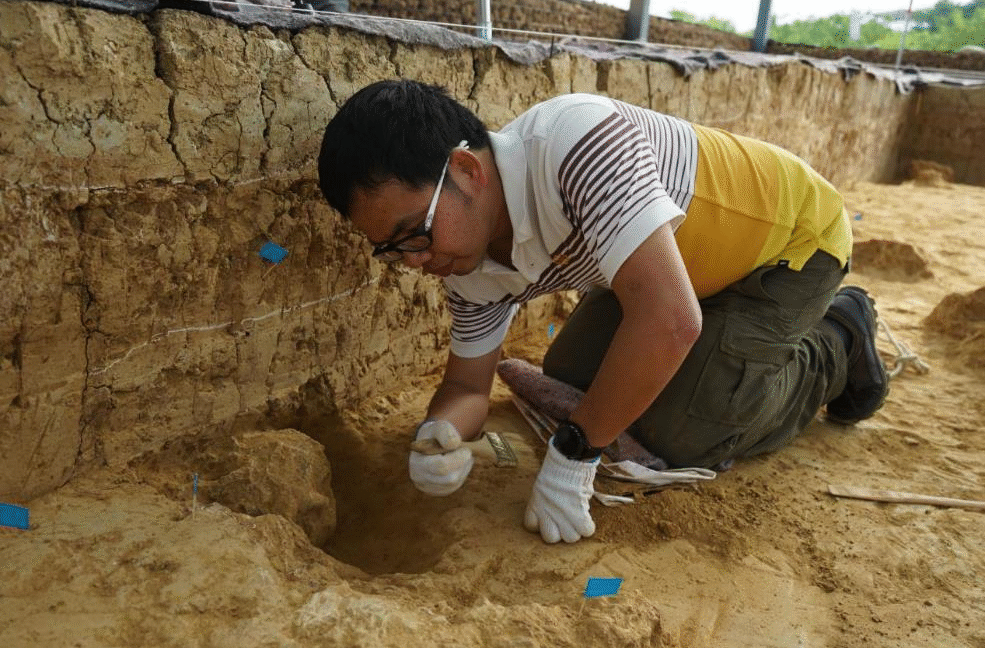
But we may need to give earlier members of our genus, like Homo habilis, a little more credit because stone tools from two other sites in China seem to be older than Homo erectus. At Shangchen, a site on the southern edge of China’s Loess Plateau, archaeologists unearthed stone tools from a 2.1-million-year-old layer of sediment. And at the Xihoudu site in northern China, stone tools date to 2.43 million years ago.
“If you have a site in China that’s 2.43 million years, and the origin of Homo erectus is 1.9 million years ago, either you need to push the origin of Homo erectus back to 2.5 or 2.6 million years or we need to accept that we need to be looking at other hominins that may have actually moved out of Africa,” University of Hawai’i at Manoa paleoanthropologist Christopher Bae, a coauthor of the new study, told Ars.
So who made those 2-million-year-old tools?
Archaeologists have unearthed stone tools but no hominin fossils at both sites, making it difficult to say for sure who the toolmakers were. But if they weren’t Homo erectus, the next most likely suspects would be older members of our genus, like Homo habilis or Homo rudolfensis. That would mean hominin expansion “out of Africa” actually happened several times during the history of our genus: once with early Homo, again with Homo erectus, and yet again with our species.
“There could have been an earlier wave that died out or interbred, so there’s all kinds of possibilities open there,” Purdue University paleoanthropologist Darryl Granger, also a coauthor of the recent study, told Ars.
In fact, there’s some debate about whether the Dmanisi fossils actually belonged to Homo erectus proper. One thing the two dueling reconstructions of the Yunxian skulls agree on is that those hominins had flattish faces, more like ours—and like the 1.63-million-year-old Homo erectus skull from Gongwangling. But the Dmanisi hominins’ lower faces project dramatically forward, like those of older hominins.